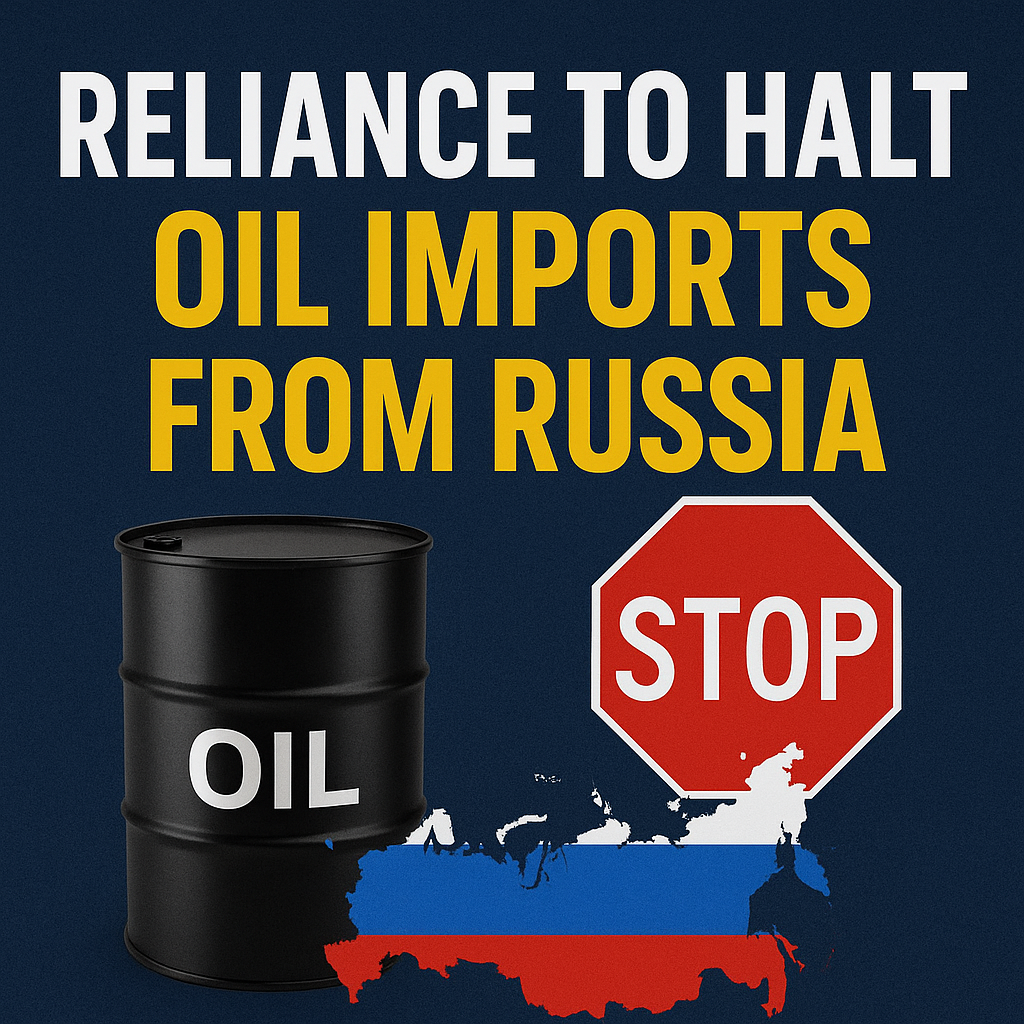
 India’s oil trade is facing a major shift as Reliance Industries, the country’s largest private refiner, prepares to halt oil imports from Russia. This move comes after new U.S. sanctions targeted several major Russian oil companies, creating ripples across global energy markets.
For over two years, Indian refiners have relied heavily on discounted Russian crude. But the latest sanctions have changed the game, raising concerns about supply disruptions, higher prices, and complex geopolitical risks.
Why Reliance Is Halting Russian Oil Imports
The U.S. recently imposed sanctions on major Russian oil producers and shipping companies, tightening restrictions on the flow of Russian crude. These sanctions directly affect companies like Reliance, which had long-term supply deals with Russian oil exporters.
Under the new rules, dealing with certain Russian entities could expose foreign buyers to secondary sanctions, cutting them off from U.S. financial systems and insurance networks. For Reliance, which operates globally and depends on U.S. dollars for international trade, this risk is too high.
As a result, Reliance is expected to halt its oil imports from Russia, marking a significant shift in India’s energy sourcing strategy.
Impact on Reliance and India’s Energy Sector
Reliance has been one of the biggest buyers of Russian Urals crude since 2022, benefiting from heavy discounts offered by Moscow after Western bans. These cheap supplies helped Indian refiners boost profits and maintain stable fuel prices domestically.
However, the new sanctions mean Reliance may now turn to the spot market to buy oil from other sources like Iraq, Saudi Arabia, and the UAE. Spot market purchases are generally more expensive and volatile, which could increase refining costs.
This move could also impact the supply of refined products like diesel and petrol, potentially influencing fuel prices within India.
Broader Effects on Other Indian Oil Companies
Reliance isn’t alone. Other Indian refiners — Indian Oil Corporation (IOC), Bharat Petroleum Corporation Ltd. (BPCL), and Hindustan Petroleum Corporation Ltd. (HPCL) — are also reviewing their contracts with Russian suppliers.
These state-owned companies had gradually increased their intake of Russian oil after 2022, taking advantage of discounts that often went up to $10–15 per barrel. Now, they are facing a dilemma: whether to risk sanctions or look for alternative crude sources.
According to reports, IOC and BPCL have already begun assessing indirect procurement routes, where oil is purchased through intermediaries or mixed cargoes. But even that approach is getting harder due to tightened shipping and insurance restrictions.
The Role of U.S. Sanctions and Global Pressure
The U.S. has made it clear that it wants to limit the revenue flowing to Russia’s energy sector, which funds its military activities. The latest sanctions target not just oil producers but also tankers, trading houses, and insurers that facilitate the export of Russian crude.
This has created a ripple effect across Asia, where both India and China emerged as the largest buyers of Russian oil. The restrictions make it increasingly difficult for refiners to pay for, transport, and insure Russian crude.
Even though India hasn’t joined the Western sanctions against Moscow, its companies still have to navigate global banking systems and comply with restrictions to avoid financial penalties.
Shockwaves in China and Regional Implications
Interestingly, the sanctions have also caused shockwaves in China, which imports even more Russian oil than India. Chinese refiners are now worried about potential disruptions in supply chains and higher shipping risks.
The sudden tightening of sanctions has created uncertainty in the Asian oil trade, leading to price fluctuations and logistical hurdles. Experts believe that the entire regional energy market might need to rebalance, as both India and China seek alternative sources.
This situation also raises questions about Asia’s long-term dependence on Russian crude, which had become a key pillar of the region’s energy security since 2022.
Complexities of Indirect Procurement
Even if Reliance or other Indian refiners want to continue sourcing Russian oil indirectly, the process is becoming increasingly complicated.
Many Russian cargoes are now re-labeled or routed through third countries, often blending with other grades to mask their origin. While this has allowed some trade to continue under the radar, it’s becoming risky due to stricter monitoring by Western authorities.
Moreover, shipping and insurance challenges are mounting. Most global insurers are based in Western countries and are unwilling to cover tankers linked to sanctioned entities. That means refiners may have to depend on costlier and less reliable local insurance, further raising operational risks.
Reliance’s Strategic Shift
For Reliance, the potential halt of Russian oil imports could also signal a strategic pivot. The company has one of the most sophisticated refineries in the world, capable of processing various grades of crude.
Analysts suggest Reliance might increase imports from the Middle East, West Africa, and the U.S., leveraging its global trading network to secure stable supplies.
While this transition may increase short-term costs, it could also protect Reliance’s international operations and maintain compliance with global financial norms.
Reliance’s move could also influence India’s overall import pattern, as private refiners often lead the market in adapting to new realities.
Impact on Global Oil Prices
The shift away from Russian oil by major buyers like Reliance and Indian state refiners could tighten supply in the Asian oil market.
This may lead to higher crude prices, especially for similar grades from the Middle East and West Africa. Traders expect the Urals discount to widen, but with fewer buyers willing to risk sanctions, Russia may face new export challenges.
On the other hand, OPEC countries could benefit, as demand for their crude rises. This rebalancing could subtly strengthen Middle Eastern producers’ influence in Asia once again.
India’s Energy Security Challenge
India imports nearly 85% of its total crude oil needs, making energy security a constant concern. The sudden loss of discounted Russian oil could put additional pressure on the country’s import bill.
The government may need to step in with strategic diversification plans, increasing long-term deals with countries like Iraq, Saudi Arabia, and the U.S., while promoting renewable energy and domestic exploration.
In the long run, India will have to balance its diplomatic neutrality with its economic needs, ensuring that energy supply remains stable while avoiding geopolitical risks.
Conclusion
The potential halt of Russian oil imports by Reliance marks a turning point in India’s oil trade strategy. What began as an opportunity to secure cheap energy has now turned into a complex web of sanctions, compliance issues, and shifting alliances.
While Reliance and other refiners adjust to the new reality, the move will have far-reaching consequences — from rising costs to reshaping Asia’s oil supply chains.
Ultimately, the episode underscores how deeply geopolitics and energy markets are connected. For India, maintaining energy stability amid global tension will require flexibility, foresight, and strategic partnerships that go beyond short-term gains