
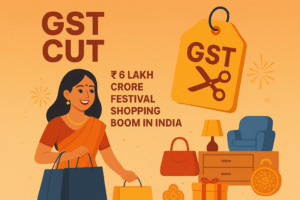
 India is witnessing one of its biggest festive shopping seasons ever, driven by a well-timed government move — a Goods and Services Tax (GST) cut just before Navratri. This policy shift has ignited a ₹6 lakh crore shopping frenzy, highlighting how tax reforms can supercharge consumer sentiment. With spending accounting for nearly 55-60% of India’s GDP, this surge reflects a powerful comeback in domestic demand — but it also raises questions about how sustainable this boom will be.
GST Cut: A Strategic Move Before the Festive Season
In early October, the Indian government announced a significant GST reduction on several consumer goods, including electronics, home decor, and lifestyle items. The timing — just before Navratri and Diwali — was no coincidence.
The goal was clear: boost consumer spending during the peak festival period when Indians traditionally splurge on new purchases. By easing the tax burden, the government aimed to stimulate demand across both online and offline markets, giving a direct push to India’s economic growth.
Experts believe this was a calculated step to keep the GDP growth rate above 7%, particularly as exports continue to face global headwinds.
Record Festival Spending: ₹6 Lakh Crore and Counting
According to reports, India’s festive sales have hit a record ₹6 lakh crore, a milestone never seen before. From smartphones and gold jewelry to home decor and cars, nearly every category witnessed robust sales growth.
E-commerce platforms like Amazon and Flipkart reported double-digit sales growth, while offline stores saw a revival in footfall across malls and local markets. Retailers say the GST cut played a major role in reviving consumer confidence, allowing people to spend more freely without worrying about high taxes.
The result? A nationwide shopping boom that’s setting the tone for one of India’s strongest festive seasons in years.
How the GST Cut Boosted Consumer Sentiment
A reduction in GST means lower prices for consumers and higher sales volumes for businesses. The latest cut affected a range of goods — from small appliances and furniture to personal care and fashion items.
Here’s how the impact unfolded:
-
Lower effective prices: A 2–5% cut in GST translated to noticeable price drops, encouraging buyers to make purchases they had been postponing.
-
More offers and discounts: Brands leveraged the tax cut to introduce combo offers and “lowest price” deals, further driving demand.
-
Ease of affordability: Consumers, especially in tier-2 and tier-3 cities, felt the difference in prices, making large-scale purchases more accessible.
-
Psychological boost: The perception of “tax relief” ahead of the festival created a positive spending mood, much like what stimulus packages do in advanced economies.
Together, these factors made the 2025 festive season a record-breaking success story for India’s retail and manufacturing sectors.
The Economic Logic: Domestic Demand as the Growth Engine
India’s economy is largely driven by domestic consumption, which makes up over 55–60% of GDP. In times when exports are slowing — particularly in sectors like textiles, apparel, and leather goods — the government often turns to domestic demand to sustain growth.
By cutting GST, policymakers hoped to:
-
Offset global trade slowdown with internal consumption.
-
Strengthen small and medium enterprises (SMEs) that depend heavily on festive sales.
-
Encourage manufacturing output in consumer goods industries.
-
Maintain the GDP growth momentum above the 7% mark.
Economists view this as a short-term boost with long-term implications. While it helps sustain growth temporarily, the challenge lies in ensuring that this momentum continues beyond the festival season.
Record GST Collections Paved the Way for the Cut
Interestingly, the decision to slash GST rates came after months of record GST collections. The government’s monthly tax revenues consistently crossed ₹1.7 lakh crore, giving it enough fiscal room to introduce temporary rate cuts.
This is a rare moment where higher tax collections enabled a lower tax policy — a sign of a healthy, growing economy. It also reflects the efficiency of India’s GST system, which has matured significantly since its launch in 2017.
According to finance ministry sources, the goal was to reward compliance and encourage spending, ensuring that revenue buoyancy is sustained through volume rather than higher rates.
Home Decor and Furniture: The Surprise Winners
While electronics, clothing, and smartphones usually dominate festive shopping, this year saw a major shift toward home decor and furniture.
With hybrid work and home renovation trends growing, consumers invested heavily in upgrading their living spaces. Retailers in these sectors reported 30–40% sales growth, outpacing even fashion and mobile categories in some markets.
Factors driving this trend included:
-
The GST cut on select furniture and decor items.
-
Growing urban middle-class demand for home improvement.
-
Online platforms offering EMI and cashback options.
-
Rising property purchases ahead of Diwali, driving furniture sales.
This shift not only diversified the spending pattern but also strengthened India’s home and lifestyle industry, one of the fastest-growing retail segments today.
E-Commerce: The Usual Festival Powerhouse
As expected, e-commerce giants continued to dominate festive sales. From flash deals to limited-time coupons, platforms leveraged the GST cuts to offer even deeper discounts.
Key highlights included:
-
Massive participation from tier-2 and tier-3 cities, contributing nearly half of total sales.
-
Record-breaking smartphone and gadget purchases.
-
Growing share of women shoppers in lifestyle and beauty categories.
-
Integration of UPI and BNPL (Buy Now, Pay Later) options, making spending more flexible.
This digital shopping surge further underscores India’s shift toward online-first consumption, blending tax policy incentives with technological convenience.
The Big Question: Is the Consumption Boom Sustainable?
While the ₹6 lakh crore figure is impressive, economists are now debating whether this surge is sustainable.
Some key concerns include:
-
Whether the spending was front-loaded due to discounts and may taper off post-festivals.
-
If inflationary pressures could return once temporary tax cuts expire.
-
How small retailers can maintain sales without ongoing GST relief.
Still, the overall consensus is optimistic. With rural income support programs, stable inflation, and upcoming state elections fueling spending sentiment, India’s consumption story remains strong for the medium term.
Conclusion
The GST cut before Navratri proved to be a masterstroke, driving a ₹6 lakh crore festival shopping boom and reaffirming the strength of India’s domestic market.
By combining tax incentives with strong consumer confidence, the government has successfully kept growth momentum alive even amid global uncertainty.
While challenges remain — particularly in sustaining post-festival demand — India’s economic resilience, digital retail expansion, and consumer appetite suggest that the festive spirit may just last all year long.