
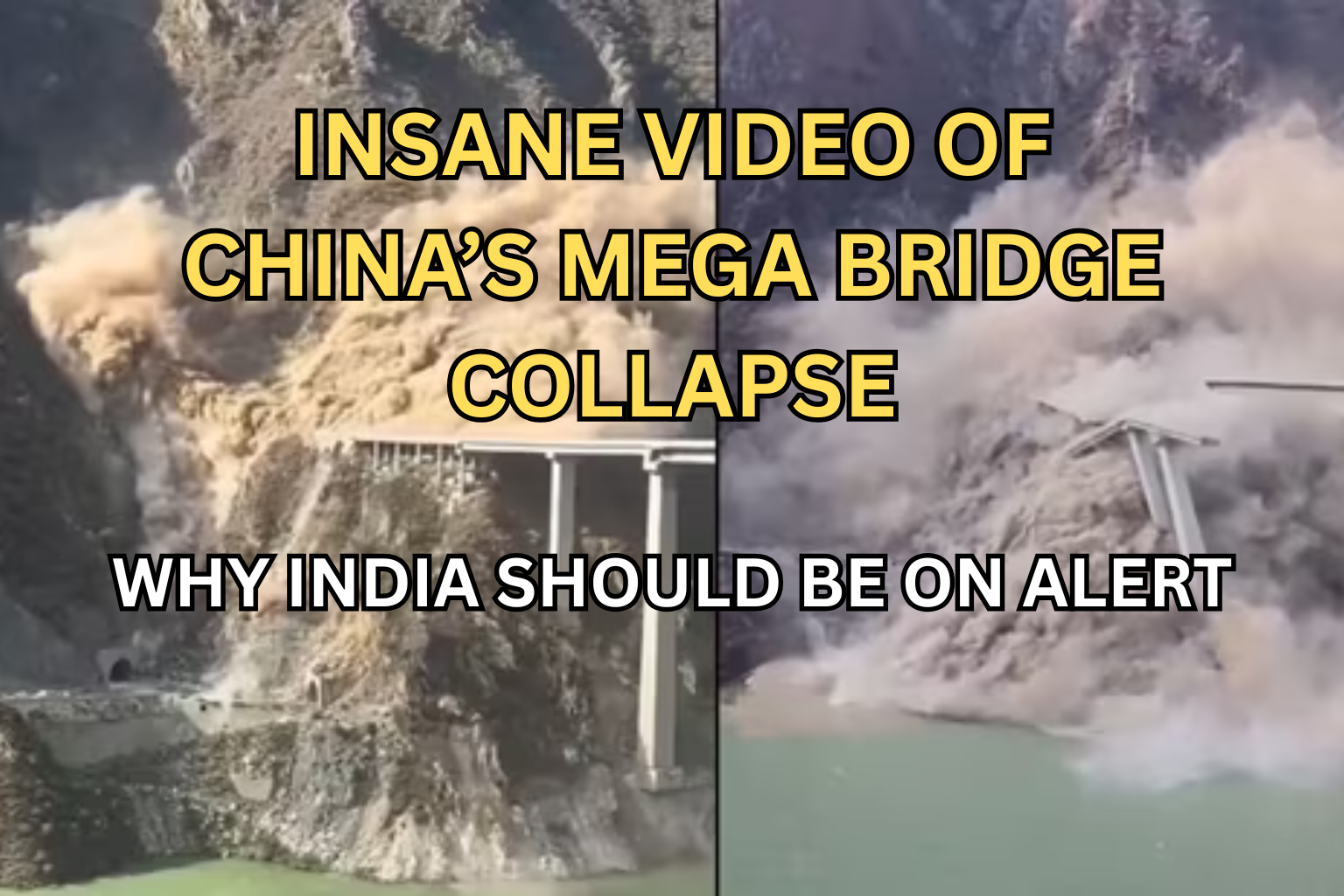
 In a shocking turn of events, a massive bridge in China—spanning 758 meters—has collapsed just months after opening to traffic, raising serious concerns about the safety of Chinese infrastructure projects. The video of the collapse has gone viral across the globe, sparking debates about the quality, design, and accountability of China’s construction industry.
This incident is more than just an engineering failure—it’s a wake-up call for India and the world, reminding everyone that speed and scale cannot replace stability and safety.
The Tragic Collapse: What Happened in China?
The bridge, located in one of China’s key industrial provinces, was touted as a symbol of rapid progress and modern engineering. Measuring 758 meters, it connected two major cities and was expected to improve trade and transportation efficiency.
However, in a tragic twist, the structure gave way without warning, sending vehicles plunging into the river below. Authorities quickly rushed to the scene, but the damage was already done.
Early reports suggest that design flaws and structural weaknesses were the primary causes of the disaster. Engineers and analysts worldwide are now questioning how such a catastrophic failure could occur in a country that claims to be a global infrastructure leader.
Design Flaws Exposed: The Hidden Weakness of “Fast Construction”
The Chinese government has long promoted a “build fast, show strength” approach—constructing skyscrapers, bridges, and railways at lightning speed. But this latest collapse shows the danger of prioritizing speed over safety.
Experts analyzing the footage and satellite data revealed signs of foundation misalignment, substandard materials, and poor quality control—all pointing toward a systemic engineering failure.
While China’s infrastructure growth is often portrayed as a model of efficiency, incidents like this expose the dark side of rushed development.
Global Reactions: A Shockwave Felt Across Continents
Within hours, the video of the collapse flooded social media platforms. News outlets from the U.S., Europe, and India covered the story extensively, labeling it a global infrastructure scandal.
American media called it a “collapse of confidence in Chinese engineering,” while European reports linked it to broader concerns about corruption and lack of oversight in China’s construction sector.
Indian news channels, too, picked up the story, highlighting the potential regional risks tied to China’s megaprojects near international borders and river systems.
The Myth of “Superior Chinese Engineering”
For years, Chinese propaganda has portrayed the nation as a global infrastructure superpower, boasting the world’s fastest trains, tallest bridges, and largest dams. But incidents like this bridge collapse crack open that narrative.
The idea that China’s economic model and engineering standards are superior is now being questioned worldwide. Critics argue that the relentless push for record-breaking projects often leads to compromised safety and hidden defects.
What’s more alarming is that these engineering failures aren’t isolated—they reflect a pattern of negligence and corruption deeply rooted in China’s construction ecosystem.
Why India Should Be on High Alert
While the bridge collapse happened within China’s borders, its implications extend far beyond. For India, the warning is crystal clear: be vigilant about the safety of Chinese-built infrastructure, especially projects that could affect India’s environment and security.
China’s massive dam networks and hydropower projects along rivers that flow into India’s northeastern states—like Arunachal Pradesh and Assam—pose a significant risk.
If a bridge can collapse due to poor design, what happens if similar flaws exist in these mega-dams?
A dam failure upstream could trigger catastrophic flooding in India’s border regions, endangering thousands of lives and causing massive ecological damage.
This is why Indian policymakers and engineers must closely monitor Chinese activities near shared river basins and demand international safety audits of cross-border water projects.
The Strategic Angle: Infrastructure as Power Projection
Beyond engineering, China’s infrastructure boom has always had a strategic dimension. Massive bridges, tunnels, and roads near border regions aren’t just for connectivity—they serve military and geopolitical objectives.
A failed structure, however, not only embarrasses China but also exposes vulnerabilities in its logistical network. For India, this event underscores the need to strengthen domestic infrastructure along the Himalayan frontier, ensuring that quality and safety remain top priorities.
By learning from China’s mistakes, India can build smarter, safer, and more sustainable projects, aligning infrastructure growth with national security goals.
Lessons for the World: Quality Over Quantity
This collapse sends a powerful message to the global community: modernization without maintenance is a recipe for disaster.
Countries partnering with China under the Belt and Road Initiative (BRI) should reassess the long-term reliability of the infrastructure being built.
Many developing nations have already faced similar problems—bridges cracking, railways malfunctioning, and ports falling apart within years of completion.
The world must prioritize transparency, durability, and local oversight rather than being lured by flashy promises of “fast-track development.”
The Bigger Picture: A Systemic Issue, Not an Accident
The bridge collapse isn’t a one-off incident—it’s part of a larger trend of structural failures in China’s infrastructure network.
In recent years, China has witnessed:
-
Apartment buildings collapsing in Guangdong and Hunan.
-
A high-speed train derailment due to faulty tracks.
-
A deadly tunnel flooding incident caused by engineering negligence.
Each of these tragedies points to deep-rooted flaws in project planning, corruption, and weak accountability mechanisms.
🇮🇳 India’s Opportunity: Build the Right Way
India has a unique opportunity here—to learn from China’s mistakes and lead by example.
By emphasizing safety standards, transparent tendering processes, and local innovation, India can build infrastructure that’s not just modern, but trustworthy and resilient.
The government’s push for “Make in India” and Atmanirbhar Bharat should include a national infrastructure quality mission—one that ensures no bridge, road, or dam is built without rigorous testing and certification.
This approach won’t just protect lives—it will boost global confidence in Indian engineering and make the country a reliable alternative to China in global construction markets.
Final Thoughts: A Warning Disguised as a Lesson
The collapse of China’s 758-meter bridge is a tragic reminder of the hidden cracks in the world’s race for rapid development.
It’s a lesson for every nation, including India:
-
Don’t rush progress.
-
Don’t compromise on quality.
-
And never ignore the warning signs.
As the viral video continues to shock millions, one truth stands out—progress built on weak foundations always collapses.
For India, this is the moment to stay alert, vigilant, and self-reliant, ensuring that every structure built stands not just tall—but stands the test of time.