 India has taken a major step in reshaping its energy future.
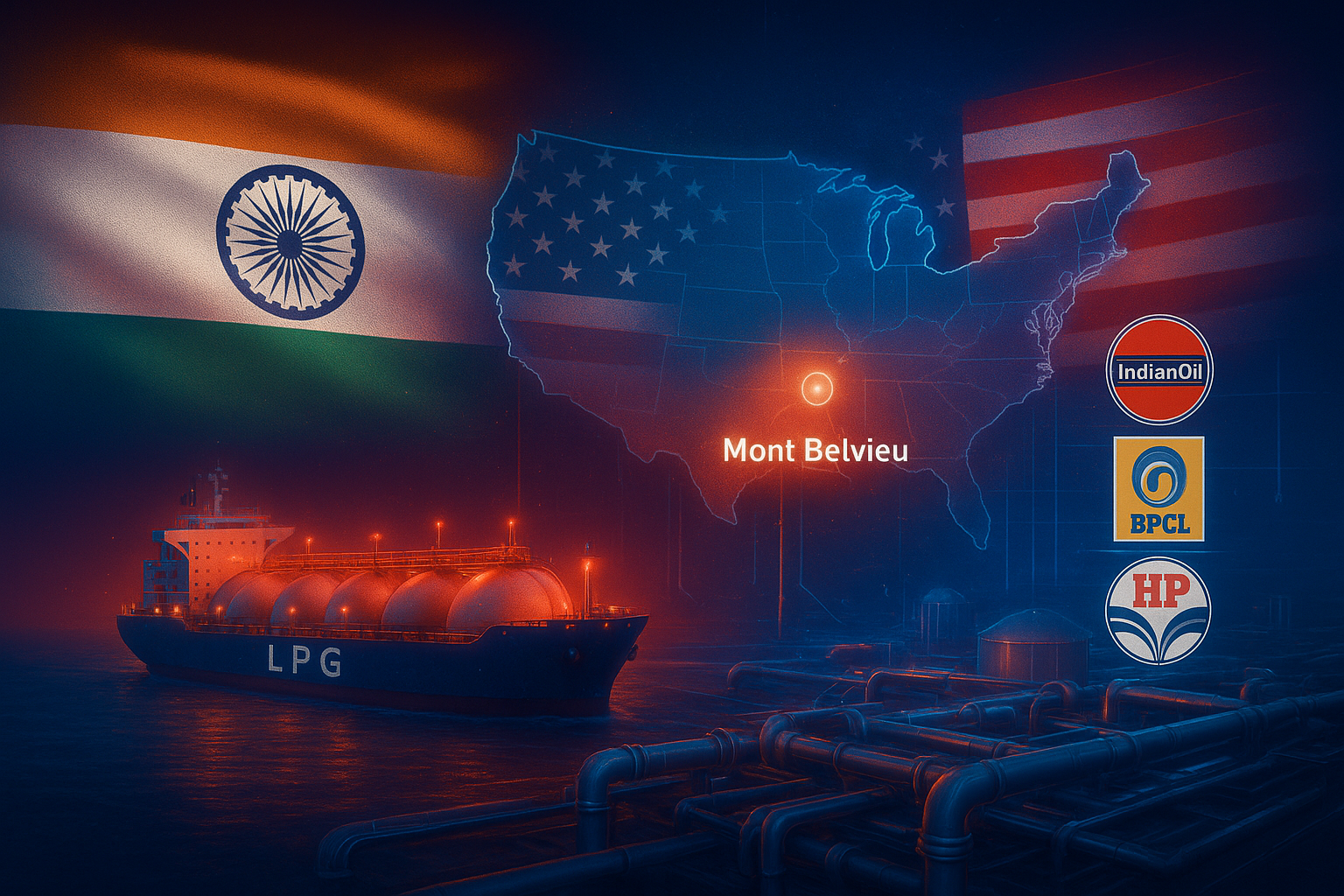
For the first time in history, the country has signed a long-term deal to import 10% of its total LPG needs from the United States. This marks a massive shift in India’s traditional sourcing strategy, which has relied heavily on the Middle East for decades.
This new agreement signals a future where India diversifies its energy basket, strengthens ties with the US, and secures better pricing advantages for consumers.
A Historic Energy Deal: What Happened?
India has officially signed a groundbreaking agreement to import liquefied petroleum gas (LPG) from the United States beginning in 2026.
This is the first time the country will source such a large share of LPG from America, and it could reshape the global LPG trade landscape.
The deal involves three major Indian oil companies:
-
Indian Oil Corporation (IOC)
-
Bharat Petroleum Corporation Limited (BPCL)
-
Hindustan Petroleum Corporation Limited (HPCL)
These state-run giants will now secure long-term American LPG supply contracts, ensuring stable fuel availability for millions of Indian households.
Why This Deal Matters for India
India is the world’s second-largest LPG consumer after China.
With rising demand driven by government schemes like Ujjwala Yojana, securing LPG supply is crucial for energy security.
This deal is groundbreaking for many reasons:
1. First Major Shift Away from Middle East Imports
For decades, India has depended primarily on countries like:
-
Saudi Arabia
-
Kuwait
-
UAE
-
Qatar
for its LPG needs.
Now, sourcing 10% of LPG from the US signals a clear intent to diversify and reduce over-reliance on Middle Eastern suppliers.
2. Strengthening India–US Energy Relations
This agreement aligns with India’s long-term strategy of building strong economic ties with Washington.
It fits into a broader energy partnership that already includes:
-
Crude oil imports
-
LNG purchases
-
Renewable energy cooperation
The new LPG deal pushes this partnership to the next level.
3. A Strategic Move for Energy Security
Diversifying supply sources means less risk during geopolitical tensions.
If disruptions happen in the Middle East, India will still have a reliable supply line from the United States.
This is a major step toward energy independence and stability.
When Will LPG Imports from the US Start?
The new supply agreements will begin in 2026.
This gives Indian oil companies time to:
-
Strengthen port infrastructure
-
Prepare storage facilities
-
Streamline shipping routes
-
Finalize commercial and logistics arrangements
By the time the first shipments arrive, India will be fully prepared to integrate US LPG into its national energy grid.
How Much LPG Will India Import from the US?
India plans to meet 10% of its total LPG import requirements through the United States.
With India importing nearly 70% of the LPG it consumes, this is a massive number in global energy trade.
This alone makes the deal a historic move with long-term impact.
Transparent Pricing: Linked to the US Mont Belvieu Benchmark
One of the most important aspects of the deal is its pricing mechanism.
The price of US-sourced LPG will be linked to:
⭐ Mont Belvieu Hub (Texas, USA)
A globally trusted and transparent benchmark for LPG rates.
Why this matters:
-
Mont Belvieu pricing is predictable and transparent
-
Reduces India’s dependency on Middle Eastern pricing formulas
-
Helps Indian oil companies secure better commercial terms
-
Stabilizes domestic LPG cylinder prices over time
This could eventually benefit Indian consumers and improve LPG affordability.
Impact on Indian Consumers
If this deal brings more stable and competitive pricing, Indian households may experience:
-
Less volatility in LPG cylinder prices
-
Improved supply during peak seasons
-
Reduced risk of shortage
-
Better long-term planning by government and oil companies
While exact price impacts will depend on global markets, the deal is expected to contribute to greater stability.
How This Deal Strengthens India’s Future
This move is not only about energy imports—it reflects India’s bigger strategy for growth and independence.
1. Energy Diversification Strategy
India wants to diversify:
-
Crude oil sources
-
Gas pipelines
-
LNG imports
-
Renewable energy partners
Adding the US as a major LPG supplier perfectly aligns with this vision.
2. Reducing Geopolitical Risks
Middle East tensions often lead to:
-
Price spikes
-
Shipping delays
-
Supply uncertainty
Now, with a strong US supply channel, India reduces geopolitical vulnerabilities.
3. Boosting India–US Trade Partnership
Energy trade is one of the largest components of India–US economic ties.
This LPG deal strengthens:
-
Diplomatic relations
-
Commercial cooperation
-
Strategic alignment
Both nations will benefit significantly from this long-term partnership.
What It Means for Middle Eastern Suppliers
India will continue to source the majority of LPG from the Middle East.
However, the new US deal sends a strong message:
India seeks balance, reliability, and competition in its energy market.
This could push Middle Eastern suppliers to:
-
Offer more competitive pricing
-
Provide longer-term stability
-
Reduce dependence on a single customer
-
Innovate better contract terms
In the long run, India gains bargaining power globally.
Shipping and Logistics: A New Global Route
Importing LPG from the US will require:
-
Trans-Pacific shipments
-
Larger storage vessels
-
More advanced port terminals
This brings India into a new global trade route traditionally dominated by East Asian markets.
Over time, the infrastructure improvements could benefit other fuel imports as well.
A Win for India’s Energy Ambitions
This deal is more than just an energy contract—it’s a message that India is ready for a new era of global energy partnerships.
It shows:
-
Confidence in US energy markets
-
A shift toward diversified, stable sources
-
A commitment to protecting Indian consumers
-
A strategic approach to national energy security
Conclusion: A Landmark Step in India’s Energy Journey
The historic decision to import 10% of India’s LPG from the United States marks a turning point in the country’s energy roadmap.
By involving IOC, BPCL, and HPCL, linking prices to Mont Belvieu, and starting supplies in 2026, India has taken a bold and future-ready step.
This move strengthens India’s position in the global energy market and deepens its ties with the United States—while reducing its dependency on the Middle East.
India’s energy future is becoming more diversified, more secure, and more globally connected.