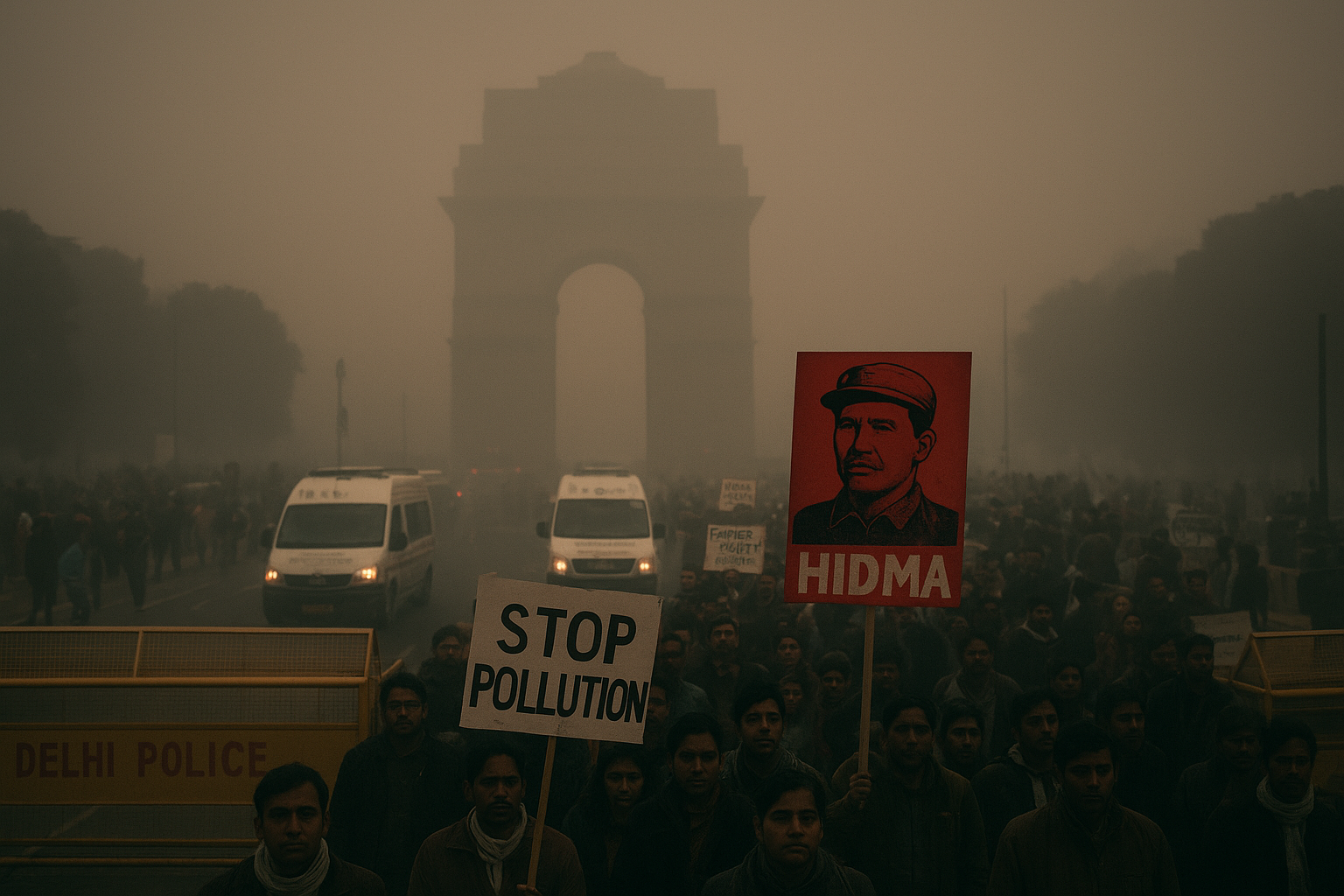
 Delhi is once again choking under toxic air. Every winter, the national capital struggles to breathe, but this year, the crisis has taken a dramatic and unexpected turn. What began as a protest against rising pollution levels in Delhi NCR has escalated into a major political and security controversy after posters of the Maoist commander Hidma surfaced at a rally.
The incident has triggered intense debate, raised questions about the protest’s intent, and sparked outrage across political circles and social media.
Delhi NCR’s Air Pollution Levels Hit Dangerous Highs
Air pollution in Delhi has returned to severe levels.
The AQI across Delhi NCR has been consistently alarming, with multiple locations crossing the “hazardous” mark.
During peak hours, several areas reported AQI numbers between 450–500, making the air nearly unbreathable. Schools have been closed, health advisories issued, and hospitals have seen a rise in pollution-related cases.
Citizens once again feel frustrated because the situation repeats every year with little long-term improvement.
Government Faces Criticism Over Handling of Pollution Crisis
As the air thickens with smog, criticism against the government has increased.
Many environmentalists, activists, and residents accuse authorities of failing to take strong action.
Some of the common complaints include:
-
Delayed reaction to rising pollution
-
Poor enforcement of construction dust control
-
Ineffective stubble-burning management
-
Lack of long-term planning
-
Seasonal short-term measures instead of permanent solutions
Both the central government and the Delhi government have faced heat for blaming each other instead of working together.
With no visible relief despite repeated warnings from experts, public anger has grown. This frustration set the stage for large-scale protests.
Why Protests Are Considered Necessary
Many citizens feel that protests have become essential because the pollution crisis has reached its worst point in years. Activists argue that without public pressure, authorities won’t take meaningful action.
Protesters often choose symbolic and powerful locations like India Gate, Jantar Mantar, and central Delhi because these areas attract maximum media coverage.
Their argument is straightforward:
“If we suffer every day, the government must see our suffering and act urgently.”
In many past instances, peaceful protests have successfully pushed governments to fast-track emergency measures such as artificial rain plans, odd-even implementation, and air quality task forces.
The Protest Escalates: Roads Blocked in Central Delhi
However, the recent protest took an unexpected turn.
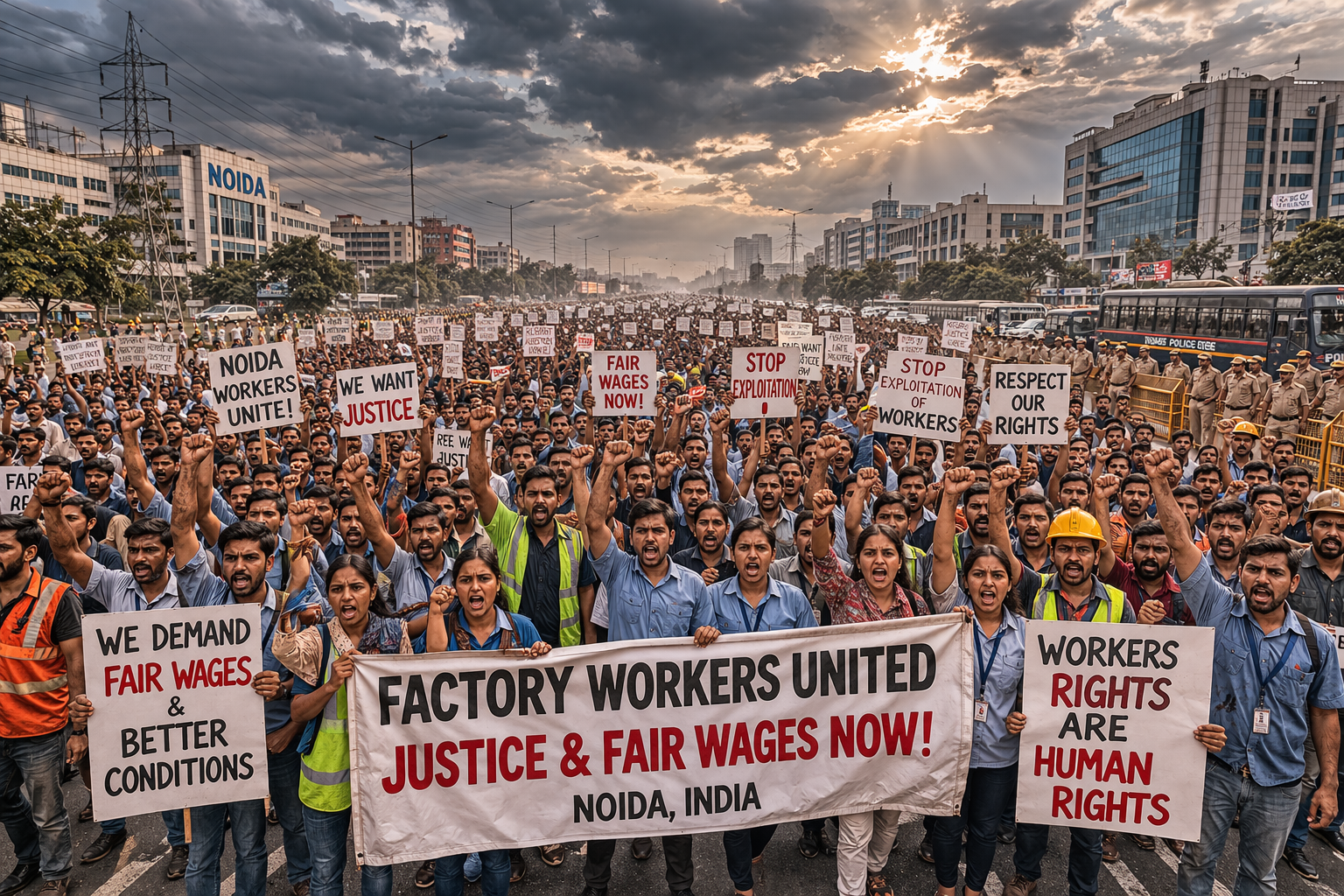
A large crowd of demonstrators moved from a peaceful gathering to blocking major roads in central Delhi, including routes used by office-goers, ambulances, and public transport.
This resulted in:
-
Massive traffic jams
-
Long delays across Connaught Place and India Gate areas
-
Stranded school buses
-
Difficulty for emergency vehicles to move
-
Complaints from commuters and tourists
Videos showed ambulances stuck in traffic for several minutes, which led to public anger and raised questions about the protesters’ methods.
While the protest began with environmental demands, the disruption of key roadways triggered public resentment.
The Situation Intensifies After a Key Figure’s Death
The atmosphere grew even more charged due to a separate but related event.
A key figure involved in a recent encounter was killed, sparking an emotional response from leftist and tribal support groups who were also attending the protest.
According to reports, these groups were already mobilized and ready to raise their issues during the pollution protest. The sudden death added tension, making the crowd more aggressive and vocal.
What was supposed to be a protest about Delhi’s air quality became a complex mix of environmental activism and political anger.
Shock and Outrage Over Maoist Hidma Posters
The turning point of the controversy came when posters of Hidma, a notorious Maoist leader associated with violent attacks in Chhattisgarh, were seen at the protest.
Images and videos circulating online showed groups carrying posters demanding “justice” and expressing solidarity with alleged Maoist-linked individuals.
This instantly escalated the situation, for several reasons:
-
Hidma is a prime accused in multiple deadly attacks on security forces.
-
Maoist symbolism has long been associated with insurgency.
-
Using such posters at a pollution protest appeared suspicious and politically loaded.
-
Many wondered if the protest was hijacked for a different agenda.
The presence of these posters overshadowed the original purpose of the rally — clean air — and turned it into a national controversy.
Political Leaders React Strongly
Political reactions were quick and fierce.
Many leaders condemned the use of Maoist posters in the heart of the capital.
Their statements highlighted several concerns:
-
Whether extremist elements were using environmental protests as camouflage
-
Why security forces allowed such material near sensitive areas
-
Whether the event was pre-planned or spontaneously infiltrated
-
The growing trend of “issue mixing” in public demonstrations
The debate quickly shifted from pollution to questions about law and order, national security, and the ideological infiltrations of protests.
Security Agencies Begin Inquiry
After images went viral, security agencies reportedly began reviewing:
-
Footage from CCTV cameras
-
Social media posts showing the posters
-
Identities of the individuals holding Maoist visuals
-
Connections between protest organizers and extremist groups
Authorities want to determine whether the display was:
-
A deliberate act by a small group
-
A coordinated plan
-
Or an attempt to mislead the public and hijack attention
Sources suggest the government is taking the incident extremely seriously.
Environmental Activists Distance Themselves
Environmental groups were quick to condemn the chaos.
Many activists expressed disappointment that a genuine issue — Delhi’s pollution crisis — was overshadowed by unrelated political symbolism.
They clarified:
-
They had nothing to do with the Hidma posters
-
Their movement focuses purely on environmental rights
-
They do not support extremist ideologies
-
The presence of such posters harmed their cause
For them, the incident not only damaged the credibility of the protest but shifted media attention away from the urgent air quality problem.
Public Opinion Remains Divided
The public’s reaction has been mixed.
Some people blame authorities
They say poor governance and lack of action forced citizens to protest in the first place.
Others blame protesters
They believe blocking roads, disrupting emergency services, and allowing extremist symbolism is unacceptable.
Some feel both sides are at fault
Authorities failed to manage pollution, while protesters failed to maintain discipline.
One thing is clear:
The real issue — toxic air — has been pushed to the background because of politics.
Air Pollution Still Demands Immediate Action
Despite the controversy, Delhi’s pollution crisis remains a real and urgent threat. Experts continue to warn of long-term health risks, including:
-
Lung damage
-
Heart diseases
-
Lower immunity
-
Breathing difficulties in children and elderly
-
Increased chances of severe infections
The city cannot afford distractions.
The government must act decisively, and protests must remain peaceful and focused.
Conclusion
The emergence of Maoist Hidma posters at a Delhi pollution protest has sparked outrage and shifted attention from the core issue. What started as a movement for clean air turned into a politically charged event after road blockages, rising tensions following a key death, and extremist imagery all collided.
Delhi’s air crisis needs solutions, not chaos.
Protests should highlight the issue, not overshadow it.
And authorities must respond with action, not blame games.
Only then can Delhi hope to breathe clean air again.