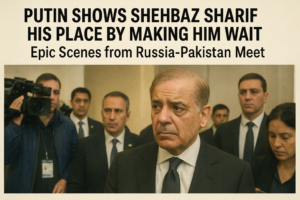
The world of international diplomacy is often wrapped in smiles, handshakes, and carefully staged photographs. But sometimes, a single moment exposes the real power dynamics between nations. One such moment recently went viral after a Russia-Pakistan meeting, where Russian President Vladimir Putin reportedly made Pakistan Prime Minister Shehbaz Sharif wait for nearly 40 minutes. The visuals, reactions, and media coverage have triggered intense debate across South Asia and beyond. This article breaks down what happened, why it matters, and how this incident fits into Putin’s larger diplomatic playbook.
What Happened at the Russia-Pakistan Meet?
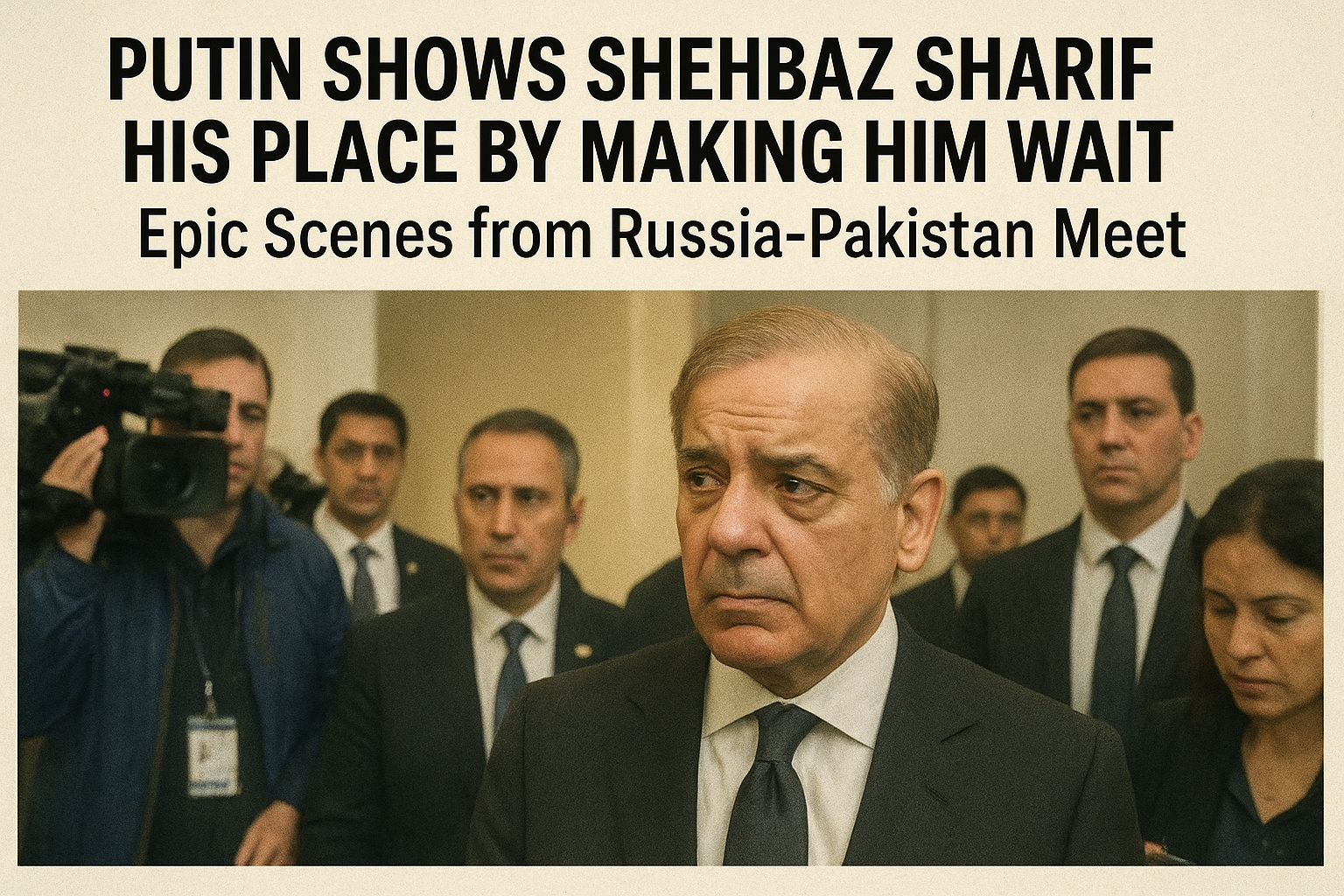
According to a widely circulated video, Shehbaz Sharif was kept waiting for approximately 40 minutes before being granted an audience with Vladimir Putin.
In diplomatic circles, such delays are rarely accidental.
Timing is power.
Making a leader wait is often interpreted as a subtle but clear message about status, priority, and hierarchy.
The delay immediately became a talking point on social media, news platforms, and political commentary shows.
The Erdoğan Meeting Incident: A Diplomatic Snub?
The situation reportedly became even more awkward.
During the same visit, Putin was already engaged in a high-level meeting with Turkish President Recep Tayyip Erdoğan.
Sources and video commentary claim that Shehbaz Sharif attempted to join or “crash” this meeting.
What followed was diplomatically telling.
Shehbaz Sharif was allowed to stay for only about 10 minutes, after which he was escorted out.
The brief interaction stood in sharp contrast to Erdoğan’s extended and warm engagement with Putin.
For many observers, this moment symbolized Russia’s clear prioritization of Turkey over Pakistan.
Visuals That Said More Than Words
Sometimes, images speak louder than official statements.
Footage from the event shows Shehbaz Sharif standing alone, visibly uneasy, and surrounded by journalists and security personnel.
His body language appeared tense.
There were no relaxed conversations.
No informal smiles.
No symbolic warmth.
Instead, the visuals conveyed awkwardness, uncertainty, and discomfort.
For political analysts, such moments are crucial because global audiences often judge diplomatic strength through optics, not press releases.
Heavy Media Presence and RT’s Role
One striking element of the incident was the strong presence of international media, especially RT (Russia Today).
RT is known for shaping global narratives and holds significant influence among Indian audiences.
The extensive coverage ensured that the incident did not remain a closed-door diplomatic matter.
Instead, it became a global spectacle.
By allowing cameras to capture these moments, Russia effectively ensured that the power imbalance was seen, shared, and discussed worldwide.
Was This a Calculated Move by Putin?
Many experts believe this was not accidental.
Vladimir Putin has long been known for using timing, protocol, and symbolism as diplomatic tools.
Making leaders wait has been part of his strategy in the past.
The message is simple:
Russia decides who matters — and when.
This incident appears to fit into that pattern.
By delaying Shehbaz Sharif and limiting his access, Putin may have been asserting dominance and reinforcing geopolitical priorities.
Leaders Who Avoided Similar Treatment
Interestingly, not all world leaders face such situations.
Some leaders manage to avoid these symbolic snubs through:
-
Strong economic leverage
-
Strategic military alliances
-
Geopolitical importance
-
Clear negotiation positioning
Countries like China, Turkey, and key Gulf nations often receive structured, respectful engagements with Russia.
This contrast raises uncomfortable questions about Pakistan’s current global standing.
Pakistan’s Diplomatic Position Under Scrutiny
For Pakistan, the incident has sparked serious debate at home and abroad.
Critics argue that such moments reflect:
-
Weak foreign policy execution
-
Over-reliance on symbolic diplomacy
-
Lack of economic leverage
Supporters, however, claim the incident is being over-interpreted and that diplomatic schedules can be unpredictable.
Still, perception matters.
And in geopolitics, perception often becomes reality.
Social Media Reaction: A Storm of Opinions
The clip spread rapidly across platforms like X (Twitter), YouTube, and Instagram.
Reactions were intense.
Some users called it humiliating.
Others labeled it a diplomatic failure.
A few defended Shehbaz Sharif, blaming media exaggeration.
Indian audiences, in particular, engaged heavily with the footage, largely due to RT’s reach and regional interest.
The viral nature of the video ensured that the narrative moved faster than any official clarification.
Why This Incident Matters Globally
This was not just about one leader waiting.
It highlighted deeper realities:
-
Russia’s shifting alliances
-
Turkey’s growing strategic importance
-
Pakistan’s struggle for diplomatic relevance
-
The role of media in shaping global opinion
In today’s interconnected world, every second of footage counts.
A delay becomes a statement.
A brief meeting becomes a message.
The Power Game of Modern Diplomacy
Putin’s leadership style has always emphasized control and authority.
From long tables to delayed meetings, symbolism is central to his approach.
This incident reinforces the idea that:
In Putin’s world, respect is displayed, not requested.
World leaders who arrive without leverage risk becoming part of the spectacle rather than the conversation.
Final Thoughts: A Moment Pakistan Won’t Forget
Whether intentional or circumstantial, the Russia-Pakistan meeting visuals have left a lasting impression.
For Pakistan, it is a reminder that global respect depends on economic strength, strategic value, and diplomatic clarity.
For Russia, it showcased confidence and control.
And for the world, it offered a rare, unfiltered look into how power is silently exercised on the global stage.
In international politics, sometimes the loudest statement is made in complete silence — while someone waits.