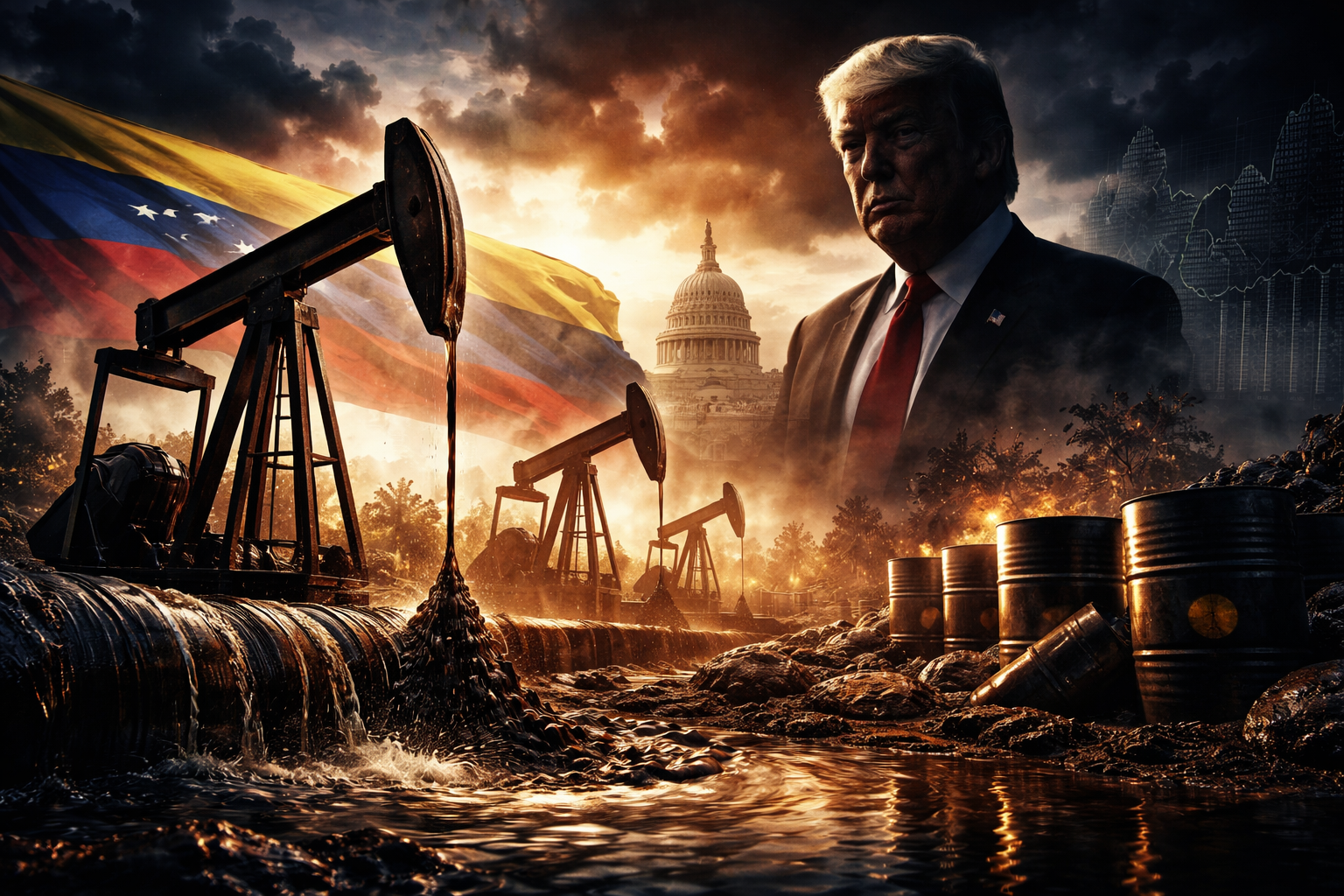
 The political crisis in Venezuela has once again captured global attention. Even after dramatic developments like the capture of President Nicolás Maduro, the situation in the oil-rich nation is far from settled. At the center of the controversy is a bold and highly debated idea linked to former U.S. President Donald Trump — a plan that critics describe as an attempt to gain control over Venezuela’s massive oil reserves for the benefit of U.S. companies.
This article breaks down the issue in simple language, explains the oil politics behind it, and explores why Venezuela’s leadership is pushing back strongly.
Venezuela Crisis: Not Over Yet
Many believed that the arrest and weakening of Nicolás Maduro’s leadership would mark the end of Venezuela’s long political crisis. However, the reality is very different.
Power struggles continue inside the country. Economic instability, international pressure, and political resistance are still shaping Venezuela’s future. The oil-rich nation remains a strategic target for global powers, especially the United States.
Despite internal challenges, Venezuela’s leadership insists that foreign intervention will not decide the country’s destiny.
Vice President’s Warning: “We Will Not Surrender Sovereignty”
Venezuela’s Vice President has issued a direct challenge to the United States.
The message is clear:
Venezuela will not hand over its sovereignty, resources, or oil fields to Washington.
According to Venezuelan officials, any attempt by the U.S. to influence or control the country’s oil sector would be seen as economic colonization. This statement reflects deep mistrust built over decades of sanctions, diplomatic pressure, and alleged foreign interference.
For Venezuela, oil is not just a resource.
It is a symbol of national independence.
Why Venezuela’s Oil Matters So Much
Venezuela sits on one of the largest oil reserves in the world.
According to available data:
-
Venezuela has around 300 billion barrels of proven crude oil reserves
-
This is more than Saudi Arabia
-
Experts believe reserves could grow even larger with modern exploration
These numbers explain why Venezuela remains a global hotspot despite years of economic decline. Even with outdated infrastructure and sanctions, the country’s underground wealth is enormous.
For global energy markets, Venezuela’s oil could be a game-changer.
Trump’s Interest: Oil Over Politics?
The video suggests that Donald Trump’s interest in Venezuela is driven more by money than diplomacy.
During his presidency, Trump followed an aggressive foreign policy approach. Venezuela became a key target due to its oil reserves and weak economy.
The idea presented is simple:
-
Control access to Venezuelan oil
-
Allow U.S. companies to extract and profit
-
Reduce dependence on Middle Eastern oil
-
Strengthen U.S. energy dominance
This strategy largely ignores objections from other major powers like India, China, and Russia, all of whom have economic and strategic interests in Venezuela.
Does the U.S. Want to “Own” Venezuelan Oil?
This is where confusion often arises.
The narrative does not suggest that the United States would legally own all Venezuelan oil. Instead, it points to a more indirect approach:
-
Installing a U.S.-friendly government
-
Opening oil contracts to American companies
-
Controlling production, pricing, and export routes
-
Limiting access for rival nations
In short, control without formal ownership.
This method has been used historically in various regions where powerful nations influence resources through corporate and political leverage.
Impact on Global Powers: India, China, and Russia
Trump’s alleged strategy raises serious concerns among other global players.
China
China has invested billions in Venezuelan infrastructure and oil projects. Losing access would hurt Beijing’s long-term energy security.
Russia
Russia views Venezuela as a strategic ally in the Western Hemisphere. U.S. dominance would weaken Moscow’s global influence.
India
India imports oil from multiple regions. A U.S.-controlled Venezuelan supply could affect pricing and availability.
Ignoring these nations could increase global tensions and deepen geopolitical divisions.
Economic Angle: Billions for U.S. Companies
One of the most controversial claims is that U.S. corporations stand to earn billions if Venezuela’s oil sector opens under American influence.
Potential benefits for U.S. firms include:
-
Cheap extraction rights
-
Long-term contracts
-
Reduced competition
-
Strategic control over supply
For oil giants, Venezuela represents an untapped goldmine waiting to be modernized and exploited.
Critics argue this approach prioritizes corporate profit over Venezuelan citizens.
Venezuela’s Struggling Economy and Oil Dependency
Venezuela’s economy is heavily dependent on oil exports.
Years of mismanagement, sanctions, and falling production have devastated the nation:
-
Hyperinflation
-
Shortages of food and medicine
-
Mass migration
Supporters of U.S. involvement argue that foreign investment could revive the economy.
Opponents say it would only replace one form of exploitation with another.
Sanctions as a Pressure Tool
The U.S. has imposed harsh sanctions on Venezuela’s oil industry.
These sanctions:
-
Limit oil exports
-
Block access to global banking
-
Discourage foreign investment
Critics claim sanctions are designed to force political change and weaken resistance to U.S. influence.
Supporters argue sanctions are necessary to punish authoritarian leadership.
Is This a New Form of Oil Imperialism?
Many analysts describe the situation as modern oil imperialism.
Instead of military invasion, power is exercised through:
-
Sanctions
-
Political pressure
-
Corporate contracts
-
Diplomatic isolation
Venezuela’s leaders see this as a direct threat to national freedom.
What Happens If the U.S. Succeeds?
If the U.S. gains effective control over Venezuelan oil operations:
-
Global oil prices could shift
-
U.S. energy dominance would grow
-
Rival nations would lose influence
-
Venezuela’s sovereignty would weaken
However, resistance from Venezuelans and international allies could make such control unstable and costly.
Public Reaction Inside Venezuela
Inside Venezuela, opinions are divided.
Some citizens:
-
Want foreign investment
-
Hope for economic recovery
-
Blame current leadership for the crisis
Others:
-
Fear loss of national identity
-
Distrust U.S. intentions
-
Support resistance against foreign control
This internal division adds another layer of complexity.
Conclusion: Oil, Power, and the Future of Venezuela
The idea that the USA could take over Venezuela’s oil reflects a deeper struggle for global energy dominance.
Donald Trump’s alleged strategy highlights how valuable resources can shape foreign policy decisions. While the plan promises massive profits for U.S. companies, it raises serious ethical, political, and humanitarian questions.
Venezuela’s oil may be worth billions, but sovereignty, stability, and dignity come at a higher cost.
As global powers compete for energy control, Venezuela remains caught in the middle — rich in resources, yet struggling for independence.