 Europe’s relationship with the United States is entering a critical phase. A new political resolution in France, growing European Union trade tensions, and strong remarks from Italy’s Prime Minister Giorgia Meloni signal a shift in transatlantic dynamics.
The developments suggest that Europe may be preparing for a future where reliance on the United States is reduced—militarily, economically, and strategically.
This article explains what is happening, why it matters, and how it could reshape NATO, U.S. influence in Europe, and global geopolitics.
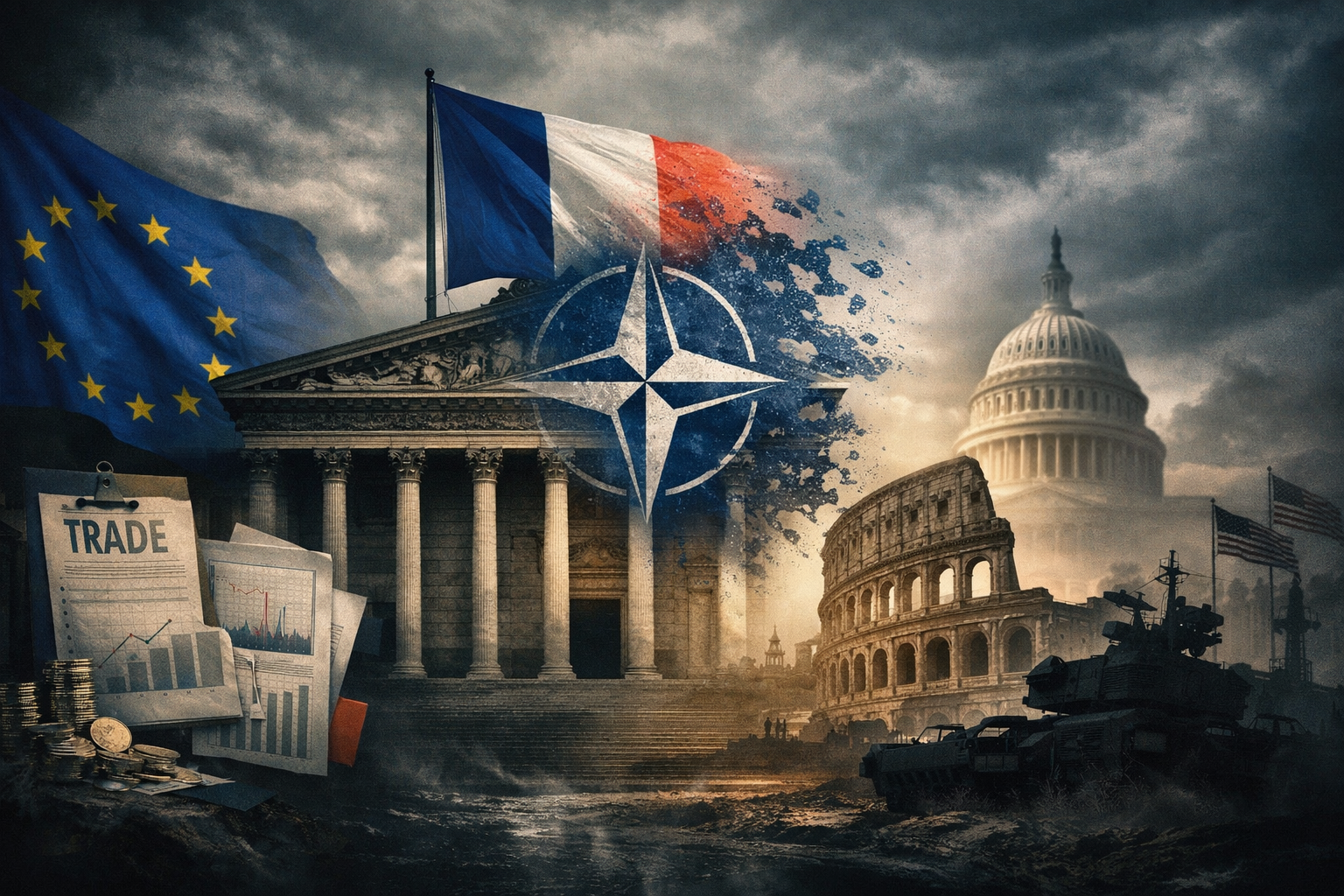
France Pushes Resolution to Exit NATO
France has taken a bold political step that has caught the attention of global leaders.
The Vice President of France’s National Assembly has introduced a resolution calling on the French government to begin planning a withdrawal from NATO. While the resolution does not immediately remove France from the alliance, it represents a powerful political signal.
It reflects growing dissatisfaction in parts of Europe about NATO’s structure and leadership.
France has historically favored strategic independence. President Charles de Gaulle withdrew France from NATO’s integrated military command in 1966, arguing that Europe should not depend entirely on U.S. military power.
Although France later rejoined NATO’s command structure, the current resolution shows that old debates are resurfacing.
Donald Trump’s NATO Remarks Trigger European Response
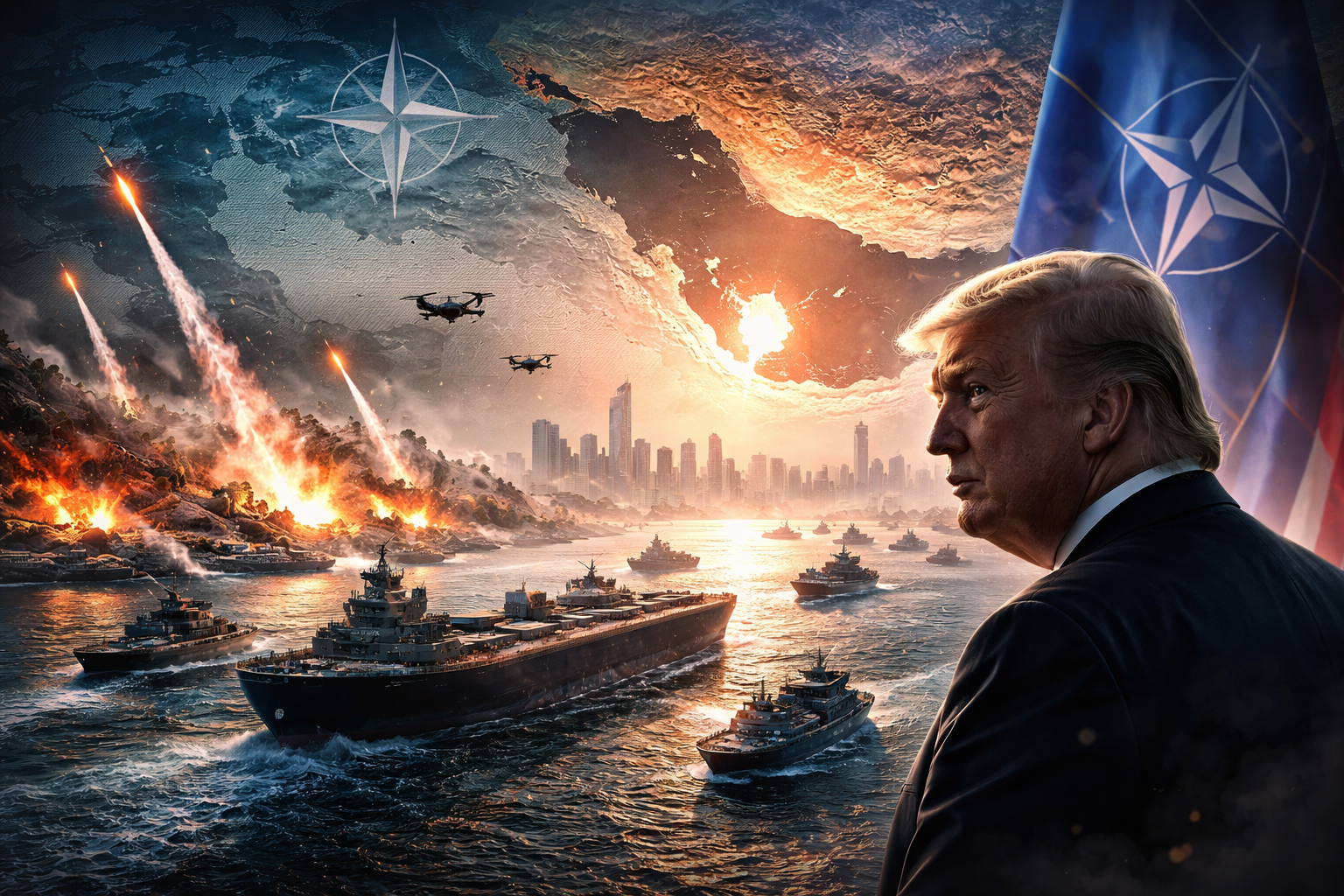
The resolution is closely linked to recent comments made by former U.S. President Donald Trump.
Trump claimed that NATO is ineffective without U.S. involvement and suggested that America should not defend countries that fail to meet military spending targets.
These remarks caused concern across Europe.
Many European leaders viewed Trump’s comments as a threat to NATO’s core principle of collective defense. The idea that U.S. support could be conditional has deeply shaken confidence in the alliance.
For France, this reinforced long-standing arguments that Europe must be capable of defending itself without relying entirely on Washington.
Europe Takes a More Assertive NATO Stance
France is not alone in reassessing NATO.
Across Europe, political leaders are openly discussing the future of the alliance. There is growing agreement that Europe must strengthen its own defense capacity and reduce strategic dependence on the United States.
This shift does not necessarily mean Europe wants to abandon NATO immediately.
Instead, it reflects a desire for greater autonomy, especially in decision-making, military planning, and defense production.
France has long supported the idea of a strong, independent European defense force. The current resolution pushes that vision back into mainstream political debate.
What This Means for NATO’s Future
NATO has been the backbone of Western military security for over 75 years.
A potential French exit—or even serious planning for one—would have major consequences.
France is one of NATO’s most powerful members, with nuclear weapons, advanced military capabilities, and global influence. Its withdrawal could weaken NATO’s unity and credibility.
It could also encourage other countries to question their role in the alliance.
At the same time, NATO officials argue that the alliance remains essential, especially amid rising tensions with Russia and instability in Eastern Europe.
The debate highlights a fundamental question: Can NATO survive without unquestioned U.S. leadership?
EU Considers Suspending US Trade Deal
Military tensions are not the only issue straining relations.
The European Union is also considering suspending or freezing parts of a major trade deal with the United States.
This move reflects frustration over U.S. economic policies, including protectionist measures, tariffs, and unilateral decisions that affect European industries.
European leaders argue that trade relationships must be balanced and fair.
The possibility of suspending a U.S. trade deal signals that the EU is willing to use economic pressure, not just diplomatic statements, to assert its interests.
If implemented, such a decision could significantly impact transatlantic trade and global markets.
Italy’s Meloni Hints at Closing US Bases
Italy has added another layer of complexity to the situation.
Prime Minister Giorgia Meloni recently hinted at the possibility of closing U.S. military bases in Italy.
Italy hosts several important American bases, which play a key role in NATO operations across Europe, the Mediterranean, and the Middle East.
Meloni’s remarks do not indicate an immediate shutdown. However, they reflect growing political pressure to reassess the long-term presence of U.S. forces on Italian soil.
The statement aligns with broader European concerns about sovereignty and strategic independence.
Why US Bases in Europe Are Under Scrutiny
U.S. military bases in Europe were originally established during the Cold War.
Their purpose was to deter Soviet expansion and protect Western Europe.
Today, the geopolitical environment has changed.
Many Europeans question whether a large U.S. military footprint is still necessary—or whether it limits Europe’s ability to act independently.
Rising nationalist politics, budget pressures, and changing security priorities have intensified these debates.
Closing or reducing U.S. bases would mark a historic shift in Europe-U.S. relations.
Growing Tensions in Transatlantic Relations
Taken together, these developments point to a clear trend.
Transatlantic relations are becoming more complex and less predictable.
Europe is no longer willing to automatically align with U.S. policies on defense, trade, or foreign affairs.
Instead, European leaders are demanding respect, partnership, and autonomy.
This does not mean Europe and the U.S. are becoming enemies. However, it does mean the relationship is evolving from dependence to negotiation.
Global Implications of Europe’s Shift
The impact of these changes will extend far beyond Europe.
A weaker or divided NATO could alter global security balances, particularly in Eastern Europe and the Middle East.
Russia and China are closely watching these developments.
A more independent Europe could pursue different diplomatic strategies, potentially reshaping global alliances.
For the United States, reduced influence in Europe would force a rethink of its global military and economic strategy.
What Happens Next?
At this stage, France’s NATO exit resolution remains symbolic.
Italy has not announced any formal plans to close U.S. bases.
The EU has not officially suspended a U.S. trade deal.
However, symbols matter in politics.
These statements and resolutions indicate a shift in mindset that could translate into real policy changes over time.
The coming months will be crucial.
Elections, NATO summits, and EU-U.S. negotiations will determine whether these signals become actions.
Conclusion
France’s resolution to plan an exit from NATO, the EU’s consideration of suspending U.S. trade agreements, and Meloni’s hints about closing American bases all point to one reality.
Europe is rethinking its relationship with the United States.
Driven by uncertainty over U.S. leadership, especially after Donald Trump’s comments on NATO, European nations are asserting their sovereignty more openly.
Whether this leads to reform, fragmentation, or renewal of transatlantic ties remains to be seen.
One thing is clear: the old assumptions about Europe-U.S. relations no longer apply.