
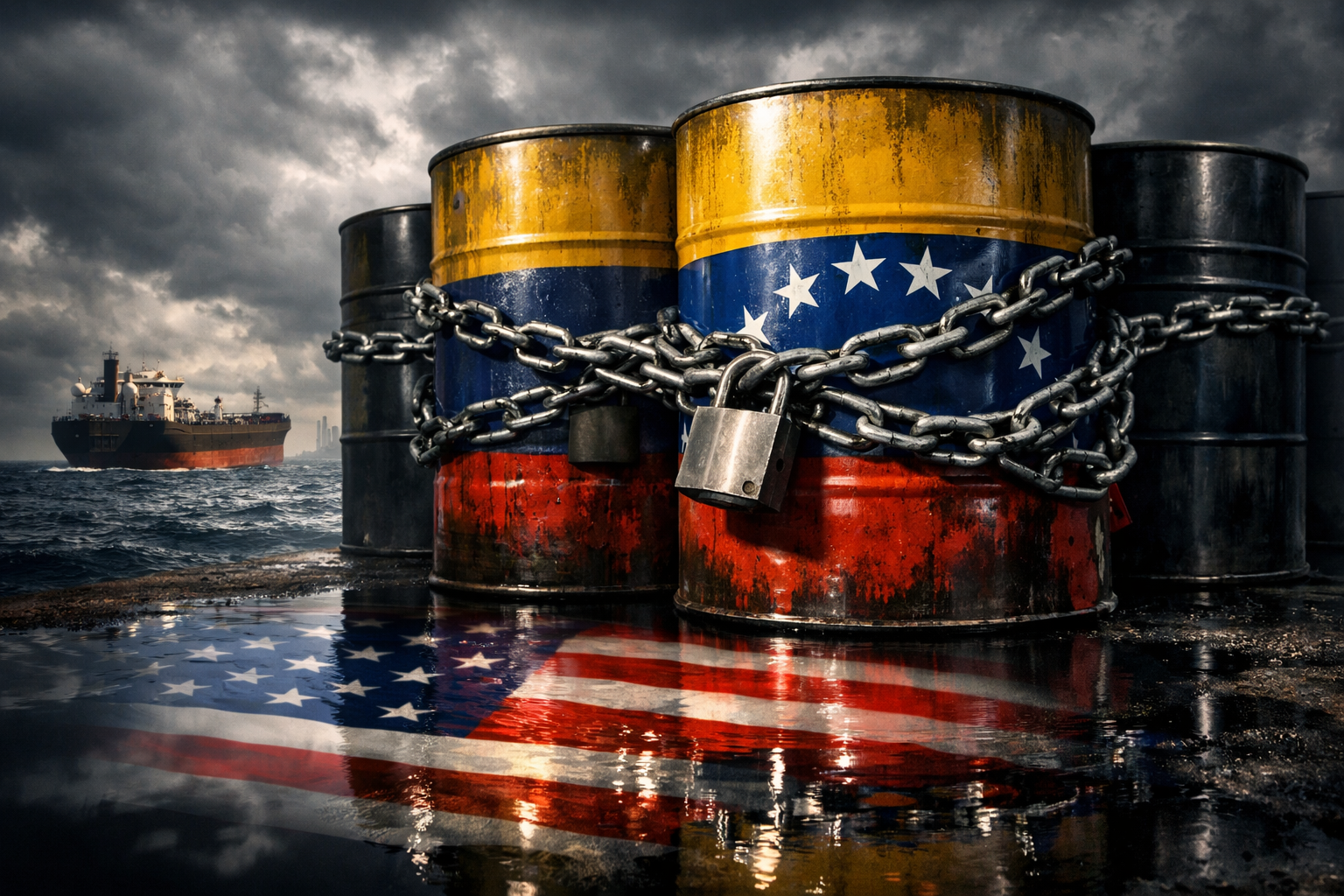
 The United States recently announced a major shift in its approach to Venezuelan oil. According to top U.S. officials, the country plans to control Venezuela’s oil exports indefinitely, meaning this could become a long-term policy, not a temporary measure.
This decision has major implications — not only for Venezuela’s economy but for global energy markets, geopolitics, and U.S.–Latin America relations.
Why Is the U.S. Controlling Venezuelan Oil?
The U.S. government — led by President Trump and Energy Secretary Chris Wright — has said it intends to control Venezuela’s oil sales going forward. This means the U.S. will manage how Venezuelan crude is sold on global markets and oversee the revenue from those sales.
According to officials, this strategy is part of a broader plan to stabilize Venezuela’s economy, improve its oil sector, and ensure that export revenues are used in ways that align with U.S. interests.
Indefinite Control — What Does That Really Mean?
When the U.S. says “indefinitely,” it means long-term oversight without a set end date.
Here’s how it works:
-
The U.S. will sell Venezuelan oil on global markets and fully manage those transactions.
-
Revenue from these sales will be placed in accounts controlled by the United States.
-
The administration has described the policy as a way to help both the U.S. and Venezuelan people, although the specifics of how the funds will be distributed remain unclear.
This represents a shift from short-term sanctions enforcement to a more enduring position of control over Venezuela’s most valuable resource.
30–50 Million Barrels to the U.S.: What Was Announced?
In early January 2026, President Trump said Venezuela would turn over 30 to 50 million barrels of heavy crude oil to the United States.
Here are the key points:
-
This oil is to be transported to U.S. ports for sale.
-
The proceeds are intended to be held in U.S.-controlled accounts.
-
Trump said this arrangement would benefit both countries.
This deal is seen as part of a larger strategy of ongoing control rather than a one-off transaction.
Sanctions and Oil Exports: What Changed?
Prior to this announcement, the U.S. had imposed strict sanctions on Venezuela’s oil sector for years. These sanctions blocked key financial channels, froze assets, and greatly reduced the country’s ability to export oil.
Now, the government is starting to lift select sanctions specifically for oil sales, allowing crude to move again — but under terms that give the U.S. significant oversight and influence.
This reflects a shift from blocking exports to managing them — though not on Venezuela’s own terms.
Critics Say the Benefits May Not Reach Venezuelans
Not everyone agrees that this arrangement is fair or beneficial for Venezuela.
Critics raise several concerns:
-
Venezuela may not truly benefit from its own oil if the revenue is controlled by the U.S. government.
-
Some analysts argue this arrangement could favor U.S. economic interests more than the Venezuelan public.
-
There is debate over whether money held in U.S. accounts will ever fully reach Venezuelan institutions or citizens.
Opponents also suggest that such control resembles economic domination rather than mutual cooperation, especially if Venezuela has limited agency over how its resources are used.
These criticisms highlight how complex and controversial this policy is — especially for Venezuelans who have endured economic hardship for years.
The Bigger Picture: U.S.–Venezuela Relations
This oil export policy comes amid already strained relations between the United States and Venezuela.
A few key dynamics include:
-
Venezuela has the largest proven oil reserves in the world, but its production capacity collapsed due to years of mismanagement and underinvestment.
-
The U.S. has previously used sanctions to pressure the Venezuelan government, though this approach led to a steep decline in exports.
-
With this new policy, the U.S. is stepping in as both a manager of sales and a potential investor in rebuilding oil infrastructure.
The relationship today reflects deep strategic competition, not cooperation.
What This Means for Global Oil Markets
Control of Venezuelan oil by the United States has implications beyond Caracas and Washington:
-
Venezuela’s oil is heavy crude — a type that many refineries around the world need for blending.
-
Reintroducing Venezuelan barrels into the market could affect oil prices, trading patterns, and global supply dynamics.
-
Other countries that used to buy Venezuelan oil — like China and India — may see shifts in how much oil they import and at what price.
Because Venezuela was such an important oil supplier before sanctions, the policy could have a wider impact on energy markets.
Conclusion
The U.S. plan to control Venezuela’s oil exports indefinitely represents a major change in foreign policy. It is designed to manage Venezuela’s most valuable asset — its oil — in a way that the U.S. government believes will foster stability and economic benefit.
However, the long-term success of this strategy is far from certain. Critics argue it may benefit U.S. interests more than Venezuelan citizens. As this situation evolves, its effects will be watched closely by global markets, policymakers, and citizens in both countries.