

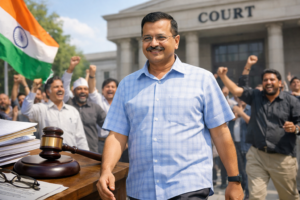

After months of allegations, investigations, and courtroom battles, a Delhi court has cleared Arvind Kejriwal and other leaders of the Aam Aadmi Party in the controversial liquor policy case.
The verdict has reshaped the political narrative in the national capital and could significantly impact future elections.
For many supporters, this decision feels like vindication. For critics, it raises questions about how such serious allegations unfolded without solid proof.
Let’s break down what happened, why it mattered, and what comes next.
Background: How the Delhi Liquor Policy Became a Political Storm
The Delhi excise or liquor policy was introduced as a reform.
The aim was simple:
-
Modernize liquor sales
-
Reduce black marketing
-
Increase revenue
-
Improve customer experience
The government believed privatization and new licensing rules would make the system more transparent.
But instead of smooth implementation, the policy triggered controversy.
Opposition parties claimed the new rules favored private players.
Soon, allegations of corruption started dominating headlines.
Charges That Shook Delhi Politics
Investigating agencies alleged that:
-
Licenses were manipulated
-
Certain businesses were given unfair benefits
-
Kickbacks were involved
-
Government revenue suffered losses
These claims turned into a major political weapon.
The controversy damaged the image of the ruling party just before elections.
As a result, public trust declined.
Impact on AAP’s Electoral Performance
The case came at the worst possible time for the party.
The Delhi electorate saw daily news about raids, questioning, and arrests.
Opposition leaders repeatedly used the “corruption” narrative in campaigns.
The consequences were clear:
-
Negative media coverage
-
Public doubt
-
Reduced voter confidence
-
Electoral setbacks for AAP
Many political analysts believe the allegations played a major role in the party’s recent defeats.
Even loyal voters felt confused.
The image of clean governance — once AAP’s strongest point — took a hit.
Court Verdict: No Evidence Found
Now comes the turning point.
A Delhi court reviewed the case and evidence.
After careful examination, the court ruled:
-
No solid proof of corruption
-
No financial wrongdoing established
-
No evidence of conspiracy
-
All 23 accused declared innocent
This included Kejriwal and Manish Sisodia.
The court clearly stated that allegations alone cannot justify prosecution without evidence.
This verdict effectively collapsed the entire case.
Why the Verdict Matters So Much
This is not just a legal victory.
It’s a political reset.
Here’s why it matters:
1. Reputation Restored
AAP built its brand on anti-corruption.
Being cleared helps restore that image.
2. Voter Confidence Returns
Supporters now feel the charges were politically motivated.
This may bring back lost voters.
3. Stronger Opposition Position
AAP can now attack rivals for spreading “false narratives.”
4. Legal Closure
Years of uncertainty finally ended.
Leaders can focus on governance again.
The “South Group” Conspiracy Theories
The case also included claims about a mysterious “South Group.”
Investigators suggested:
-
Businesspersons and politicians worked together
-
Deals were influenced
-
Money changed hands
However, these remained allegations.
During hearings, no direct evidence linked the accused to any such network.
Without documents, financial trails, or witnesses, the theory failed in court.
This weakened the prosecution’s argument further.
Political Drama Over the Years
The liquor policy issue wasn’t just legal.
It became pure political theatre.
Over the past few years:
-
Leaders were questioned for hours
-
Arrests made national headlines
-
Agencies conducted raids
-
Press conferences turned aggressive
Opposition parties repeatedly accused AAP of massive corruption.
AAP leaders claimed political revenge.
The issue divided public opinion sharply.
Now the court ruling has brought clarity.
Kejriwal’s Response After Clearance
After being cleared, Kejriwal emphasized:
-
Truth has prevailed
-
The party was targeted unfairly
-
Governance remains the priority
Supporters celebrated the verdict across Delhi.
Party workers called it justice delayed but delivered.
For many, this feels like a comeback moment.
How This Changes Delhi’s Political Landscape
The verdict could reshape the future in several ways.
Fresh Momentum for AAP
Without legal troubles, the party can focus on development.
Policy Focus Returns
Education, healthcare, and electricity reforms may regain attention.
Sympathy Factor
Voters may feel the party was unfairly attacked.
Stronger Campaign Narrative
AAP can now claim it was falsely accused.
This could give them an edge in upcoming elections.
What About the Liquor Policy Itself?
Even though leaders are cleared, the policy debate continues.
Some experts still question:
-
Was privatization the right approach?
-
Could transparency be improved?
-
Should future policies include stronger oversight?
Governments may now act more cautiously while reforming excise systems.
The controversy shows how sensitive such policies can be.
Lessons From the Case
The Delhi liquor policy episode offers key lessons.
For Politicians
Policy reforms must be transparent.
For Agencies
Evidence matters more than allegations.
For Voters
Media narratives can be misleading.
For Democracy
Courts remain the final safeguard.
The case highlights the importance of due process.
Public Reaction
Public opinion is mixed but largely positive for AAP supporters.
Many people feel:
-
The case was exaggerated
-
Political rivalry played a role
-
Leaders deserved justice
Social media shows increasing sympathy for Kejriwal.
Some voters now see him as a victim rather than an accused.
This perception shift can influence future elections.
Looking Ahead
The big question is: what next?
Here’s what we might see:
-
AAP focusing on governance
-
More aggressive election campaigns
-
Opposition searching for new issues
-
Stronger legal scrutiny of future policies
Delhi politics is entering a new phase.
The liquor policy saga may soon become history.
But its impact will be remembered for years.
Final Thoughts
The clearance of Arvind Kejriwal and other leaders marks a significant chapter in Delhi’s political story.
From allegations and arrests to courtroom battles and finally acquittal, the journey has been intense.
The court’s decision confirms one thing clearly:
Without proof, accusations cannot stand.
For AAP, this is a second chance.
For voters, it’s a moment to reassess narratives.
And for Indian politics, it’s a reminder that justice ultimately depends on evidence — not speculation.
The coming months will show whether this legal victory turns into political success.
But one thing is certain.
Delhi politics just got a lot more interesting.