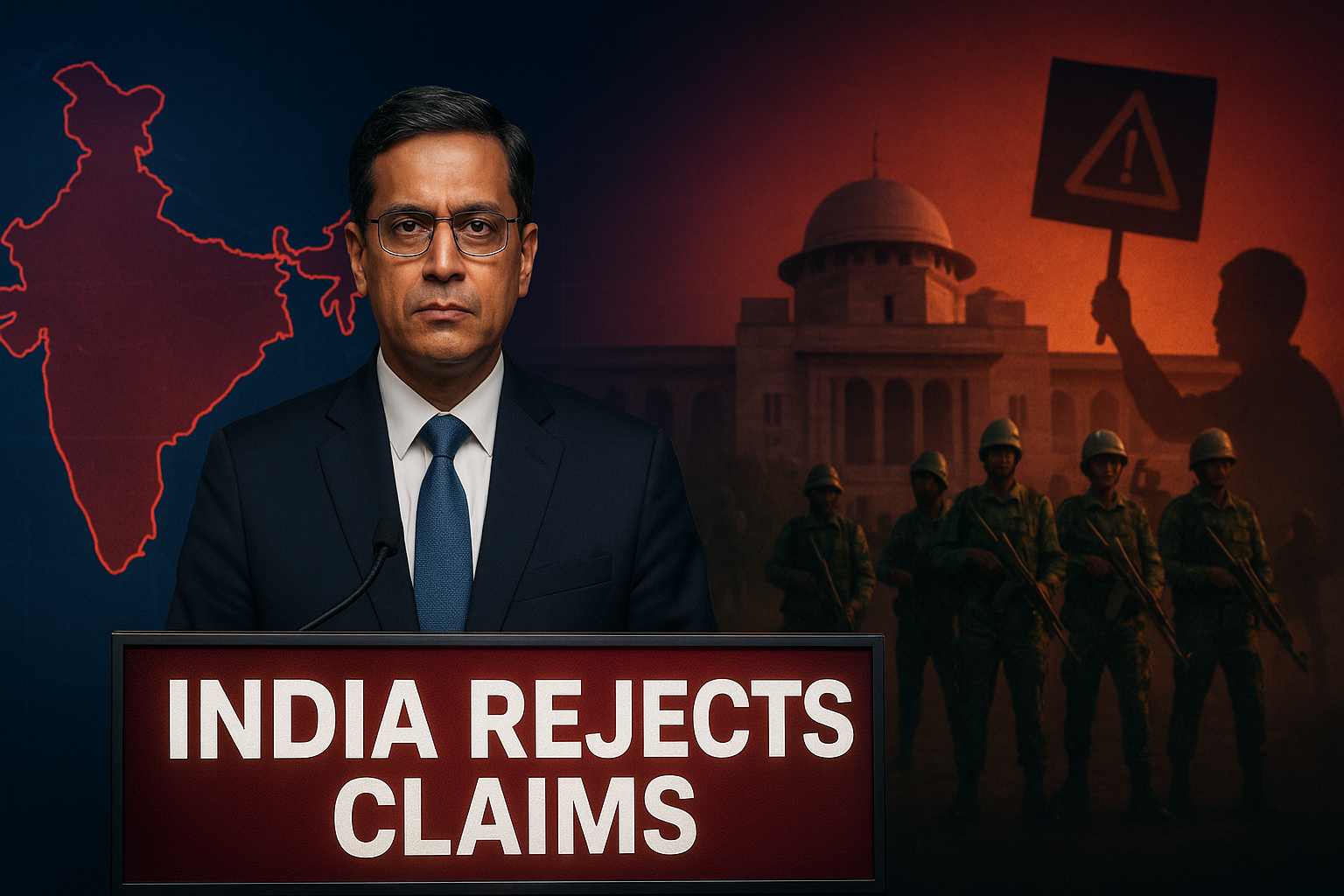
A recent deadly attack in Bangladesh has triggered fresh political tension in South Asia. The Bangladesh government has accused India of indirectly supporting anti-Bangladesh activities by allowing its territory to be used by hostile elements. India has strongly rejected these allegations, calling them baseless and politically motivated.
The controversy has emerged at a sensitive time, with Bangladesh’s 2026 national elections approaching. The situation has raised serious questions about regional stability, political narratives, and the future of India–Bangladesh relations.
This article explains the issue in simple terms, examines both sides of the argument, and looks at why these claims matter politically and diplomatically.
What Happened in the Bangladesh Attack?
Bangladesh recently witnessed a deadly attack that shook public confidence and raised concerns over internal security. While official investigations are still ongoing, the incident quickly became politicized.
Instead of focusing only on domestic security failures, sections of the Bangladeshi establishment shifted blame outward, pointing fingers at India. The claim suggests that anti-Bangladesh elements are operating from Indian soil.
Such allegations are serious, as they directly challenge India’s long-standing position as a partner in regional counterterrorism efforts.
Bangladesh Government’s Allegations Against India
The Bangladesh government has claimed that:
-
Indian territory is being used by anti-Bangladesh forces
-
India is not taking sufficient action against these alleged threats
-
This inaction could destabilize Bangladesh internally
These statements have sparked debate within Bangladesh and abroad. Critics argue that such claims require strong evidence, which has not been publicly presented so far.
Sheikh Hasina’s Statements and Political Messaging
Bangladesh Prime Minister Sheikh Hasina has made remarks implying that India has failed to act decisively against elements hostile to Bangladesh.
Her statements suggest that:
-
India is aware of certain threats
-
Yet it has not taken visible steps to neutralize them
-
This inaction could worsen Bangladesh’s internal security situation
However, analysts believe these comments may have political motivations, especially given the timing ahead of the 2026 elections.
India’s Strong Rejection of the Claims
India has categorically denied all accusations made by the Bangladesh government.
Indian officials have stated that:
-
India is not a safe haven for terrorists
-
The country follows strict counterterrorism policies
-
Allegations of Indian soil being used for attacks are false and misleading
India has also emphasized its consistent record of cooperation with Bangladesh on security matters.
India on Extradition Requests
Another key claim from the Bangladeshi side is that India has not acted on extradition requests.
India has responded by clarifying that:
-
Extradition follows legal and judicial processes
-
Requests are evaluated based on evidence and international law
-
India cannot act arbitrarily for political reasons
This response highlights the difference between legal procedure and political pressure.
Role of the Yunus Government Narrative
The controversy has intensified under what critics are calling the “Yunus government narrative”, which places responsibility for internal instability on external actors.
Observers note that blaming India:
-
Shifts focus away from domestic governance issues
-
Helps create a nationalist narrative
-
Can be used to consolidate political support
India views this narrative as unfair and damaging to bilateral trust.
Why the 2026 Bangladesh Elections Matter
The accusations come at a crucial time as Bangladesh prepares for its 2026 elections.
Political experts believe:
-
Security threats may be highlighted to justify stricter controls
-
External enemies are often invoked during election cycles
-
Tensions with India could be used to influence voter sentiment
Such strategies are not uncommon in regional politics, but they carry serious diplomatic risks.
Risk of Election Disruption
The video discussing this issue raises concerns that:
-
Ongoing tensions could disrupt the electoral process
-
Security fears may limit political activity
-
Opposition voices could be sidelined under the pretext of national security
If unresolved, these accusations could deepen instability during a critical democratic phase.
Impact on India–Bangladesh Relations
India and Bangladesh share:
-
A long land border
-
Deep cultural and historical ties
-
Strong trade and security cooperation
However, repeated allegations like these can:
-
Create mutual distrust
-
Slow down cooperation on border security
-
Affect economic and diplomatic engagement
India has stressed that such claims harm the spirit of partnership built over decades.
India’s Track Record with Bangladesh
India has consistently highlighted its positive role, including:
-
Cooperation against extremist groups
-
Support during Bangladesh’s economic and humanitarian challenges
-
Intelligence sharing on cross-border threats
Indian officials argue that blaming India contradicts the history of collaboration between the two nations.
Regional Security Concerns
South Asia already faces multiple challenges, including:
-
Terrorism
-
Political instability
-
Economic pressures
Rising tensions between India and Bangladesh could:
-
Encourage extremist narratives
-
Weaken regional counterterrorism efforts
-
Create opportunities for external powers to exploit divisions
Stability depends on cooperation, not confrontation.
Media and Public Perception
Media coverage in both countries has played a major role in shaping public opinion.
In Bangladesh:
-
Some outlets echo government claims
-
Others question the lack of evidence
In India:
-
The allegations are seen as politically motivated
-
Strong reactions defend India’s global image
This media divide further complicates diplomatic dialogue.
Diplomatic Way Forward
Experts suggest several steps to reduce tensions:
-
Quiet diplomatic engagement instead of public accusations
-
Joint investigation mechanisms
-
Intelligence-level dialogue
-
Avoiding election-driven rhetoric
Both nations stand to gain more from cooperation than conflict.
Conclusion
The Attack in Bangladesh and India’s rejection of the Yunus government’s claims highlight how security incidents can quickly turn into political flashpoints.
India has firmly denied all allegations, reiterating that it does not support terrorism and follows legal processes in extradition matters. Bangladesh’s accusations, especially ahead of the 2026 elections, raise concerns about political narratives overshadowing facts.
For the sake of regional stability and long-term relations, both countries must prioritize dialogue, evidence-based action, and mutual trust. Escalating blame games will only harm diplomatic ties and regional security.