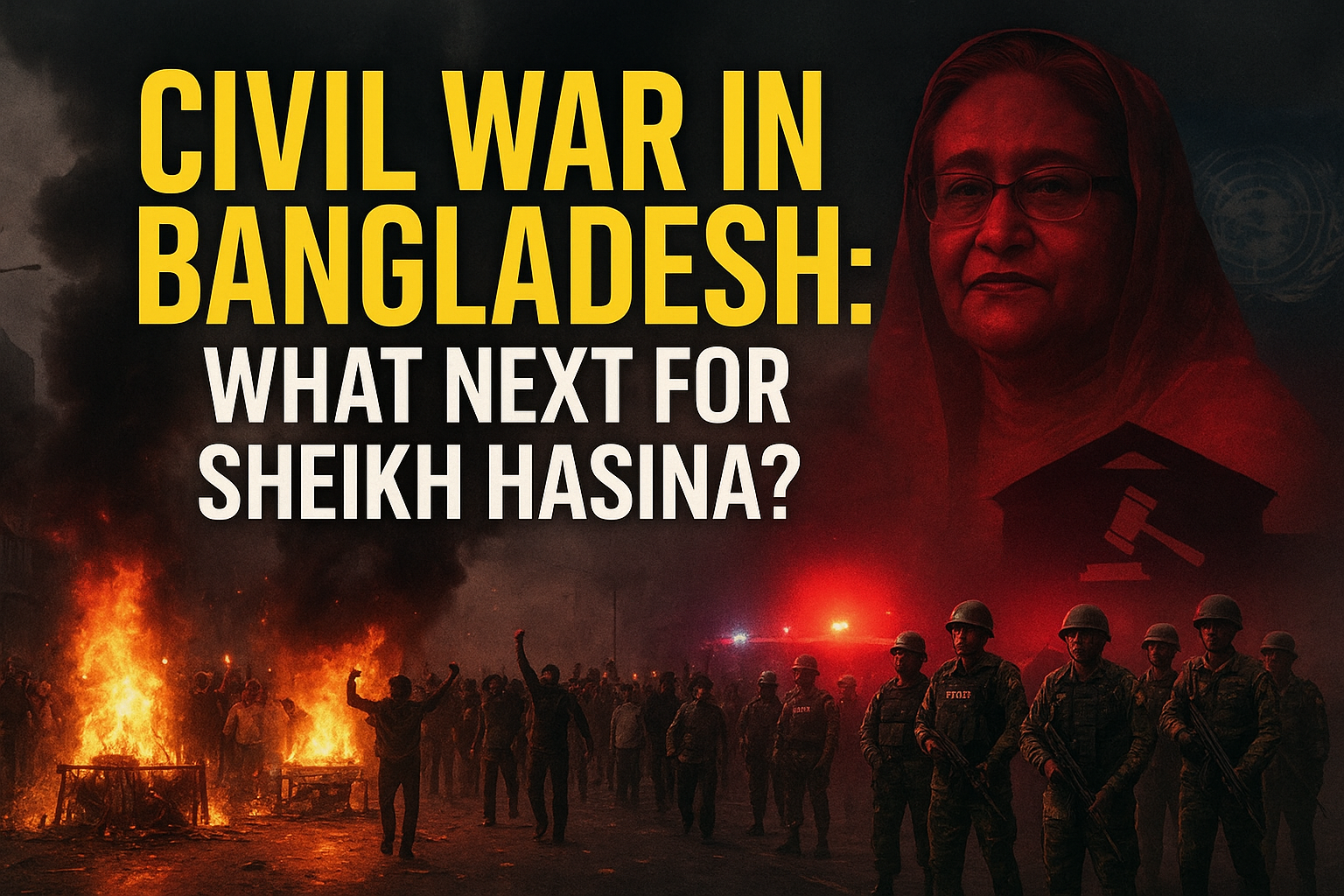
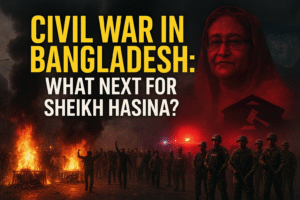
 Bangladesh is facing one of the most turbulent moments in its political history. The recent death sentence handed to former Prime Minister Sheikh Hasina by a special tribunal has triggered nationwide unrest, raising fears of a civil war–like situation. As protests spread and political tensions intensify, many are asking: What happens next for Sheikh Hasina? What does this mean for Bangladesh’s future?
1. The Shocking Verdict: Sheikh Hasina Sentenced to Death
The political landscape of Bangladesh changed dramatically when a tribunal sentenced Sheikh Hasina to death.
According to reports, the charges relate to alleged abuses of power and human rights violations committed during her tenure.
The decision has raised serious concerns about:
-
Judicial transparency
-
Fairness of the trial process
-
Political motivations behind the case
Many legal experts believe the verdict could become a turning point in Bangladesh’s political trajectory.
The most important question now is: What legal options does Sheikh Hasina have left?
2. Can Sheikh Hasina Appeal the Death Sentence?
Despite the severity of the sentence, Sheikh Hasina still has a few legal and political avenues available:
➤ Appeal to Higher Courts
She can challenge the verdict in the High Court and later in the Supreme Court.
If the ruling is overturned, it may reduce or nullify the sentence.
➤ International Pressure
Global organizations may push for a review, citing concerns about human rights and judicial fairness.
➤ Political Negotiation
In countries experiencing civil conflict, political deals are often made behind the scenes.
There is speculation that Hasina’s supporters could attempt to negotiate:
-
exile instead of execution
-
a transfer of power
-
intervention by foreign governments
At the moment, her fate remains uncertain and depends heavily on how the situation evolves on the ground.
3. Civil Unrest and Street Protests Spread Across Bangladesh
The verdict has triggered massive civil unrest, especially in Dhaka, Chittagong, Narayanganj, Sylhet, and Khulna.
Thousands of people—both supporters and opponents—have taken to the streets.
Why Are Protests Erupting?
-
Allegations of politically motivated judicial action
-
Long-standing anger against government policies
-
Fear that political chaos could dismantle state institutions
-
Sympathy among the elderly population who view her as the daughter of Sheikh Mujibur Rahman, the Father of the Nation
These protests have pushed the country into an extremely tense and unpredictable situation, with clashes breaking out between citizens, security forces, and rival political groups.
4. Security Forces on High Alert in Major Cities
Because of the rising violence, the government and security establishment have deployed:
-
Rapid Action Battalion (RAB)
-
Border Guard Bangladesh (BGB)
-
Additional police units
-
Military support in sensitive zones
Curfews and movement restrictions have been imposed in several areas to prevent further escalation.
Checkpoints, roadblocks, and internet shutdowns have also increased.
The situation now resembles what many observers describe as a civil war–like environment.
5. United Nations Reacts With Regret and Concern
The United Nations has expressed deep regret over the death sentence and the growing unrest.
UN officials highlighted several concerns:
⚠ Lack of Fair Trial Standards
Human rights bodies claim the tribunal did not meet international legal norms.
⚠ Concerns About Capital Punishment
The UN has consistently opposed the death penalty and urged Bangladesh to reconsider its use.
⚠ Risk of Widespread Violence
International organizations fear the verdict could spark long-term internal conflict and destabilize South Asia.
The UN has also urged Bangladesh to ensure dialogue, peace, and respect for democratic processes.
6. What Happens to the Awami League Now?
The Awami League, one of the most powerful political parties in Bangladesh for decades, is now at a crossroads.
Key Problems Facing the Party:
-
Loss of its central leader
-
Increasing pressure from opposition groups
-
Internal divisions growing rapidly
-
Future electoral strategy uncertain
Many analysts are asking whether the party can maintain its dominance without Sheikh Hasina at the helm.
Upcoming Elections Add More Pressure
Bangladesh is scheduled to hold national elections next year.
However, with:
-
the civil unrest
-
the leadership crisis
-
the legal case
-
and the violent environment
there is uncertainty about whether the Awami League will participate, or if elections will even be possible.
7. Could This Crisis Lead to a Political Realignment?
With Sheikh Hasina’s future in question, Bangladesh may be heading toward:
➤ A transitional government
to stabilize the country
➤ A power shift
to opposition parties or military-supported groups
➤ International mediation
to prevent nationwide collapse
➤ A new political movement
emerging from the youth and civil society
Bangladesh is already witnessing discussions among political experts about forming a neutral caretaker government, similar to what happened in earlier periods of instability.
8. What About Sheikh Hasina’s Properties and Assets?
The crisis also brings attention to the fate of Sheikh Hasina’s:
-
personal properties
-
family assets
-
political offices
-
official residences
If the political turmoil worsens, several scenarios may unfold:
Scenario 1: State Seizure
The government may seize her property if the verdict is upheld.
Scenario 2: Preservation Under Court Orders
Assets could be protected until appeals are settled.
Scenario 3: Future Government Reversal
If a new government takes power, earlier actions could be overturned.
Scenario 4: International Legal Cases
Family members living abroad may challenge property-related rulings through foreign courts.
The situation remains unpredictable, and much depends on how the civil conflict evolves.
9. Is Bangladesh Slipping Into a Civil War?
Political violence, mass protests, and military deployments have led many to fear a full-scale civil conflict.
Factors increasing this risk include:
-
Deep mistrust between political parties
-
Widespread public anger
-
Economic instability
-
Declining global confidence in Bangladesh’s governance
-
Excessive crackdowns on dissent
If dialogue does not begin soon, Bangladesh may face a prolonged period of chaos.
10. What Comes Next for Sheikh Hasina and Bangladesh?
The near future will be shaped by several critical factors:
1. Outcome of Appeals
The next legal steps will determine whether Hasina’s sentence stands, is reduced, or overturned.
2. Public Reaction
If unrest intensifies, the government may be forced to negotiate.
3. International Pressure
Global powers may intervene to prevent further destabilization.
4. Military’s Position
The armed forces could play a decisive role if the political situation collapses.
5. Election Plans
The 2026 elections remain uncertain and may reshape the entire political structure of the nation.
Final Thoughts
Bangladesh is at a historic turning point.
The death sentence of Sheikh Hasina, the rising civil war–like situation, and the future of the Awami League have become central issues that will define the nation’s future.
For now, the world watches closely as Bangladesh navigates one of the most dangerous chapters in its modern political history.
If the country fails to restore dialogue, fairness, and calm, the consequences could be devastating not just for Bangladesh, but for the entire South Asian region.