
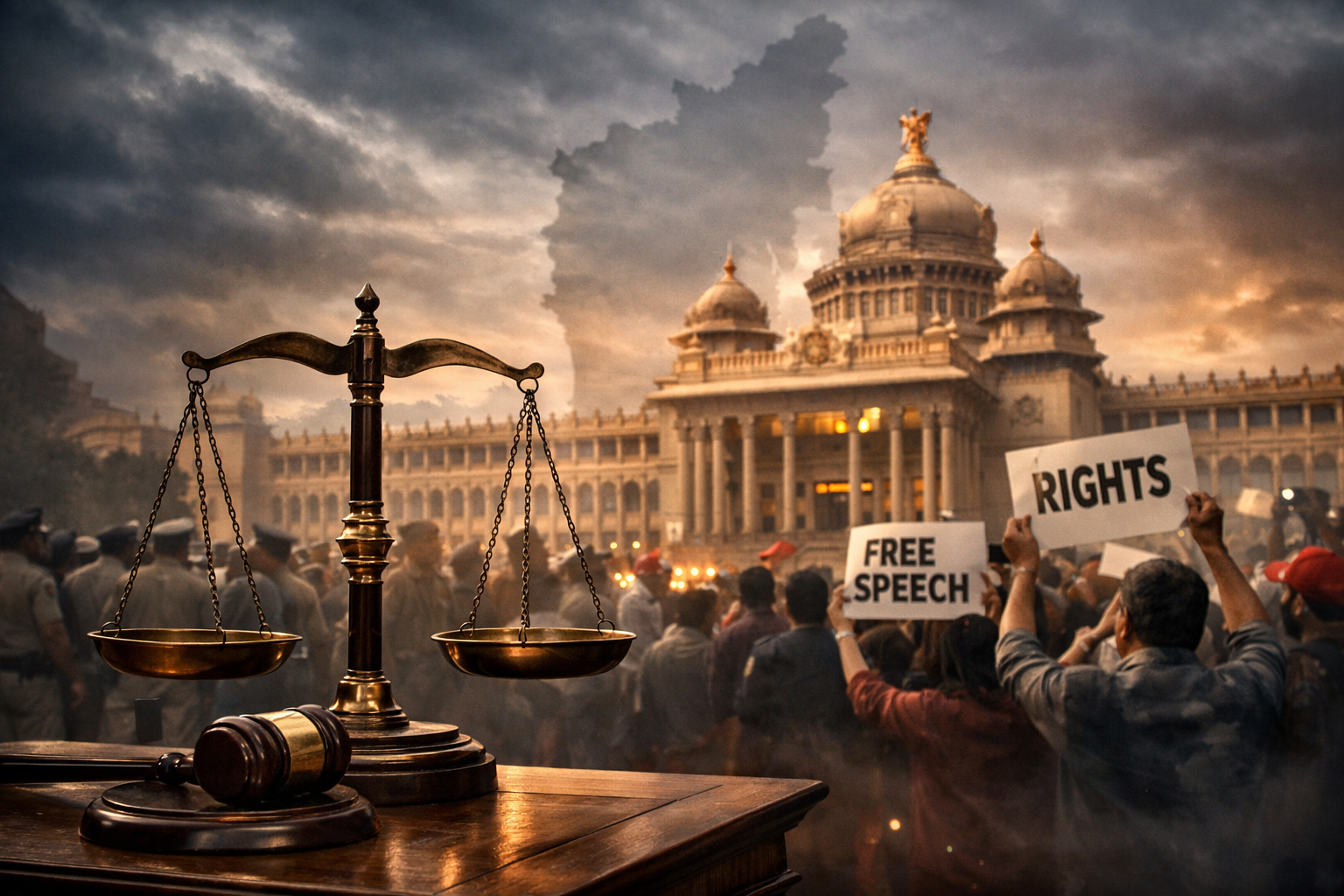
 The Karnataka government has introduced a Hate Speech Bill with the stated aim of controlling hate speech, preventing hate crimes, and promoting social harmony.
The government argues that rising online abuse, communal tension, and offensive speech targeting communities demanded stronger laws.
But as soon as the bill was announced, it triggered a massive political and social debate.
Supporters say the bill is necessary to maintain peace, while critics warn that it could seriously threaten freedom of speech and democratic rights.
So, what exactly does this bill say?
Why is it being criticized?
And does it really protect people or does it restrict individual freedom?
Let’s break it down in simple words.
What Is Karnataka’s Hate Speech Bill About?
The main objective of the Karnataka Hate Speech Bill is to reduce:
-
Hate speech
-
Discriminatory statements
-
Hostile behavior toward communities
-
Speech that could cause social conflict
The government believes that hate speech has increased, especially on social media, and needs to be regulated strongly.
They say unchecked hateful statements can lead to:
-
Communal violence
-
Social unrest
-
Threats to public safety
-
Division in society
So, according to the government, this bill is meant to build a safer and more respectful society.
Why Is the Bill Facing Opposition?
Even though the purpose sounds positive, the bill has faced huge opposition from:
-
Opposition political parties
-
Activists
-
Lawyers
-
Journalists
-
Civil rights groups
The biggest concern people have is freedom of speech.
Critics argue that the bill might be used to:
-
Silence criticism
-
Punish political opponents
-
Control media speech
-
Intimidate common citizens
They believe that any powerful law without clarity always has a risk of being misused.
Does the Bill Threaten Freedom of Speech?
India guarantees Freedom of Speech and Expression as a Fundamental Right under Article 19(1)(a) of the Constitution.
This right allows citizens to:
-
Question the government
-
Express opinions
-
Debate policies
-
Criticize leaders
However, rights come with reasonable restrictions.
The concern here is whether the Karnataka Hate Speech Bill crosses that limit.
Opponents say that if the law is too broad, then anything unpleasant or critical could be branded as “hate speech”.
This creates fear among:
-
Journalists
-
Creators
-
Political speakers
-
Social media users
In short, critics say the bill might not only stop hate but also stop honest opinions.
The Biggest Problem: Vague Definition of Hate Speech
One of the strongest criticisms against the Karnataka Hate Speech Bill is the vague definition of hate speech.
The bill does not clearly define:
-
What exactly counts as hate speech
-
What is allowed criticism
-
What is political speech
-
What is satire or humor
-
What is emotional expression
The wording of the law is very general and open-ended.
Because of that, authorities can interpret it in many different ways.
For example:
-
If someone criticizes a policy, can it be called hate speech?
-
If a journalist exposes wrongdoing, can it be seen as offensive?
-
If a comedian makes a joke, can it be punished?
This lack of clarity is the main reason people fear misuse and unfair punishment.
Can Authorities Misuse the Law?
This is one of the biggest questions people are asking.
When a law is vague and powerful, it automatically raises fear that:
-
Authorities may use it for political advantage
-
Police may unfairly target certain individuals
-
Governments could silence opposition voices
Civil rights activists say that such laws have historically been used to:
-
Arrest activists
-
Intimidate protesters
-
Control public opinion
So many people feel that instead of protecting citizens, the law might become a tool to control citizens.
What Does the Bill Aim to Stop?
According to the government, the bill aims to target:
-
Speech promoting hatred
-
Speech creating hostility between communities
-
Speech encouraging discrimination
-
Speech that can disturb public peace
On paper, this sounds right.
No society wants hatred, violence, or dangerous speech.
The bill claims to stand against:
-
Religious discrimination
-
Caste-based insults
-
Gender-based hate
-
Race and ethnicity hostility
-
Language or regional hate
So the intention seems positive, but the execution and language of the bill remain questionable.
Why Are People Worried About Enforcement?
Another major concern about the Karnataka Hate Speech Bill is how it will be implemented.
Even if the idea sounds noble, enforcement depends on:
-
Police interpretation
-
Government decision
-
Officer judgment
If officers interpret the bill too strictly, many innocent people can be punished.
If authorities interpret it politically, only selective people may be targeted.
So critics say that laws should be:
-
Clear
-
Transparent
-
Strict but fair
But this bill’s general language makes people feel unsafe and unsure.
Supporters vs Critics – Two Sides of the Debate
✔️ Supporters Say:
-
Hate speech has increased
-
Strong laws are needed
-
Society must be protected from toxic speech
-
Minorities and vulnerable groups deserve safety
-
Responsible speech is important in democracy
❌ Critics Say:
-
The bill threatens free speech
-
The definition of hate speech is vague
-
Law can be easily misused
-
It may silence criticism and dissent
-
Implementation may become unfair
Both sides agree on one thing:
Hate should not be encouraged.
But they disagree on how to control it.
Does the Bill Protect Society or Silence It?
This is the core question.
The intention of the Karnataka Hate Speech Bill might be to:
-
Promote peace
-
Reduce social tension
-
Encourage respectful communication
But many people feel that without a clear definition and strong safeguards, it may:
-
Limit open discussions
-
Create fear among citizens
-
Reduce democratic freedom
So the debate is not just about law.
It is also about democracy, rights, fairness, and trust in government.
Final Thoughts
The Karnataka Hate Speech Bill is one of the most debated political and social issues today.
It highlights an important challenge every modern society faces:
👉 How do we stop hate speech
without killing free speech?
There is no doubt that hate speech is dangerous.
It divides communities, spreads anger, and can even lead to violence.
But at the same time, freedom of speech is the foundation of democracy.
People must be able to question power, criticize policies, and express opinions without fear.
For this bill to truly work:
-
The definition of hate speech must be crystal clear
-
Safeguards against misuse must be strong
-
Implementation must be fair and unbiased
-
Freedom of speech must remain protected
Only then can the law genuinely protect society instead of controlling it.
❓ What is the Karnataka Hate Speech Bill?
The Karnataka Hate Speech Bill is a law introduced to control hate speech, discrimination, and hostility in society. It claims to protect communities and prevent hate crimes.
❓ Why is the Karnataka Hate Speech Bill controversial?
It is controversial because critics say the bill has a vague definition of hate speech and can be misused to restrict freedom of speech and silence criticism.
❓ Does the bill affect freedom of speech?
Many experts believe the bill may affect free speech because the broad wording allows authorities to interpret it in multiple ways, which can lead to unfair punishment.
❓ What does the bill aim to stop?
The bill aims to stop hateful speech, discrimination, and statements that may cause social division, hostility, or violence.
❓ Why are people worried about misuse?
Since the law is not clearly defined, people fear it may be used against journalists, activists, political opponents, and ordinary citizens who express opinions.