

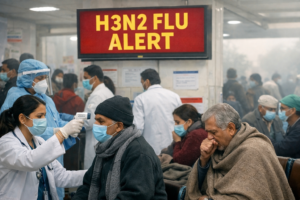

Hospitals and clinics are reporting a steady increase in patients with fever, cough, and severe body aches.
Doctors say this time it is not just a seasonal cold.
The main culprit is H3N2 influenza, a stronger and longer-lasting flu strain.
Recent spikes in H3N2 cases have been observed not only in Delhi-NCR but across northern parts of India.
This sudden rise has created concern among families, schools, and workplaces.
Many people still mistake H3N2 for a common cold.
That confusion often delays treatment and worsens symptoms.
This article explains everything in simple terms — symptoms, differences, risks, treatment, and precautions.
Let’s understand why this flu season is different.
What is H3N2 Flu?
H3N2 is a subtype of Influenza A virus.
It spreads through:
-
Cough droplets
-
Sneezing
-
Close contact
-
Contaminated surfaces
It infects the nose, throat, and lungs.
Unlike a mild cold, this strain causes stronger and longer symptoms.
Doctors say it can leave patients weak for several days or even weeks.
Why are Cases Rising in Delhi-NCR?
Several reasons are behind the spike:
1. Seasonal Weather Changes
Temperature fluctuations weaken immunity.
Cold mornings and warm afternoons help viruses spread faster.
2. Air Pollution
Poor air quality irritates the lungs.
This makes respiratory infections worse.
3. Crowded Public Spaces
Metro stations, schools, offices, and markets increase transmission risk.
4. Low Awareness
Many people ignore early symptoms thinking it is just a cold.
This leads to late diagnosis and faster spread.
Common Symptoms of H3N2
Experts say symptoms are stronger than a normal cold.
Here are the most reported signs:
-
High fever (101–103°F)
-
Continuous cough
-
Severe sore throat
-
Body pain
-
Headache
-
Extreme fatigue
-
Chills
-
Nasal congestion
-
Loss of appetite
Some patients report fever lasting up to 7–10 days.
This is unusual for a simple cold.
That’s why doctors are calling this wave more serious.
Why People Confuse It With a Common Cold
Both illnesses start similarly:
-
Runny nose
-
Sneezing
-
Mild throat irritation
So many people assume it’s harmless.
They take home remedies or ignore it.
But within 1–2 days, symptoms worsen.
By then, the virus has already spread to others.
This mistake delays recovery.
H3N2 vs Common Cold: Key Differences
Let’s compare clearly.
Fever
-
Cold: Rare or mild
-
H3N2: High fever for days
Body Pain
-
Cold: Mild discomfort
-
H3N2: Severe muscle and joint pain
Fatigue
-
Cold: Slight tiredness
-
H3N2: Extreme weakness
Duration
-
Cold: 3–4 days
-
H3N2: 7–10 days or more
Complications
-
Cold: Usually harmless
-
H3N2: Can cause pneumonia or breathing issues
This comparison shows why H3N2 should not be taken lightly.
Who is at Higher Risk?
Some groups need extra care.
Elderly People
Weaker immunity increases complications.
Children
Schools spread infections quickly.
Pregnant Women
Higher risk of severe illness.
People with Existing Diseases
-
Asthma
-
Diabetes
-
Heart problems
For them, flu can turn dangerous.
Can H3N2 Become Serious?
Yes, in some cases.
Doctors report:
-
Bronchitis
-
Pneumonia
-
Breathing difficulty
-
Hospitalization
If untreated, it may lead to lung infections.
This is why early medical help is important.
Especially if fever lasts more than 3 days.
When Should You See a Doctor?
Do not ignore these warning signs:
-
Fever above 102°F
-
Breathing problems
-
Chest pain
-
Persistent cough
-
Fever lasting more than 5 days
-
Severe weakness
Immediate consultation can prevent complications.
Self-medication is risky.
How is H3N2 Treated?
There is no instant cure, but treatment helps recovery.
Doctors may suggest:
-
Antiviral medicines
-
Paracetamol for fever
-
Cough syrups
-
Rest
-
Fluids
Antibiotics are only needed if bacterial infection develops.
Never take antibiotics without prescription.
Home Care Tips for Faster Recovery
Simple steps can help:
Drink More Fluids
Water, soups, coconut water keep you hydrated.
Take Proper Rest
Sleep helps immunity fight the virus.
Eat Light Food
Khichdi, fruits, vegetables are easy to digest.
Steam Inhalation
Clears congestion.
Avoid Cold Drinks
Prevents throat irritation.
Recovery usually takes 7–10 days.
Prevention is Better Than Cure
Stopping infection is easier than treating it.
Follow these habits daily:
Wear Mask in Crowded Places
Reduces exposure.
Wash Hands Frequently
Use soap or sanitizer.
Avoid Close Contact with Sick People
Maintain distance.
Cover Mouth While Coughing
Use tissue or elbow.
Improve Immunity
-
Exercise
-
Balanced diet
-
Adequate sleep
Flu Vaccination
Doctors recommend annual flu shots for high-risk groups.
These small steps can protect your family.
Schools and Offices: What Should Be Done?
Institutions must stay alert.
Schools
-
Encourage sick children to stay home
-
Regular sanitization
-
Proper ventilation
Offices
-
Work from home if unwell
-
Clean common surfaces
-
Avoid crowded meetings
This helps control spread.
Myths About H3N2
Let’s clear some confusion.
Myth: It’s just a cold
Reality: It’s stronger and lasts longer
Myth: Antibiotics cure flu
Reality: Flu is viral, antibiotics don’t work
Myth: Only kids get sick
Reality: Anyone can get infected
Myth: Masks are useless
Reality: Masks reduce transmission significantly
Correct information saves lives.
Why Awareness Matters Now
Experts say many patients delay treatment.
They think:
“It’s just weather change.”
But ignoring symptoms spreads infection to family and coworkers.
Awareness helps:
-
Early diagnosis
-
Quick recovery
-
Fewer complications
-
Reduced community spread
Education is the best protection.
Final Thoughts
The current H3N2 wave in Delhi-NCR is not a minor seasonal illness.
It is stronger, longer, and more exhausting than the common cold.
High fever, body pain, and extreme fatigue are clear warning signs.
Do not ignore symptoms.
Take rest, consult a doctor, and follow precautions.
A little care today can prevent serious problems tomorrow.
Stay alert. Stay safe. Protect your loved ones.