 India is once again ready to surprise the world. This time, it is not just about launching another satellite. India is preparing to change one of the oldest rules of space technology.
For decades, satellites have followed a simple life cycle.
Fuel khatam → Mission over → Satellite becomes space debris.
But India is about to break this rule.
On January 12, 2026, India will test a revolutionary idea — a “Petrol Pump in Space” mission. If successful, this mission can change the future of space operations forever.
Let’s understand what this mission is, why it matters, and why the whole world is watching India closely.
The Biggest Problem in Space Today: Fuel
Satellites don’t die because their technology stops working.
They die because fuel runs out.
Once fuel is exhausted:
-
Satellites lose maneuvering ability
-
They cannot maintain orbit
-
They become dangerous space debris
This debris:
-
Threatens active satellites
-
Increases collision risk
-
Creates long-term space pollution
Till now, no country has successfully solved this fuel problem.
India’s Bold Move: Space Mein Petrol Pump
India is now testing something extraordinary.
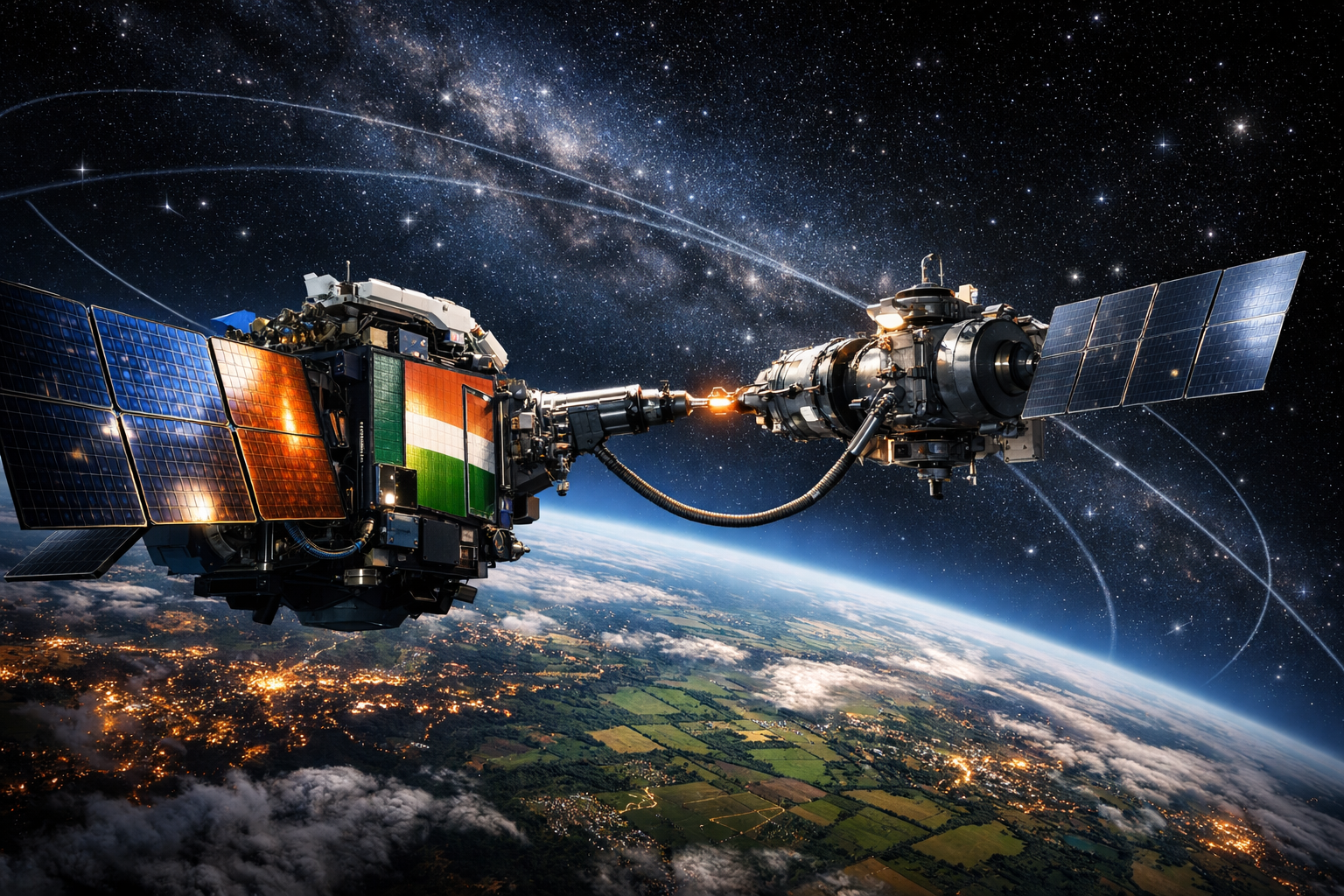
Instead of letting satellites die, India wants to refuel them in space.
Yes, just like a petrol pump on Earth — but in orbit.
This mission will:
-
Refill satellite fuel
-
Extend satellite life
-
Reduce space debris
-
Save billions of dollars
This is why experts are calling it a game-changer mission.
January 12, 2026: A Historic Date
On January 12, 2026, India is not only launching satellites.
India is also:
-
Testing in-orbit refueling technology
-
Demonstrating next-generation space servicing
-
Challenging decades-old space limitations
This single mission could redefine how space missions are planned globally.
World Is Watching Closely
This mission is not happening quietly.
Global powers are watching every move:
-
United States
-
China
-
Europe
Why?
Because whoever masters in-space refueling:
-
Controls long-term space infrastructure
-
Gains economic advantage
-
Leads the next space economy era
If India succeeds, it will become a leader in space servicing technology.
The Main Payload: EOS N1 – Anvesha
The key satellite for this mission is EOS N1, also called Anvesha.
Anvesha is an Earth Observation Satellite developed by DRDO.
This satellite is not ordinary.
It is packed with advanced technologies that serve both civilian and strategic purposes.
What Makes Anvesha Special?
Anvesha uses Hyperspectral Imaging Technology.
Unlike normal satellites:
-
It captures data in hundreds of spectral bands
-
It can analyze objects beyond visible light
This allows extremely precise observation of Earth.
How Anvesha Helps Indian Farmers
Agriculture is one of the biggest beneficiaries of this mission.
Anvesha can:
-
Detect crop health early
-
Identify soil quality
-
Monitor water availability
-
Predict crop stress and disease
This means:
-
Better yield
-
Reduced losses
-
Data-driven farming decisions
For Indian farmers, this is a silent revolution from space.
Tracking Water and Soil Resources
Water scarcity is a growing concern in India.
Anvesha helps by:
-
Monitoring groundwater levels
-
Tracking drought-prone regions
-
Analyzing soil moisture
Governments can use this data for:
-
Better irrigation planning
-
Disaster preparedness
-
Sustainable resource management
Monitoring Urban Expansion
India’s cities are growing fast.
Anvesha helps track:
-
Urban sprawl
-
Infrastructure development
-
Environmental impact
This data supports:
-
Smart city planning
-
Pollution control
-
Sustainable urban growth
Strategic and Security Applications
Apart from civilian uses, Anvesha also has strategic importance.
It can:
-
Monitor sensitive border regions
-
Track unusual movements
-
Support national security planning
This dual-use capability makes it extremely valuable.
Why Space Refueling Changes Everything
If India’s space petrol pump works, satellites will no longer have a fixed lifespan.
Benefits include:
-
Satellites can operate for decades
-
Massive cost savings
-
Fewer satellite launches
-
Reduced space debris
This could turn space into a service-based economy.
A New Global Space Economy
In the future:
-
Satellites will be serviced, not replaced
-
Refueling missions will become common
-
Space logistics companies will emerge
India could:
-
Offer satellite servicing to other countries
-
Become a hub for space maintenance
-
Generate huge revenue
This mission opens doors to multi-billion-dollar opportunities.
India’s Growing Space Confidence
This mission shows India’s maturity in space technology.
From:
-
Budget-friendly launches
-
Mars and Moon missions
To now:
-
Advanced in-orbit servicing
India is moving from space exploration to space leadership.
Risks and Challenges
Of course, the mission is complex.
Challenges include:
-
Precision docking in space
-
Safe fuel transfer
-
Zero-error execution
But even testing this technology puts India among elite space nations.
What Happens If Mission Succeeds?
If successful:
-
India breaks a decades-old space rule
-
Global satellite design philosophy changes
-
India gains strategic dominance
It will mark the beginning of a new chapter in human space activity.
Final Thoughts
India’s Space Mein ‘Petrol Pump’ Mission is not just about technology.
It is about:
-
Vision
-
Innovation
-
Long-term thinking
On January 12, 2026, India may prove that space missions don’t have to end when fuel runs out.
Instead, they can be reborn.
The world is watching.
And India is ready to lead.