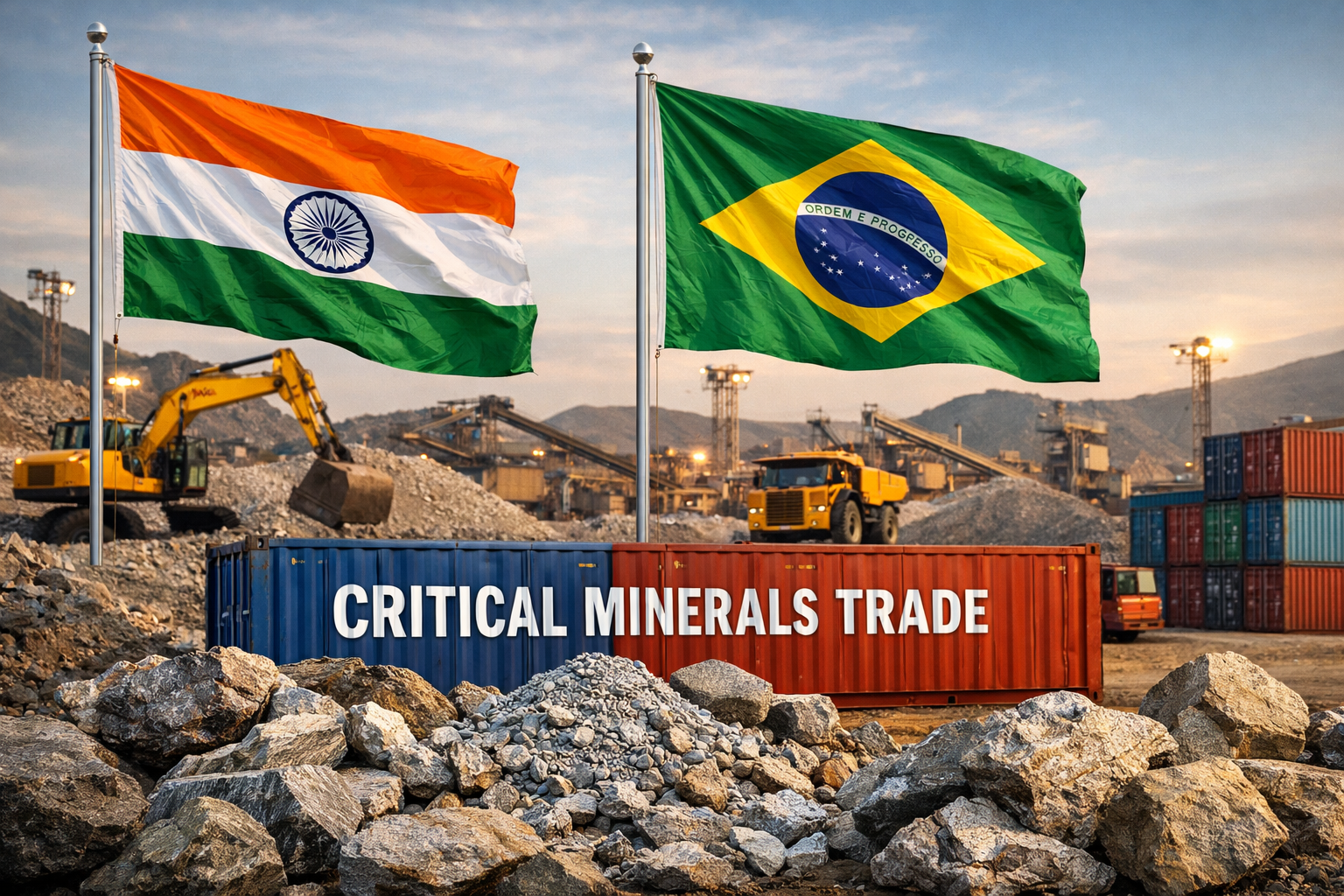
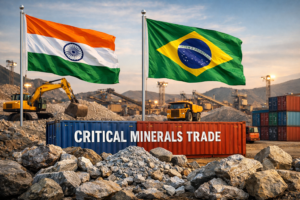
 India has taken a major step toward securing its future supply of critical minerals.
During a high-level diplomatic visit, Luiz Inácio Lula da Silva, President of Brazil, traveled to India and signed an important agreement focused on rare earth and critical minerals.
This deal could reshape India’s industrial and technology future.
It is not just another trade pact.
It is a strategic move to strengthen supply chains, reduce import risks, and build long-term cooperation.
Let’s understand why this agreement matters so much.
Why Critical Minerals Matter Today
Critical minerals are the backbone of modern technology.
They are used in:
-
Electric vehicles
-
Smartphones
-
Solar panels
-
Wind turbines
-
Semiconductors
-
Defense equipment
-
AI hardware
Without these minerals, industries slow down.
Countries that control these resources often control global supply chains.
That is why governments are now racing to secure mineral partnerships.
India is doing the same.
What Was Signed Between India and Brazil?
During the visit, both nations agreed to cooperate in:
-
Rare earth exploration
-
Mining
-
Processing
-
Technology sharing
-
Supply chain development
-
Long-term trade
The two sides also set an ambitious trade target.
They aim to increase bilateral trade to $10 billion in the next five years.
This shows that the agreement goes beyond mining.
It covers economic and strategic growth.
Rare Earth Minerals: Not Rare But Hard to Extract
Many people think rare earth minerals are scarce.
That is not true.
They are actually found in many places.
The problem is extraction.
Processing these minerals is:
-
Technically difficult
-
Expensive
-
Environmentally sensitive
-
Time-consuming
Only a few countries have strong refining capabilities.
That makes them powerful players.
For India, building partnerships is faster and smarter than starting alone.
This deal helps solve that challenge.
Reducing Dependence on China
For years, China has dominated the global rare earth market.
It controls:
-
Mining
-
Processing
-
Exports
-
Pricing
Many countries depend heavily on Chinese supplies.
This creates risks.
If exports are restricted, industries suffer immediately.
India has already faced such concerns in the past.
That is why diversification is critical.
By working with Brazil, India reduces over-reliance on one source.
This improves economic security.
It also strengthens negotiation power globally.
Why Brazil Is a Strong Partner
Brazil is rich in natural resources.
The country has large reserves of:
-
Iron ore
-
Lithium
-
Nickel
-
Rare earth elements
-
Bauxite
Its mining industry is well established.
It has both resources and expertise.
This makes Brazil a natural partner for India.
The two nations also share:
-
Strong diplomatic relations
-
Growing trade ties
-
Similar development goals
-
Membership in global forums
The trust level is high.
That makes cooperation smoother.
How India Benefits From This Deal
This agreement brings multiple advantages.
1. Supply Security
India gets stable access to critical minerals.
This protects industries from sudden shortages.
2. Lower Costs
Diversified sourcing can reduce price shocks.
Companies can plan better.
3. Boost to Manufacturing
More raw materials mean stronger domestic production.
This supports:
-
Electronics
-
EV manufacturing
-
Renewable energy
-
Defense equipment
4. Technology Transfer
The deal includes knowledge sharing.
Brazil’s mining expertise can help India develop faster.
5. Economic Growth
Trade expansion toward $10 billion creates jobs and investments.
A Strategic Partnership, Not Just Trade
This agreement is different from regular trade deals.
It focuses on long-term strategy.
Both countries plan to collaborate in:
-
Research
-
Mineral processing technology
-
Clean mining methods
-
Industrial development
-
Infrastructure
This creates deeper ties.
It turns two trading partners into strategic allies.
In today’s uncertain world, such partnerships matter more than ever.
Impact on India’s EV and Green Energy Plans
India is pushing hard toward green energy.
The government wants:
-
More electric vehicles
-
More solar power
-
More wind farms
-
Less fossil fuel dependence
But all these need rare earth minerals.
For example:
-
Lithium for batteries
-
Neodymium for motors
-
Cobalt for storage systems
Without steady supply, these projects slow down.
The Brazil deal supports India’s green goals directly.
It ensures raw materials are available when needed.
That keeps clean energy plans on track.
Support for Make in India
The partnership also strengthens India’s manufacturing mission.
With better mineral access:
-
Battery plants can expand
-
Chip factories can grow
-
Electronics production rises
-
Defense manufacturing improves
This supports the “Make in India” vision.
Instead of importing finished goods, India can produce locally.
That means more jobs and higher exports.
Global Message From the Deal
This agreement sends a strong message worldwide.
India is serious about:
-
Securing resources
-
Building partnerships
-
Reducing risks
-
Strengthening supply chains
It shows India is thinking long term.
Not just reacting.
Other countries may now look to form similar partnerships with India.
That increases India’s global influence.
Challenges Ahead
Of course, no deal is perfect.
There are still challenges.
Mining projects take time.
Environmental clearances can slow progress.
Transport logistics must be improved.
Processing facilities need investment.
But with cooperation, these issues can be managed.
The key point is that the foundation has been laid.
Future Outlook
Experts believe this partnership could grow further.
In the coming years, we may see:
-
Joint mining ventures
-
Indian investments in Brazilian mines
-
Technology exchange programs
-
New trade agreements
-
Increased business cooperation
If executed well, this deal could become a model for other countries.
It might even inspire similar mineral alliances across the world.
Final Thoughts
India signing a critical minerals deal with Brazil is a smart and timely move.
It protects supply chains.
It reduces dependence on one country.
It boosts manufacturing.
It supports clean energy.
And it strengthens trade ties.
Rare earth minerals may not sound exciting.
But they power the modern world.
By securing them today, India is preparing for tomorrow.
This agreement could quietly become one of the most important economic decisions of the decade.
For India’s technology, energy, and industrial growth, this is a big win.