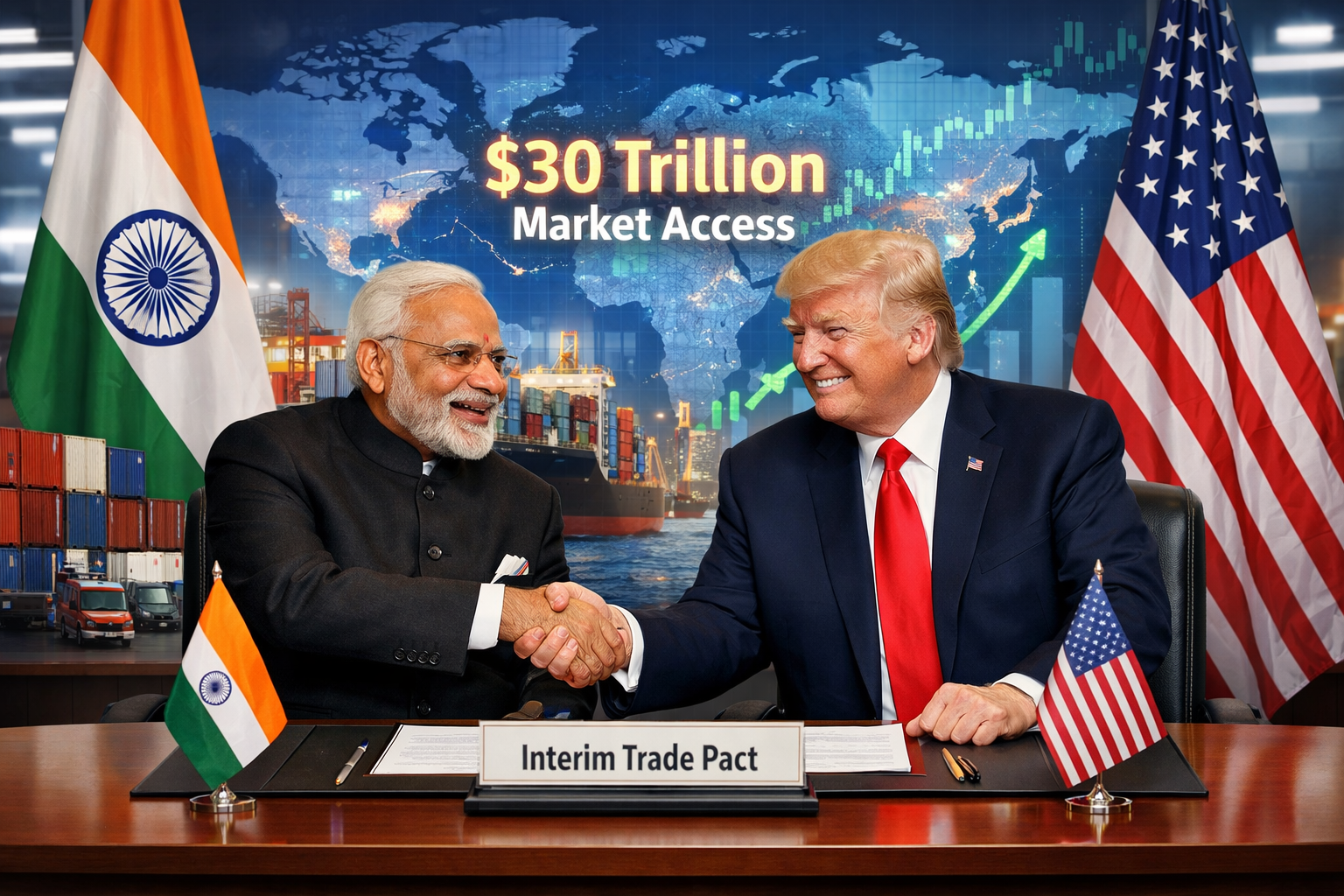
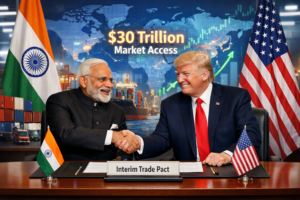
 India and the United States have announced a major interim trade pact that could reshape global commerce.
The agreement gives India access to a massive $30 trillion US market while opening new opportunities for American businesses in India.
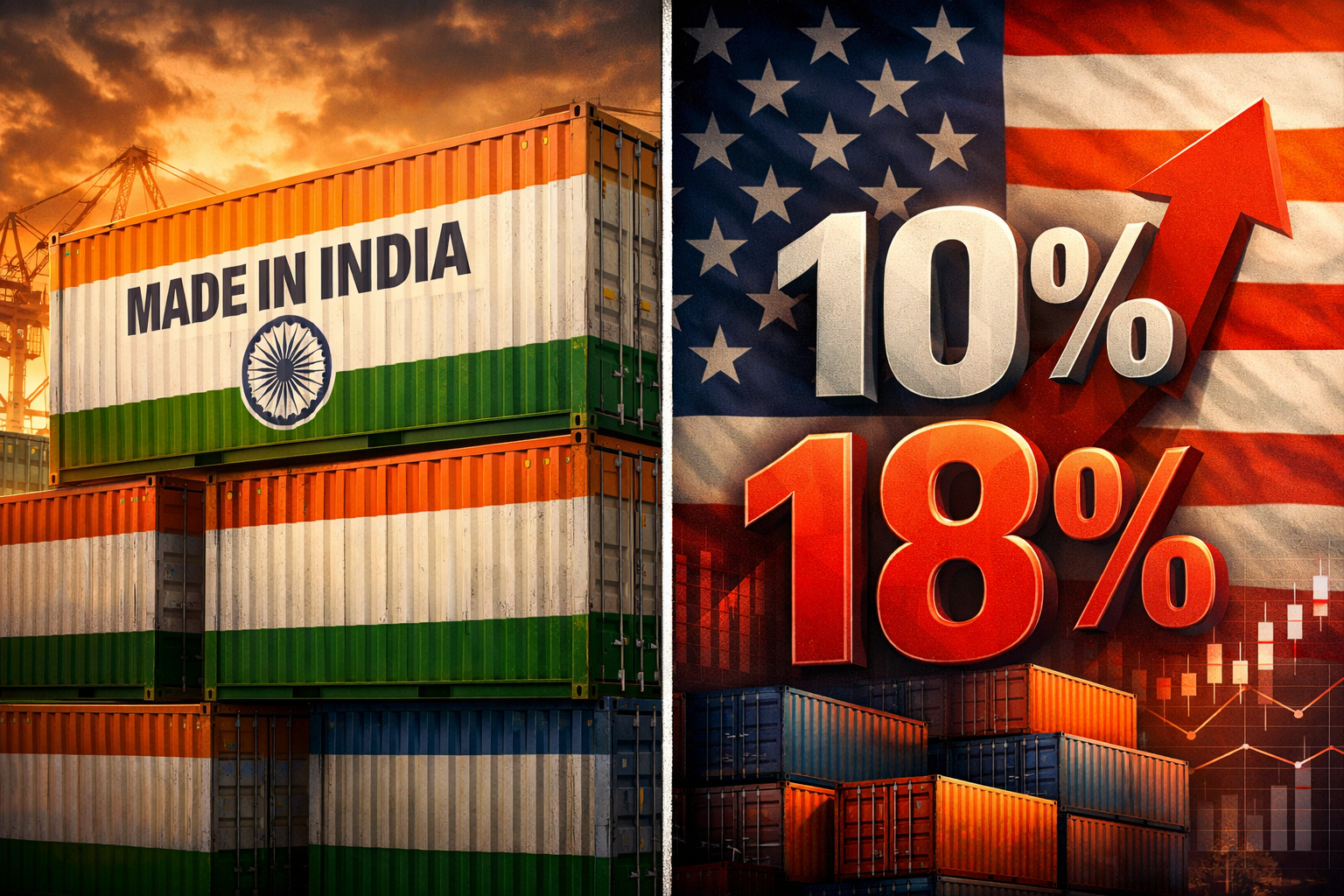
Although some tariffs remain — including an 18% tariff on certain Indian goods — the overall deal signals stronger economic cooperation between the world’s largest democracy and the world’s biggest economy.
This interim pact is being seen as a strategic step toward a full free trade agreement (FTA) in the future.
Let’s break down what this deal means, what changes are coming, and how both countries benefit.
What Is the India–US Interim Trade Pact?
The interim trade pact is a temporary or partial trade agreement.
It focuses on:
-
Reducing trade barriers
-
Lowering tariffs
-
Improving market access
-
Boosting exports
Instead of waiting years for a full FTA, both countries chose to start with a smaller agreement first.
This approach allows faster benefits while negotiations continue.
In simple words, it’s a “first step” trade deal.
Why This Trade Deal Matters
The United States has one of the largest consumer markets in the world, valued at nearly $30 trillion.
For India, this means:
-
More exports
-
Higher revenues
-
More jobs
-
Stronger manufacturing
For the US, it means:
-
Easier entry into India’s fast-growing market
-
Lower costs for industrial exports
-
Better supply chains
Both countries see this pact as a win-win opportunity.
Key Highlights of the Agreement
Here are the most important points of the deal:
✅ Access to $30 Trillion Market
India gets wider access to US buyers and businesses.
This opens doors for Indian exporters across multiple sectors.
✅ Tariff Reductions
India will reduce or eliminate tariffs on several US industrial goods.
These include:
-
Machinery
-
Manufacturing equipment
-
Industrial tools
-
Technology products
✅ 18% Tariff on Certain Indian Goods
The US has introduced an 18% tariff on specific Indian products.
However, details on affected sectors are still being clarified.
✅ Faster Trade Flow
Customs procedures will be simplified to speed up trade.
✅ Step Toward Bigger Trade Deal
This interim pact lays the groundwork for a full-scale trade agreement in the future.
Why the 18% Tariff Is Important
One of the most discussed points is the 18% tariff on some Indian goods.
At first glance, it may look negative.
But experts say it’s part of the negotiation balance.
Trade agreements often include:
-
Gains in some areas
-
Concessions in others
The tariff helps protect US domestic industries while still allowing broader cooperation.
Over time, these tariffs may be reduced further.
What India Gains From This Deal
India stands to benefit significantly.
1. Bigger Export Opportunities
Indian companies can sell more goods in the US market.
This is especially useful for:
-
Textiles
-
Pharmaceuticals
-
IT services
-
Auto components
-
Engineering goods
2. Job Creation
Higher exports mean:
-
More factories
-
More production
-
More employment
This supports India’s Make in India initiative.
3. Technology Transfer
US firms bringing machinery and industrial products help Indian businesses modernize.
This boosts productivity and efficiency.
4. Stronger Global Position
Better trade ties with the US strengthen India’s global economic influence.
What the US Gains From This Deal
The US also benefits.
1. Easier Entry into Indian Market
India is one of the fastest-growing economies.
American companies get easier access to:
-
Manufacturing
-
Infrastructure projects
-
Consumer markets
2. Reduced Tariffs on Industrial Goods
Lower duties make US exports cheaper and more competitive in India.
This helps US manufacturers increase sales.
3. Supply Chain Diversification
The US wants alternatives to China.
India becomes a strong supply chain partner.
This reduces risks and dependence.
Industrial Goods at the Center of the Deal
A key feature of the pact is India’s decision to cut tariffs on US industrial goods.
These include:
-
Heavy machinery
-
Production equipment
-
Engineering tools
Why does this matter?
Because industrial tools help build:
-
Factories
-
Roads
-
Infrastructure
-
Power plants
This supports India’s growth plans.
It also creates demand for American products.
So both sides win.
The Need for Compromise
Trade deals are never perfect.
Both sides must compromise.
The video explaining this deal highlights an important truth:
👉 Not everyone will be fully satisfied.
Some industries may feel pressure.
Some sectors may face higher competition.
But overall, the bigger goal is long-term economic growth.
Compromise is necessary for progress.
Without flexibility, no trade agreement is possible.
Strategic Importance Beyond Trade
This deal is not only about money.
It also has geopolitical value.
Stronger India–US ties help:
-
Counter global supply chain risks
-
Reduce dependence on single countries
-
Build trusted trade partnerships
-
Strengthen political cooperation
In today’s world, trade and strategy go hand in hand.
How This Impacts Businesses
For Indian Businesses
-
New export opportunities
-
Bigger customer base
-
Need to meet US quality standards
For US Businesses
-
Lower import duties
-
Faster approvals
-
Access to India’s huge market
Companies that act early may benefit the most.
Challenges Ahead
Despite the positives, challenges remain.
These include:
-
Policy differences
-
Regulatory issues
-
Tariff disputes
-
Compliance requirements
Also, the 18% tariff may affect some exporters.
But experts believe ongoing talks will smooth out these issues.
The interim pact is just the beginning.
Future Outlook
This agreement could evolve into a full Free Trade Agreement (FTA).
If that happens:
-
Tariffs could drop further
-
Trade volumes could double
-
Investments could rise
-
Jobs could increase
Many analysts predict India–US trade may reach record levels in the coming years.
The interim pact sets the foundation for this growth.
Conclusion
The India–US interim trade pact marks a major milestone in economic cooperation.
India gains access to a $30 trillion market.
The US gains better entry into one of the fastest-growing economies.
While the 18% tariff and other compromises exist, the overall direction is positive.
Trade deals are about balance, not perfection.
By reducing barriers and strengthening ties, both countries move toward a stronger future.
This agreement is not the end — it’s the beginning of a bigger partnership.
If negotiations continue smoothly, this could become one of the most important trade relationships in the world.