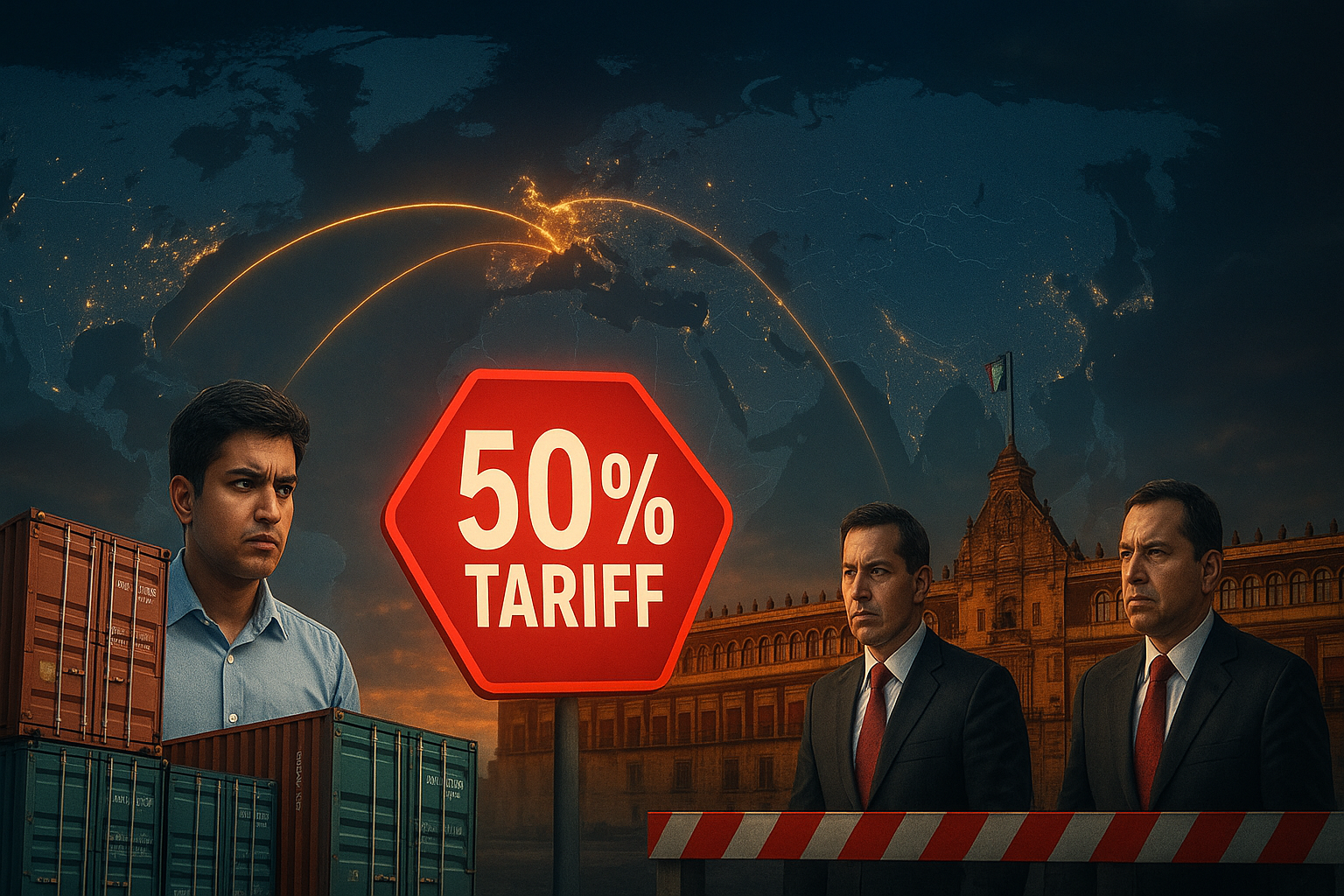
India has issued a strong warning after Mexico imposed a steep 50% tariff hike on imports from India.
The move has triggered serious concerns among Indian exporters and policymakers.
New Delhi has clearly stated that it will take “appropriate retaliatory measures” if the situation is not addressed soon.
This development comes at a time when global trade is already under pressure due to rising protectionism. This article explains why Mexico raised tariffs, how India may respond, and what this means for India’s exporters and global trade relations.
What Is the 50% Tariff Imposed by Mexico?
Mexico has sharply increased import duties on selected goods coming from India.
The tariff hike goes up to 50%, making Indian products significantly more expensive in the Mexican market.
Such a high tariff can:
-
Reduce Indian exports
-
Hurt Indian manufacturers
-
Disrupt supply chains
-
Increase prices for Mexican consumers
For Indian exporters, this move creates immediate uncertainty.
Why Did Mexico Increase Tariffs on Indian Imports?
The tariff hike is not happening in isolation.
It is closely linked to ongoing trade negotiations between the United States and Mexico.
Strategic Alignment with the U.S.
Mexico appears to be aligning its trade policies with U.S. interests.
The U.S. has been pushing North American countries to reduce dependence on Asian imports.
India, being a major exporter, becomes indirectly affected by this strategy.
Rising Protectionism in North America
In recent years, North America has seen a rise in protectionist trade policies.
Governments are prioritizing domestic industries over global free trade.
Mexico’s tariff decision reflects this broader trend.
India’s Official Response to Mexico’s Tariff Hike
India has reacted firmly but diplomatically.
The government has warned that it may take “appropriate retaliatory steps” to protect national interests.
Officials have emphasized that:
-
India will not tolerate unfair trade practices
-
Exporters must be protected
-
Economic sovereignty is non-negotiable
India’s response signals seriousness without rushing into immediate confrontation.
What Does “Appropriate Measures” Mean?
The phrase “appropriate measures” leaves room for multiple options.
India could respond in several ways.
1. Counter-Tariffs
India may impose tariffs on Mexican goods entering the Indian market.
This is a common trade retaliation method.
2. WTO Dispute Mechanism
India could approach the World Trade Organization (WTO).
It may argue that Mexico’s tariff hike violates global trade norms.
3. Trade Diversification
India may reduce dependence on Mexico by expanding exports to:
-
Latin America
-
Africa
-
Southeast Asia
-
Europe
4. Diplomatic Engagement
Back-channel negotiations may take place to resolve the issue without escalation.
Impact on Indian Exporters
Indian exporters are the most affected by this decision.
Key Challenges
-
Higher prices reduce competitiveness
-
Orders may get cancelled
-
Profit margins shrink
-
Long-term contracts are at risk
Small and medium exporters could suffer the most.
Why India Is Taking a Firm Stand
India’s response is not just about Mexico.
It is about setting a precedent.
Protecting National Economic Interests
India wants to ensure that its exporters are not treated unfairly.
Allowing such tariffs without response could encourage similar actions by other countries.
Message to Global Markets
India’s warning sends a clear signal:
-
India supports free trade
-
But it will defend its interests
-
Protectionism will be challenged
The Bigger Global Trade Context
This tariff dispute reflects a larger shift in global trade.
Decline of Free Trade
Many countries are moving away from open trade systems.
National security and domestic industry protection are becoming priorities.
India’s Balanced Approach
India is trying to balance:
-
Export growth
-
Strategic autonomy
-
Global partnerships
This situation tests India’s trade diplomacy skills.
How This Affects India-Mexico Relations
India and Mexico have traditionally enjoyed cordial relations.
However, trade tensions could strain ties.
If unresolved:
-
Bilateral trade may decline
-
Trust could weaken
-
Cooperation in other sectors may slow
That is why diplomatic solutions remain crucial.
Lessons for Indian Trade Policy
This incident highlights key lessons.
Need for Market Diversification
India must avoid over-reliance on specific regions.
Strong Trade Negotiation Framework
India needs proactive trade agreements that protect exporters.
Monitoring Global Protectionism
Early warning systems can help anticipate such tariff shocks.
What Happens Next?
Much depends on upcoming diplomatic talks.
Possible outcomes include:
-
Partial rollback of tariffs
-
Trade negotiations
-
Temporary relief for exporters
-
Escalation if talks fail
India’s next steps will be closely watched by global markets.
Conclusion
Mexico’s 50% tariff hike on Indian imports has sparked a serious trade response from India.
New Delhi’s warning of retaliatory steps reflects its commitment to protecting exporters and national economic interests.
As protectionism rises globally, India’s firm yet balanced approach will shape its future trade relations.
Whether through diplomacy, counter-measures, or global forums, India is making it clear — unfair trade will not go unanswered.
❓ Why did Mexico impose a 50% tariff on Indian imports?
Mexico imposed the tariff amid ongoing trade negotiations with the U.S., reflecting rising protectionist policies in North America.
❓ How has India responded to Mexico’s tariff hike?
India has warned of taking appropriate retaliatory measures to protect exporters and national economic interests.
❓ What retaliatory steps can India take?
India may impose counter-tariffs, approach the WTO, diversify export markets, or pursue diplomatic negotiations.
❓ How will this tariff affect Indian exporters?
The higher tariff reduces competitiveness, increases costs, and may lead to reduced export volumes to Mexico.
❓ Why is this issue important for exams?
The dispute covers international trade, protectionism, WTO rules, and economic diplomacy—key topics for UPSC and other competitive exams.