
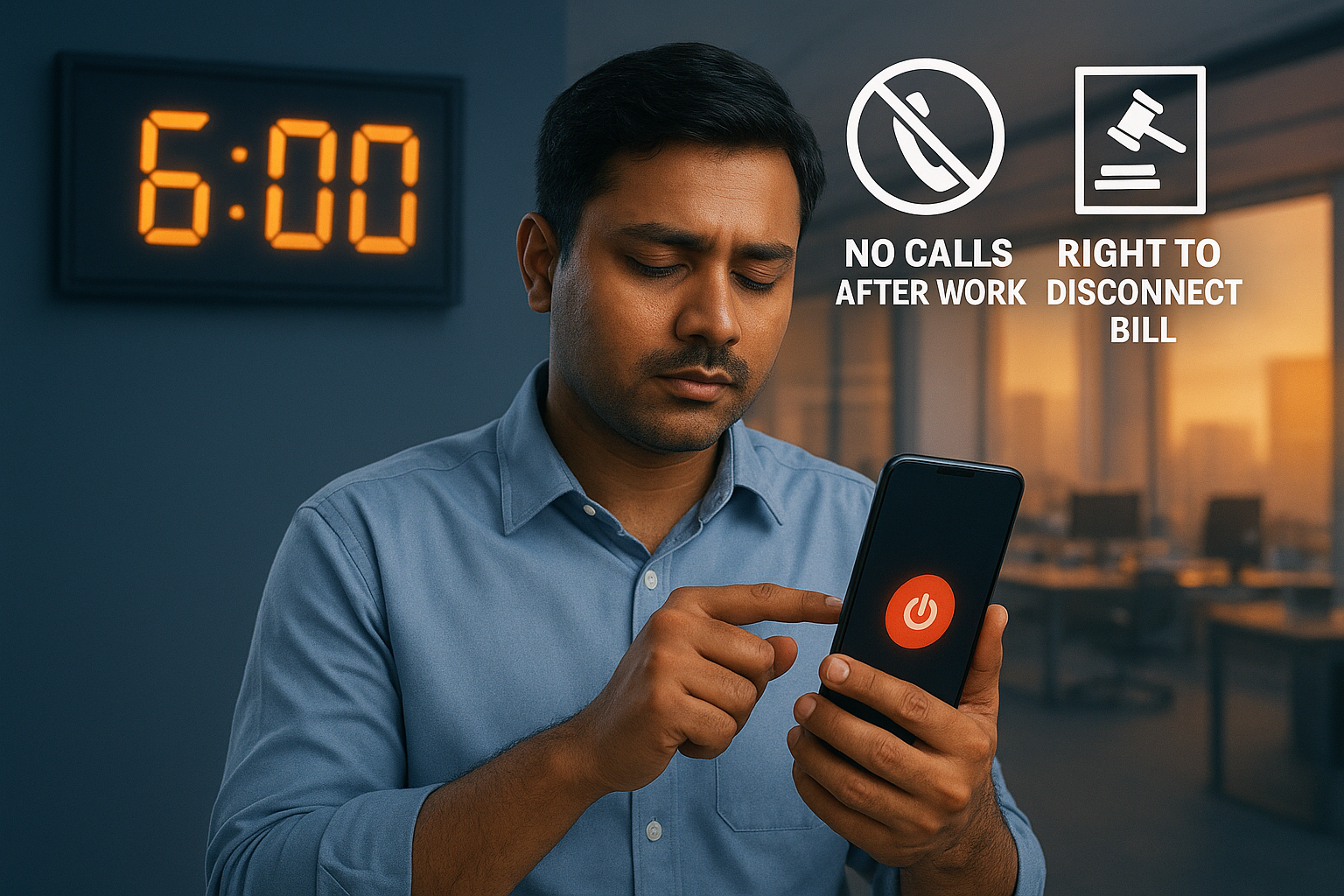
 In today’s fast-paced world, work never really stops. Emails keep buzzing, WhatsApp groups stay active, and calls from the office continue long after the official workday ends. This has become a growing concern in India, where many employees feel they are always “on duty.”
The Right to Disconnect Bill aims to change this.
This article explains what the bill means, why it is needed, and how it can transform work culture in India.
What Is the Right to Disconnect Bill?
The Right to Disconnect Bill proposes that employees should have the legal right to ignore work-related calls, emails, and messages after office hours without any fear of consequences.
The idea is simple:
When the workday ends, so should work communication.
This concept is already common in many developed countries. Employees there can disconnect from work after hours, and companies are legally required to respect personal time. India is now debating whether it’s time to adopt similar laws.
Why Is Work-Life Balance So Important?
In a recent video discussion, experts highlighted a major difference between India and many developed countries:
Employees abroad can truly disconnect once work hours end, while Indian workers often remain tied to their phones 24/7.
Work-life balance is not a luxury.
It directly affects:
-
Mental health
-
Physical well-being
-
Family relationships
-
Productivity
-
Job satisfaction
Without a balance, employees feel exhausted and overwhelmed. This is why the debate around the Right to Disconnect is growing stronger.
India’s “Always-On” Work Culture
Over the last few years, especially after the pandemic, work culture in India has drastically changed.
Work-from-home blurred the boundaries between office time and personal time. Many companies now expect instant replies, even late at night.
Employees often report:
-
Work calls during dinner
-
Emails at midnight
-
Weekend tasks
-
Urgent messages during family events
-
No proper rest even on holidays
This nonstop pressure leads to burnout, which affects both employees and the organizations they work for.
Why Do People Want This Bill?
1. To Reduce Burnout
Burnout is becoming a serious problem. Constant pressure and lack of rest weaken mental health. Employees feel they are always working, even if the clock shows otherwise.
2. To Improve Mental Well-Being
Continuous connectivity creates stress. The bill aims to protect mental health by giving workers uninterrupted personal time.
3. To Enjoy Personal and Family Time
People need time for their families, hobbies, and relaxation. Work shouldn’t invade these precious hours.
4. To Build a Healthy Work Culture
A balanced culture increases productivity and keeps employees happy. Companies with clear boundaries work more efficiently.
5. To Match Global Standards
Countries like France, Italy, and the Philippines already have Right to Disconnect laws. India wants to ensure its workforce gets similar respect and protection.
How the Right to Disconnect Bill Works
If implemented, the bill would include:
-
Clear rules for after-hours communication
-
No penalties for not answering work calls after office hours
-
Mandatory offline time for employees
-
Policies to ensure managers respect work boundaries
-
Systems to handle urgent situations without disturbing everyone
This doesn’t mean companies can never contact employees after work.
It simply means they can’t force employees to respond unless it’s part of an agreed duty, such as emergency roles.
Key Highlights of the Debate
The video discussing work-life balance in India raises important points:
-
Developed countries already encourage or enforce disconnecting after hours.
-
Indian employees face high pressure and extended workdays.
-
Legal protection may be the only way to ensure boundaries.
-
Companies must rethink how they manage employee time.
-
The bill could reduce stress and improve overall well-being.
Many believe India is ready for such a law, while others say it needs careful planning. But everyone agrees that constant connectivity is unhealthy.
The Real Problem: Post-Pandemic Pressure
The pandemic changed everything. With remote work, boundaries blurred. Employers began assuming employees were always available.
What started as a temporary adjustment turned into a permanent expectation.
Now, even those who returned to office face:
-
Extended work hours
-
Weekend assignments
-
Late-night coordination calls
-
A culture where responding instantly is considered “professional”
This has increased stress levels like never before. The Right to Disconnect Bill is seen as a solution to restore balance.
How the Bill Can Change Employees’ Lives
1. Better Mental Health
Employees will finally be able to switch off mentally after work.
2. Improved Sleep and Rest
No more worrying about emails at midnight.
3. Higher Productivity
Rested employees perform better during working hours.
4. Stronger Family Relationships
More time with family leads to a healthier personal life.
5. Reduced Job Stress
Knowing that after-hours time is protected reduces anxiety.
Benefits for Companies Too
A healthier workforce benefits the organization as well.
-
Lower employee burnout
-
Reduced attrition
-
Better performance
-
Improved employee loyalty
-
Stronger employer branding
-
A more positive work environment
Companies that respect boundaries stand out in the job market.
Rotational On-Call Duty: A Practical Solution
One useful suggestion discussed in the video is rotational on-call duty.
Here’s how it works:
-
Not every employee needs to be available after hours.
-
Each team can have a weekly or monthly rotation.
-
Only the assigned person handles urgent work issues.
-
Others can enjoy their time off without disturbance.
This system already exists in many countries and industries. It helps companies stay functional without exhausting employees.
Counseling and Mental Health Support
Another recommendation is to provide counseling to employees.
Work stress is real. Mental health support can make a big difference.
Companies should offer:
-
Employee assistance programs
-
Stress management sessions
-
Regular counseling
-
Workshops on work-life balance
-
Mental health awareness programs
When companies care about well-being, employees feel valued.
Challenges in Implementing the Bill
Even if the bill becomes law, some challenges will remain:
-
Some industries operate 24/7
-
Indian work culture prioritizes availability
-
Managers may need training
-
Companies must redesign communication policies
-
Employees must adjust to new boundaries
However, with proper planning, these challenges can be managed easily.
What Employees Can Do Right Now
Even before the bill becomes law, employees can take steps to protect their balance:
-
Set clear boundaries with managers
-
Communicate availability politely
-
Avoid checking emails after work
-
Take planned leaves regularly
-
Prioritize mental health
-
Use “Do Not Disturb” modes on devices
These small actions can greatly reduce stress.
What Companies Can Do Today
Organizations can adopt a healthy culture even before the law is passed:
-
Avoid sending emails after work
-
Set clear timelines for tasks
-
Provide weekly offs without interruptions
-
Train managers on work-life balance policies
-
Encourage employees to unplug after hours
Smart companies know that employee well-being leads to better results.
India’s Future with the Right to Disconnect
If India adopts this bill, it could transform the workplace forever.
Employees will finally have the freedom to disconnect, rest, and recharge.
Companies will build stronger teams and improve productivity.
Society will benefit from healthier, happier individuals.
The conversation around this bill is growing—and it signals hope for millions of workers.
Conclusion
The Right to Disconnect Bill is more than a law. It’s a step toward respecting human boundaries and creating a healthier society.
It recognizes that employees are not machines—they need rest, personal time, and mental peace.
With rising burnout and pressure, the bill offers a path toward balance.
Through structured work hours, rotational duties, and mental health support, India can build a work culture that values people as much as productivity.
Work can wait.
Life cannot.