 Pakistan’s economic crisis has reached a critical point. With foreign reserves shrinking and debt pressures rising, the government is now considering a major move — selling a majority stake in Pakistan International Airlines (PIA). This step is being taken to secure more loans from the International Monetary Fund (IMF).
The decision mirrors India’s sale of Air India, which was privatized after decades of losses.
This development has shaken the political landscape, the aviation industry, and the people of Pakistan. Here is a clear and simple breakdown of what’s happening, why it matters, and what it means for Pakistan’s future.
Why Pakistan Wants to Sell PIA
PIA, once considered a leading airline in Asia, is now heavily loss-making. For years, the airline has suffered due to:
-
Mismanagement
-
Corruption
-
Political interference
-
Overstaffing
-
Accumulated massive debts
The IMF has made it clear that Pakistan must reform or privatize loss-making state-owned enterprises before it can receive fresh financial assistance.
So, to unlock the next round of IMF loans, Pakistan is preparing to sell a majority stake in PIA.
IMF Pressure: The Driving Force Behind the Sale
The move is not entirely voluntary. The IMF is pushing Pakistan hard to fix its broken economic structure. PIA’s massive losses have become a big burden on the national budget.
IMF officials have reportedly told Islamabad that the airline must be privatized to stop further financial leakage.
Due to this pressure:
-
The privatization process has accelerated
-
Government officials are working on restructuring plans
-
Meetings with potential buyers have already begun
The situation reflects the seriousness of Pakistan’s economic crisis. Without IMF support, Pakistan risks defaulting on its international payments.
Possible Buyers: Military-Linked Foundations in the Race
One of the most talked-about parts of this story is the list of potential bidders.
According to reports, several military-linked foundations are interested in buying the airline.
These include well-known organizations that already run successful businesses in:
-
Real estate
-
Cement
-
Education
-
Manufacturing
-
Agriculture
Their involvement shows how deeply the financial crisis has impacted Pakistan.
It also raises questions about the growing role of the military in the country’s economy.
However, some analysts believe that military-backed buyers may be more capable of:
-
Managing PIA professionally
-
Reducing corruption
-
Cutting unnecessary costs
-
Turning the airline into a profitable business
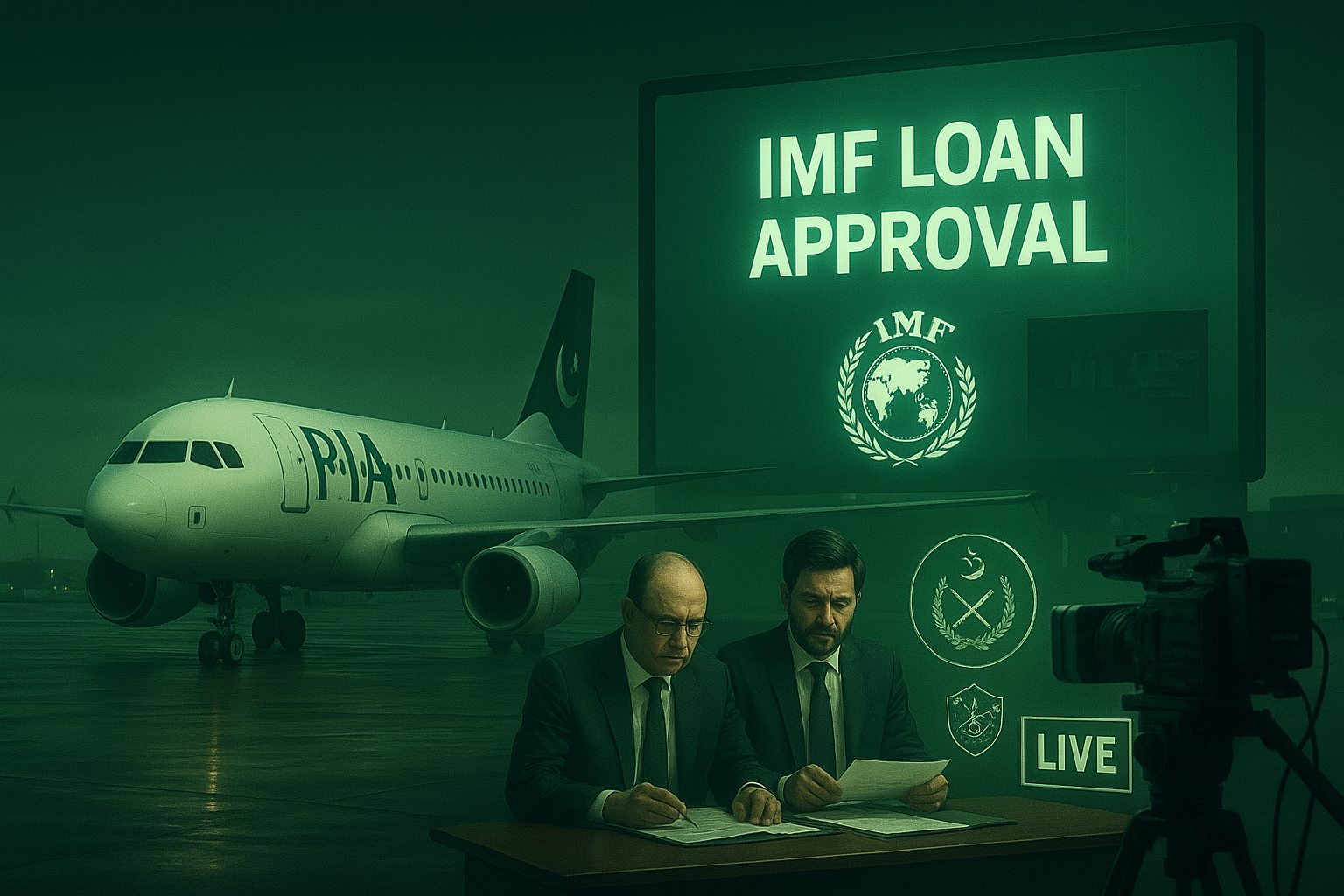
Government Promises Transparency — Sale May Be Broadcast Live
In a surprising move, the Pakistani government has announced that the privatization process will be fully transparent.
Officials have suggested that the entire bidding process may even be broadcast live on television.
This is being done to:
-
Build trust among the public
-
Avoid accusations of corruption
-
Prevent political protests
-
Show the IMF that the sale is clean and fair
Privatization of national assets has always been sensitive in Pakistan.
By planning a live broadcast, the government aims to avoid the mistakes of past privatizations.
How the Sale Could Be Structured
The structure of the PIA sale is still being debated.
Multiple options are being considered, including:
1. Full Privatization
The government may sell 100% of PIA, giving complete control to a private buyer.
This option would remove the airline entirely from government hands.
2. Majority Stake Sale (51% – 75%)
This is the most likely option.
A majority stake gives the buyer control while allowing the government to retain some share.
This approach is seen as:
-
Politically easier
-
More acceptable to the public
-
Better for long-term restructuring
3. Splitting Assets Before Sale
PIA owns large real estate assets, including prime land in Karachi, Islamabad, and abroad.
The government is considering:
-
Separating land assets from the airline
-
Selling only the aviation business
-
Keeping non-aviation assets under government control
This model was used in India when Air India was sold, making the sale easier and more attractive.
Why a 51% to 75% Sale Makes Sense
Selling a majority stake gives the buyer the freedom to:
-
Replace the management
-
Cut unnecessary staff
-
Introduce new systems
-
Improve safety and services
-
Bring in modern aircraft
-
Implement international best practices
Many experts believe this is the only realistic way to save PIA.
However, there is concern among the public about:
-
Job losses
-
Loss of a national symbol
-
Privatization corruption
-
Foreign influence
Despite this, a majority sale is still seen as the most practical path forward.
Impact on Pakistan’s Economy
If handled properly, the PIA sale could help Pakistan in several ways:
1. Unlock IMF Loans Quickly
IMF wants to see structural reforms.
Privatizing PIA directly supports Pakistan’s request for more financial aid.
2. Reduce Government Losses
PIA is losing billions each year.
Privatization will stop the airline from draining the national budget.
3. Boost Investor Confidence
Selling PIA successfully could send a positive message to global investors.
It shows Pakistan is willing to take bold steps to fix its economy.
4. Improve Airline Quality
A professional, private management team could:
-
Improve service quality
-
Reduce delays and cancellations
-
Modernize aircraft
-
Expand profitable routes
5. Reduce Political Interference
Privatization may help stop the cycle of political appointments and corruption that damaged PIA.
Political Reaction Inside Pakistan
The decision has sparked mixed reactions:
Supporters Say:
-
Privatization will save the airline
-
IMF loans are necessary
-
The government cannot run commercial businesses efficiently
-
Military-linked buyers may stabilize PIA
Critics Say:
-
It is a violation of national pride
-
Thousands of employees may lose jobs
-
The sale will be influenced by politics
-
Pakistan is selling its assets under pressure
Political parties are preparing to use the issue as a tool in upcoming elections.
Comparison With India’s Sale of Air India
Pakistan’s move is being compared to India’s successful privatization of Air India in 2021.
Similarities:
-
Both airlines were in deep financial trouble
-
Both governments faced pressure to reduce losses
-
Both sales included splitting assets before privatization
-
Both processes aimed to reduce the burden on taxpayers
Differences:
-
Air India was bought by Tata Group
-
Pakistan may sell PIA to military-linked foundations
-
Pakistan’s financial crisis is far worse
-
IMF pressure is much stronger
Experts say Pakistan is following India’s model, but under far more urgent circumstances.
What Happens Next?
The following steps are expected soon:
-
Finalization of the sale structure
-
Public announcement of bidders
-
Government approval
-
Live-broadcast auction (if confirmed)
-
Transfer of majority ownership
-
Restructuring of the airline
If the process moves smoothly, Pakistan could receive the next IMF loan tranche within months.
Conclusion
Pakistan’s decision to sell a majority stake in PIA marks a historic shift in the country’s economic policy.
Driven by IMF pressure and a deep financial crisis, Pakistan is preparing to privatize one of its most iconic national institutions.
Whether this move revives PIA or becomes another failed attempt depends on:
-
Transparency
-
Political stability
-
Professional management
-
Public acceptance
For now, the sale of PIA represents a bold — and controversial — attempt to rescue Pakistan’s struggling economy.