

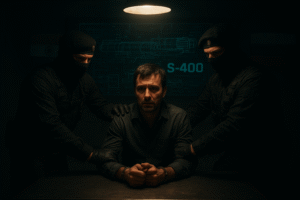
Indian media has widely covered the incident, raising questions about regional security, Pakistan’s intelligence ambitions, and the future of India–Russia defense cooperation.

Spy Arrested in Russia: What We Know So Far
Russian security agencies detained a Pakistani national accused of spying on behalf of ISI.
Early reports indicate that the individual was operating inside Russian territory for months, collecting information related to advanced defense technology.
Key points emerging from the investigation:
-
The suspect maintained secret links with ISI handlers.
-
He attempted to access restricted information related to Russia’s high-end military equipment.
-
Russia has started probing deeper, suggesting the case may be part of a larger network targeting sensitive technology.
This arrest is significant because Russia rarely makes such incidents public, indicating the severity of the threat.
Why the S-400 Missile System Matters
The biggest concern is the alleged attempt to obtain information about the S-400 Triumf Air Defense System, one of the world’s most advanced long-range missile systems.
Why this system is extremely sensitive:
-
India purchased the S-400 from Russia to strengthen its air defense against Pakistan and China.
-
The system can track and destroy aircraft, drones, cruise missiles, and even ballistic missiles at long distances.
-
Any compromise of its technical specifications, operational details, or vulnerabilities would pose a serious threat to India’s national security.
If ISI was attempting to retrieve details about the S-400, it signals a targeted effort to neutralize India’s defensive advantage.
India’s Concerns: More Than Just Spy Games
The arrest has understandably raised alarms in India.
India fears:
-
Pakistan could try to identify weaknesses in India’s S-400 deployment.
-
Sensitive data could end up with China, Pakistan’s closest military partner.
-
Any leakage could reduce India’s deterrence capability in the region.
Since India operates the S-400 near sensitive borders, intelligence exposure could allow hostile nations to plan evasive strategies or electronic warfare tactics.
Russian Response: Controlled but Serious
Russia’s intelligence agencies moved fast once they detected suspicious activity.
After the arrest, they launched a broader investigation to uncover potential networks operating inside the country.
Initial findings suggest:
-
A planned operation targeting multiple Russian defense installations.
-
Foreign intelligence operatives may have been posing as students, researchers, or businessmen.
-
The arrested spy was likely only one part of the larger ISI-backed operation.
Despite the seriousness, Russia has not publicly attacked Pakistan diplomatically. The silence appears intentional.
Why Russia and Pakistan Are Silent
Both countries have chosen to downplay the situation.
Russia’s reasons may include:
-
Protecting ongoing geopolitical engagements, especially in Central Asia.
-
Avoiding unnecessary friction with Pakistan while dealing with global conflicts.
-
Ensuring the issue remains an internal security matter rather than a diplomatic stand-off.
Pakistan’s likely reasons:
-
Preventing embarrassment on the international stage.
-
Avoiding public exposure of ISI’s involvement.
-
Maintaining stable relations with Russia, which Pakistan has been trying to improve in recent years.
The silence itself shows how sensitive this espionage attempt was.
Impact on India–Russia Relations
India and Russia share a long-standing defense partnership, with New Delhi relying on Moscow for major military platforms such as:
-
S-400 air defense system
-
Su-30MKI fighter jets
-
T-90 tanks
-
BrahMos cruise missile (co-developed)
This spy incident has the potential to complicate matters.
Possible outcomes:
-
Russia may increase security protocols for sharing technology with any foreign country.
-
India may request a detailed briefing from Russia on what information, if any, was compromised.
-
Joint counter-intelligence cooperation between India and Russia could strengthen.
For India, reassurance from Russia is essential, especially regarding the integrity and safety of the S-400 systems already delivered.
How India Is Responding
While India has not officially commented, Indian intelligence agencies are closely following the developments.
Likely steps being taken:
-
Evaluating whether any part of India’s S-400 deployment could be exposed due to Russian information leakage.
-
Monitoring Pakistan’s intelligence activities, especially in relation to defense technology.
-
Reviewing domestic counter-espionage efforts to prevent similar incidents.
The arrest abroad does not reduce the risk of espionage attempts within India’s borders.
ISI’s Pattern: A History of Targeting Defense Secrets
This incident fits a pattern of ISI’s long-standing intelligence gathering strategy targeting India’s military capabilities.
Past attempts include:
-
Recruiting informants near Indian military bases
-
Cyber espionage to access sensitive documents
-
Honey-trapping Indian personnel to extract strategic information
-
Infiltrating research institutions and defense contractors
The Russia case shows ISI is willing to extend its operations globally to gather high-value intelligence.
Could China Be the Hidden Beneficiary?
Security experts believe China may indirectly benefit if ISI acquires sensitive military data.
Pakistan and China maintain a strong military partnership, and intelligence sharing between the two nations is common.
Potential risks for India include:
-
China using leaked data to counter the S-400 in any future conflict.
-
Pakistan upgrading its own missile or drone programs using compromised data.
-
Joint China-Pakistan strategies to bypass Indian air defenses.
This raises the strategic stakes for India even further.
What This Means for India’s Security Landscape
The arrest highlights a crucial fact: India’s defense environment is increasingly multi-dimensional, involving not just borders but global intelligence activities.
Key implications:
-
Espionage now extends far beyond national borders.
-
India must collaborate more closely with allies to secure shared technologies.
-
The country needs to boost domestic counter-intelligence systems.
-
Sensitive import-based technologies require strong security protocols from supplier nations.
India cannot afford any vulnerability in high-value defense systems, especially one as critical as the S-400.
Conclusion
The arrest of a Pakistani spy in Russia attempting to acquire S-400-related secrets is a serious geopolitical event with wide implications.
While Russia and Pakistan have chosen silence, the issue remains highly relevant for India’s national security.
The episode underscores the need for India to strengthen counter-espionage capabilities, deepen intelligence cooperation with Russia, and ensure that crucial defense technologies remain fully secure.
As regional tensions rise and intelligence warfare intensifies, safeguarding strategic assets like the S-400 is more important than ever.