 India’s energy market is witnessing a major shift.
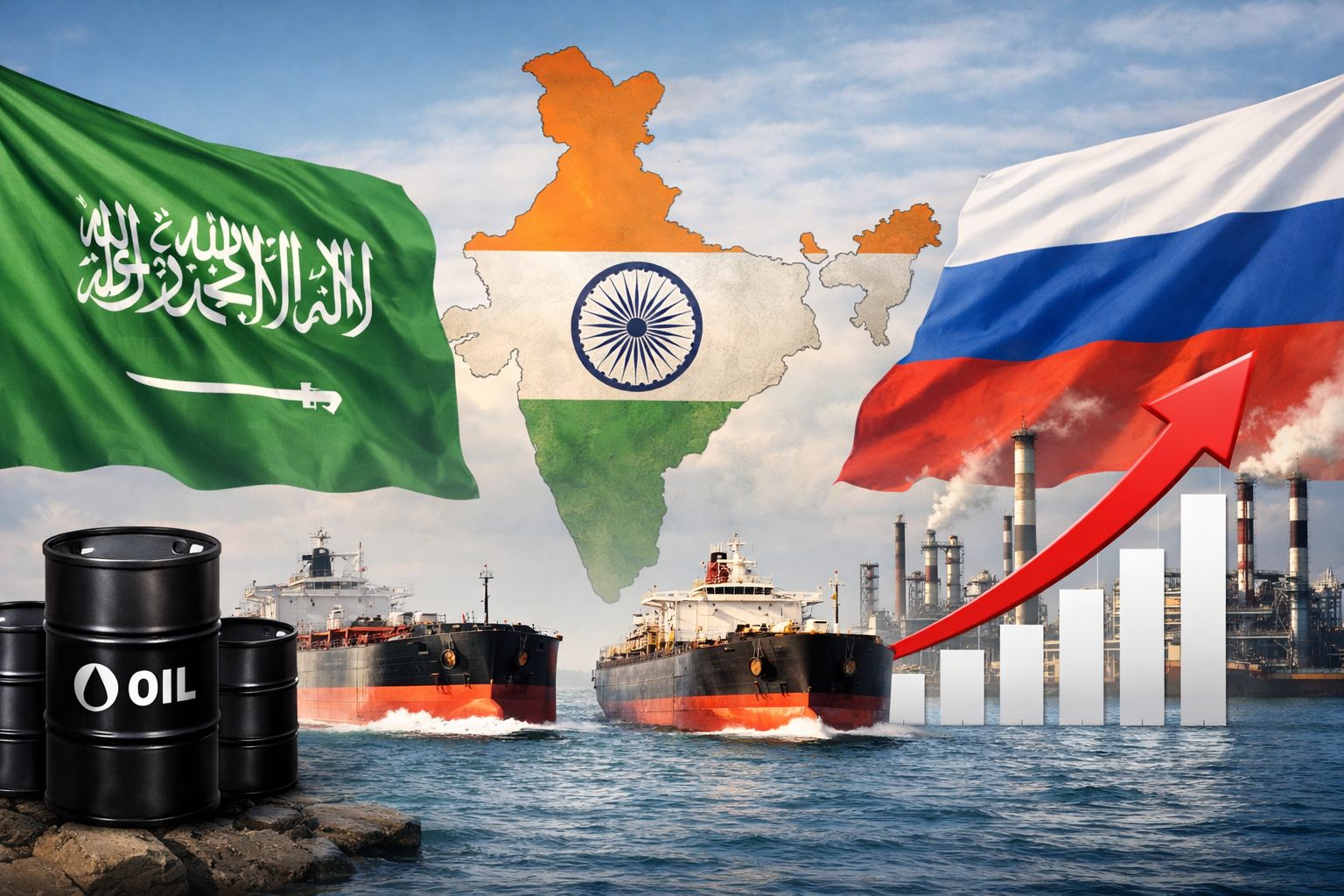
For years, Russia dominated India’s crude oil imports. But now, Saudi Arabia has taken the top spot, changing the balance of power in one of the world’s fastest-growing energy markets.
Fresh trade data shows that Saudi Arabia has overtaken Russia to become the largest crude oil supplier to India.
This change is not just about numbers. It reflects pricing strategies, logistics advantages, geopolitical factors, and new trade partnerships.
Let’s break it down in simple terms.
Why India Depends on Imported Oil
India is the world’s third-largest oil consumer.
But domestic production is limited.
The country imports 85–90% of its crude oil needs from other nations.
That means:
-
India must secure stable suppliers
-
Price changes directly affect inflation
-
Supply disruptions can hurt the economy
Fuel prices influence everything from transport costs to food prices. So even small changes in crude sourcing matter a lot.
Because of this, India constantly looks for cheaper, safer, and faster supply routes.
Russia Was India’s Top Supplier for Years
After the Ukraine conflict and Western sanctions, Russian oil became cheaper.
India took advantage of these discounts.
Russian crude was:
-
Sold at lower prices
-
Available in large volumes
-
Offered flexible payment options
As a result, Russia quickly became India’s largest supplier.
At one point, Russian oil accounted for nearly one-third of India’s total imports.
Indian refiners benefited from strong profit margins by buying discounted crude and selling refined fuels globally.
But this trend didn’t last forever.
Saudi Arabia Makes a Comeback
Now the tables have turned.
Recent February data shows Saudi Arabia surpassing Russia in shipments to India.
This comeback didn’t happen by accident.
It was driven by smart pricing, logistics advantages, and lower risk factors.
Saudi crude has become more attractive for Indian refiners.
Here’s why.
Lower Freight Costs Matter
Shipping plays a huge role in oil pricing.
Transporting crude from Russia often involves:
-
Longer routes
-
Higher freight charges
-
Limited tanker availability
In contrast, Saudi oil travels shorter distances to Indian ports.
This means:
-
Lower shipping costs
-
Faster delivery
-
Reduced delays
When refiners calculate the total landed cost, Saudi crude becomes cheaper even if the base price is similar.
Small savings per barrel add up to millions of dollars over time.
Faster Delivery Times Help Refineries
Speed is critical in the energy business.
Refineries need steady and predictable supplies.
Saudi shipments arrive quicker compared to Russian cargoes.
Faster delivery means:
-
Less inventory storage
-
Lower working capital
-
Better production planning
This improves operational efficiency.
For large refiners, timing is just as important as price.
Reduced Insurance and Risk Costs
Another big factor is insurance.
Russian oil shipments face:
-
Higher insurance premiums
-
Sanction risks
-
Payment complications
-
Banking restrictions
These extra risks increase overall costs.
Saudi oil, however, comes with:
-
Stable trade channels
-
Lower insurance fees
-
Fewer legal hurdles
This makes Saudi crude safer and easier to handle.
Indian companies prefer fewer complications.
Saudi Aramco’s Smart Pricing Strategy
The biggest game-changer has been pricing.
State-owned oil giant Saudi Aramco adjusted its pricing strategy to compete directly with Russian grades.
Aramco:
-
Reduced official selling prices
-
Offered discounts to Asian buyers
-
Made long-term supply deals attractive
This helped Indian refiners secure cheaper contracts.
When Saudi oil became price competitive, there was little reason to stick with costlier or riskier Russian cargoes.
Simply put, Aramco outplayed competitors on price.
Role of India–US Trade Deal
Geopolitics also played a role.
A recent trade deal between United States and India has influenced energy flows.
Closer ties with the US encourage:
-
Diversified sourcing
-
Reduced dependence on sanctioned oil
-
Stronger partnerships with Gulf suppliers
India aims to balance relations carefully.
Buying more from Saudi Arabia fits better with global trade alignment and reduces diplomatic pressure.
So this shift isn’t only economic — it’s strategic too.
What This Means for India
Saudi Arabia becoming the top supplier brings several benefits for India.
1. Stable supply
Saudi Arabia has long been a reliable energy partner.
2. Lower costs
Cheaper freight and competitive pricing help reduce overall import bills.
3. Less risk
Fewer sanctions and insurance complications.
4. Stronger Gulf ties
Better relations with Middle East producers ensure long-term energy security.
All these factors support India’s growing economy.
Impact on Russia
For Russia, this is a setback.
India was one of its biggest customers after Western markets shrank.
If India cuts purchases:
-
Russia may have to offer deeper discounts
-
Profit margins may fall
-
New buyers must be found
Still, Russia will likely remain an important supplier.
It just may not hold the number one position anymore.
Will Saudi Stay on Top?
The oil market changes quickly.
Leadership can shift based on:
-
Prices
-
Wars
-
Sanctions
-
Shipping costs
-
Currency rates
If Russia offers bigger discounts again, India could increase purchases.
If Saudi keeps prices competitive, it may hold the top spot longer.
India usually follows a practical strategy.
It buys from whoever offers the best value.
So future rankings may continue to change.
India’s Diversification Strategy
India doesn’t rely on one supplier.
Instead, it spreads imports across:
-
Middle East
-
Russia
-
United States
-
Africa
-
Latin America
This reduces risk.
Diversification ensures that if one source faces disruption, others can fill the gap.
Saudi Arabia’s rise fits into this flexible approach.
Why This Matters Globally
This shift is not just about India.
It shows how:
-
Energy trade follows economics, not politics alone
-
Price and logistics beat ideology
-
Suppliers must stay competitive
It also highlights Saudi Arabia’s continued dominance in global oil markets.
Even with competition from Russia and the US, Saudi producers remain highly influential.
Final Thoughts
Saudi Arabia overtaking Russia as India’s biggest crude supplier marks a significant moment in global energy trade.
India imports nearly 90% of its oil needs, so every decision affects the economy.
Saudi crude now offers:
-
Lower freight costs
-
Faster delivery
-
Less risk
-
Better pricing
Add in Aramco’s competitive strategy and supportive trade ties, and the shift becomes clear.
For India, it’s a practical move.
For Russia, it’s a challenge.
For Saudi Arabia, it’s a strong comeback.
And for global markets, it proves one thing:
In the oil business, cost and convenience always win.