

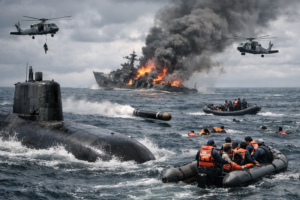

The event occurred while the Iranian naval vessel was returning to Iran after a diplomatic visit to India. The ship had participated in several international naval events, including the International Fleet Review 2026 and the Milan Naval Exercise.
This unexpected confrontation has increased tensions across the region and drawn attention from governments, defense analysts, and international organizations.
What Happened in the Indian Ocean?
According to early reports, a US submarine operating in the Indian Ocean launched an attack on an Iranian warship. The vessel was traveling westward toward Iran after completing diplomatic engagements in India.
The attack resulted in severe damage to the ship, eventually causing it to sink in waters not far from Sri Lanka’s southern maritime zone.
Initial information suggests that 87 crew members were killed or missing following the incident. Several others survived and were later rescued by emergency teams.
Because the situation unfolded quickly, details about the exact circumstances and the reason for the attack remain unclear.
Military analysts say investigations will likely focus on whether the attack was intentional, a misidentification incident, or the result of escalating geopolitical tensions.
Iranian Warship Was Returning From India
The Iranian naval vessel had recently completed a diplomatic naval visit to India. These visits are usually meant to strengthen maritime cooperation and build goodwill among naval forces.
During its time near India, the Iranian ship took part in two major international naval activities:
-
International Fleet Review 2026
-
Milan Naval Exercise
Both events bring together naval forces from multiple countries to promote maritime cooperation, joint exercises, and diplomatic engagement.
Participation in such events often includes:
-
Naval demonstrations
-
Joint training exercises
-
Fleet parades
-
Military diplomacy meetings
Iran’s participation highlighted its effort to maintain a visible naval presence in international waters and engage with regional partners.
After the events ended, the warship began its journey back toward Iranian waters, which is when the reported submarine attack occurred.
Sri Lankan Navy Launches Immediate Rescue Operation
Once distress signals were detected, the Sri Lankan Navy quickly initiated search and rescue operations.
Authorities deployed multiple resources to locate survivors in the affected area.
Rescue teams included:
-
Naval patrol ships
-
Military helicopters
-
Maritime surveillance aircraft
These teams searched the surrounding waters for survivors, debris, and life rafts.
The rescue mission was challenging due to rough ocean conditions and the urgency of locating injured sailors.
Sri Lankan authorities stated that their priority was saving lives and providing immediate medical assistance.
Survivors Taken to Hospital in Galle
Several crew members were found alive during the rescue operation.
They were transported to a hospital in Galle, Sri Lanka, where doctors began emergency treatment.
Medical teams reported that some survivors were suffering from:
-
Severe injuries
-
Hypothermia
-
Shock from the incident
Sri Lankan officials confirmed that medical care would be provided regardless of nationality, following international maritime rescue laws.
Hospitals in the region were placed on alert in case more survivors were recovered from the ocean.
Rising Tensions Between the United States and Iran
The reported sinking of an Iranian warship could significantly increase tensions between the United States and Iran.
The two nations have had a long history of military and political rivalry, particularly in maritime regions such as:
-
The Persian Gulf
-
The Strait of Hormuz
-
The Arabian Sea
-
The Indian Ocean
Any direct naval confrontation between the two forces is considered extremely serious by global security experts.
Defense analysts warn that such incidents could lead to:
-
Diplomatic protests
-
Military escalation
-
International investigations
-
Increased naval deployments
Global leaders are expected to closely monitor the situation.
Importance of the Indian Ocean in Global Security
The Indian Ocean is one of the world’s most strategically important waterways.
It connects major trade routes between:
-
Asia
-
Europe
-
The Middle East
-
Africa
Thousands of cargo ships travel through these waters every year carrying oil, gas, and essential goods.
Because of its importance, several major powers maintain naval patrols and submarine operations in the region.
These include:
-
United States
-
India
-
China
-
Iran
-
European naval forces
This heavy military presence sometimes increases the risk of miscalculations or confrontations at sea.
International Naval Events and Diplomacy
The Iranian warship’s visit to India was part of international naval diplomacy efforts.
Events like the International Fleet Review and the Milan Naval Exercise are designed to strengthen global naval cooperation.
These events allow countries to:
-
Showcase naval capabilities
-
Conduct joint training
-
Improve maritime communication
-
Promote peace and stability
Navies from many countries participate in these exercises to build trust and cooperation at sea.
The sinking of a vessel returning from such an event makes the incident even more surprising for observers.
Global Reactions and Possible Investigations
The international community is likely to demand clear explanations about the incident.
Several questions remain unanswered, including:
-
Why was the Iranian warship targeted?
-
Did the US submarine identify the vessel correctly?
-
Was the attack intentional or accidental?
-
What were the rules of engagement at the time?
Defense experts believe that satellite data, radar records, and submarine logs will play a crucial role in understanding what happened.
International maritime authorities may also request a formal investigation.
Impact on Regional Security
The incident could reshape naval security dynamics in the Indian Ocean region.
Countries in South Asia and the Middle East may respond by:
-
Increasing naval patrols
-
Strengthening maritime surveillance
-
Conducting more joint exercises
For nations like India and Sri Lanka, maintaining stability in the region will be extremely important.
Sri Lanka’s role in rescue operations may also highlight the importance of regional cooperation during maritime emergencies.
What Happens Next?
In the coming days, governments and military officials will likely release more detailed information about the attack.
Possible developments may include:
-
Diplomatic statements from Iran and the United States
-
International calls for investigation
-
Updated casualty numbers
-
Reports from rescued crew members
The situation remains sensitive and closely monitored by global defense analysts.
Conclusion
The reported US submarine attack on an Iranian warship in the Indian Ocean has become a major international incident.
With 87 casualties and multiple survivors rescued by the Sri Lankan Navy, the event highlights the dangers of military operations in heavily patrolled maritime zones.
The Iranian vessel was returning from a diplomatic naval visit to India, where it had participated in important international naval events.
As investigations continue, the world will be watching closely to see how both nations respond and whether this incident will escalate tensions or lead to diplomatic solutions.
For now, the focus remains on rescue operations, medical care for survivors, and uncovering the truth behind the attack.