

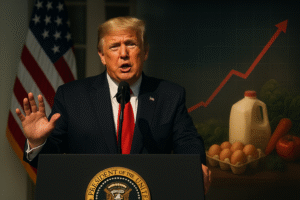

to tariffs that were previously imposed on a wide range of imported goods.
This decision marks a major shift from Trump’s earlier stance on tariffs and has triggered fresh debate on whether the move will
bring down inflation—or create new economic challenges.
In this article, we break down:
✔ Why Trump imposed tariffs in the first place
✔ Why critics said those tariffs could increase inflation
✔ Ongoing legal battles over tariff authority
✔ Why the tariff cuts are happening now
✔ How the government plans to distribute $2,000 to families
✔ What this means for food inflation and the U.S. economy
Let’s dive in.
Tariffs Were Originally Imposed to “Protect the U.S. Economy”
When Donald Trump first introduced global tariffs during his presidency, he argued that America needed to fight back against unfair trade practices.
His strategy was simple:
-
Other countries were imposing tariffs on U.S. goods
-
The U.S. should respond with its own tariffs
-
Higher tariffs, in theory, would protect American industries and jobs
Trump believed this move would make the U.S. economy stronger by reducing dependence on foreign imports and increasing domestic production.
However, things didn’t go exactly as planned.
Critics Warned That High Tariffs Would Increase Inflation
Economists, trade experts, and several lawmakers strongly criticized the tariff strategy.
Their main argument:
High tariffs = higher import costs = higher prices for consumers.
Here’s how it works:
-
U.S. importers pay the tariff to bring goods into the country
-
Businesses then raise prices to cover the tariff cost
-
Consumers end up paying more
Critics repeatedly stated that tariffs were pushing the country toward inflation, especially in sectors that rely heavily on imports like food, manufacturing, and electronics.
They warned:
-
Imported ingredients become more expensive
-
Food packaging and transport costs rise
-
Consumers see higher prices on grocery shelves
Unfortunately, many of those predictions turned out to be true.
Food Inflation Becomes a Major National Concern
Over the past year, the United States has seen steadily rising food inflation. Many families have struggled with:
-
Higher grocery bills
-
Increased cost of essential foods like milk, eggs, and meat
-
Price hikes on imported produce and packaged goods
Economists have linked part of this inflation directly to the earlier tariffs.
Food supply chains rely heavily on imports—whether it’s raw ingredients, packaging materials, or fertilizers.
So when tariffs were imposed on these goods, food production and distribution costs rose sharply.
This growing pressure has now forced a major policy shift.
Trump’s New Move: Tariff Cuts to Ease Inflation
In an effort to control food inflation and provide relief to American families, Trump has announced significant tariff cuts on many imported products.
The goal of the tariff reduction is:
-
To lower import costs
-
To reduce production expenses
-
To ease price pressures on consumers
-
To stabilize food markets
This change marks a major reversal from Trump’s earlier tariff-heavy approach.
Supporters say the cuts are necessary and urgent given current inflation.
Critics argue the move is too late and should have happened much earlier.
Were Trump’s Tariffs Even Legal? The Debate Continues
One of the most controversial aspects of Trump’s tariff strategy was whether he had the authority to impose them without Congressional approval.
Normally, Congress controls U.S. trade policy.
But Trump used a legal loophole under Section 232, claiming national security concerns.
This triggered an intense debate:
-
Supporters said presidents can act quickly on national security
-
Opponents said Trump overreached and bypassed lawmakers
Ongoing Legal Challenges
Several lawsuits were filed claiming the tariffs were:
-
Unconstitutional
-
Misused under national security laws
-
Implemented without proper oversight
These cases are still moving through the courts.
There is a possibility that courts may eventually strike down the tariffs entirely, which could lead to refunds, policy changes, and a major economic shift.
Tariff Revenue Will Fund $2,000 Payments to Families
One of the most surprising announcements linked to the tariff cuts is a government plan to distribute $2,000 to American families.
This payment will be funded directly from the revenue collected through past tariffs.
The idea is:
-
If tariffs contributed to inflation
-
And families suffered from higher prices
-
Then tariff revenue should be returned to the public
Supporters say this is a fair and necessary repayment after months of rising costs.
Critics, however, question whether the payments will be enough to offset the financial pain caused by inflation.
Still, for millions of families, a $2,000 boost could provide much-needed relief.
How Tariff Cuts Could Affect Food Prices
Cutting tariffs may help cool food inflation, but results won’t be immediate.
Here’s what may happen next:
1. Lower Import Costs
Importers will pay less for goods coming into the U.S.
This includes:
-
Raw food ingredients
-
Packaged products
-
Fertilizer and farm supplies
2. Cheaper Production for Food Companies
As supply costs fall, food manufacturers and distributors may lower their prices.
3. Grocery Prices Could Gradually Ease
Consumers may start seeing relief at grocery stores within weeks or months.
4. Global Trade Tensions May Decrease
Tariff cuts could reduce friction with other countries, improving trade relations.
While prices won’t drop overnight, the cuts are expected to bring slow but steady improvement.
Will Tariff Cuts Solve Inflation Completely?
Most economists agree:
Tariff cuts will help, but they won’t fix everything.
Food inflation is influenced by many factors, including:
-
Supply chain shortages
-
Global conflicts
-
Transportation costs
-
Weather disruptions
-
Labor shortages
Tariff cuts are just one tool.
But they may provide meaningful relief in the short term.
Over time, lower tariffs combined with economic stabilization could help restore normal pricing across the food sector.
Political Impact: A Move That Could Shape Elections
Tariff policy has always been a major political issue.
Trump’s decision to cut tariffs—after years of defending them—could influence voters in:
-
Swing states
-
Farming regions
-
Working-class communities
-
Urban areas suffering from high food prices
The $2,000 payments could also play a big role in public opinion.
Supporters may see this as strong leadership during an economic challenge.
Critics may call it a politically motivated move.
Either way, the decision is already reshaping national debate.
Conclusion: Tariff Cuts Mark a Major Economic Turning Point
Trump’s decision to cut tariffs is a major shift from his original trade strategy.
After years of defending high tariffs, the rising pressure of food inflation has forced a new approach.
Key takeaways:
-
Tariffs were initially imposed to protect the U.S. economy
-
Critics warned the tariffs would increase inflation
-
Legal challenges argue the tariffs should have gone through Congress
-
Rising food inflation pushed the government to cut tariffs
-
$2,000 payments will be given to families using tariff revenue
As inflation continues to challenge American households, these tariff cuts may bring some relief—though the full impact will take time to unfold.
This decision marks a crucial moment in U.S. trade policy and could have lasting effects on the economy, food prices, and national politics.