

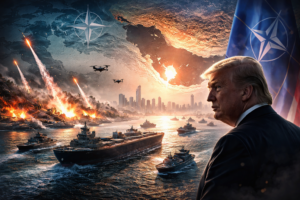

Trump has sparked controversy by openly criticizing NATO’s response to the escalating Iran crisis. His remarks have reignited debates about global security, military alliances, and the future of energy supply chains.
What Is the Strait of Hormuz and Why It Matters
The Strait of Hormuz is one of the most important oil transit routes in the world.
- Nearly 20% of global oil supply passes through this narrow waterway
- It connects the Persian Gulf to the Arabian Sea
- Major oil exporters rely heavily on it
Any disruption here affects global fuel prices instantly.
Trump’s Strong Reaction to NATO
Donald Trump has not held back his criticism.
Key Points from Trump’s Statement:
- He accused NATO of failing to act decisively
- He reportedly called some allies “cowards”
- He demanded a more aggressive stance against Iran
Trump believes NATO should take stronger military and strategic action to secure oil routes and deter Iranian threats.
What Is NATO Doing Right Now?
NATO has taken a more cautious approach.
NATO’s Current Strategy:
- Monitoring the situation closely
- Avoiding direct military escalation
- Supporting diplomatic efforts
This approach aims to prevent a full-scale war, but critics like Trump see it as weakness.
Why Trump Is Frustrated
Trump’s frustration comes from a long-standing belief that NATO members do not share enough responsibility.
His Concerns Include:
- Unequal military contributions
- Slow decision-making
- Lack of urgency in crisis situations
He has previously warned that such hesitation could embolden adversaries like Iran.
Iran’s Strong Military Response
Iran has reacted aggressively to rising tensions.
Recent Actions by Iran:
- Missile strikes targeting strategic locations
- Drone attacks on military and shipping assets
- Warnings to Western forces
These moves signal that Iran is ready to defend its interests at any cost.
Why This Crisis Is More Complex Than Expected
According to analysts, the situation is not as simple as it seems.
Key Challenges:
- Multiple global powers are involved
- Economic interests are deeply tied to the conflict
- Military escalation could trigger a wider war
Even Trump’s critics say that the crisis requires careful handling, not just strong rhetoric.
Impact on Global Oil Supply
The Strait of Hormuz crisis has already begun affecting oil shipments.
Major Effects:
- Delays in tanker movements
- Rising oil prices globally
- Increased insurance costs for shipping
Countries that depend on imported oil are especially vulnerable.
Why Dubai and Other Cities Are at Risk
Major cities in the region, especially Dubai, are facing growing threats.
Risks Include:
- Potential missile or drone attacks
- Disruption of trade and tourism
- Economic instability
Dubai is a global business hub, so any instability here has international consequences.
The Role of Military Alliances
The crisis highlights the importance—and limitations—of global alliances.
Key Questions Being Asked:
- Should NATO take direct military action?
- Can diplomacy prevent escalation?
- Are current alliances strong enough?
Trump’s comments have intensified this debate.
Global Political Reactions
Leaders around the world are responding cautiously.
Common Themes:
- Calls for de-escalation
- Support for diplomatic talks
- Concern over economic fallout
No country wants a full-scale conflict in such a sensitive region.
What Could Happen Next?
The situation remains unpredictable.
Possible Scenarios:
- Diplomatic Resolution
- Talks reduce tensions
- Shipping routes stabilize
- Limited Military Conflict
- Targeted strikes continue
- No full-scale war
- Major Escalation
- Wider regional conflict
- Severe global economic impact
Final Thoughts
The clash between Donald Trump and NATO over the Iran crisis highlights a deeper issue—how the world responds to rising geopolitical threats.
While Trump calls for stronger action, NATO remains cautious.
Meanwhile, Iran continues to assert its power, raising the stakes in an already volatile region.
With the Strait of Hormuz at the center of it all, the world is watching closely.