 Former U.S. President Donald Trump has once again shaken global trade dynamics.
This time, the focus is on Iran and the countries that continue to trade with it.
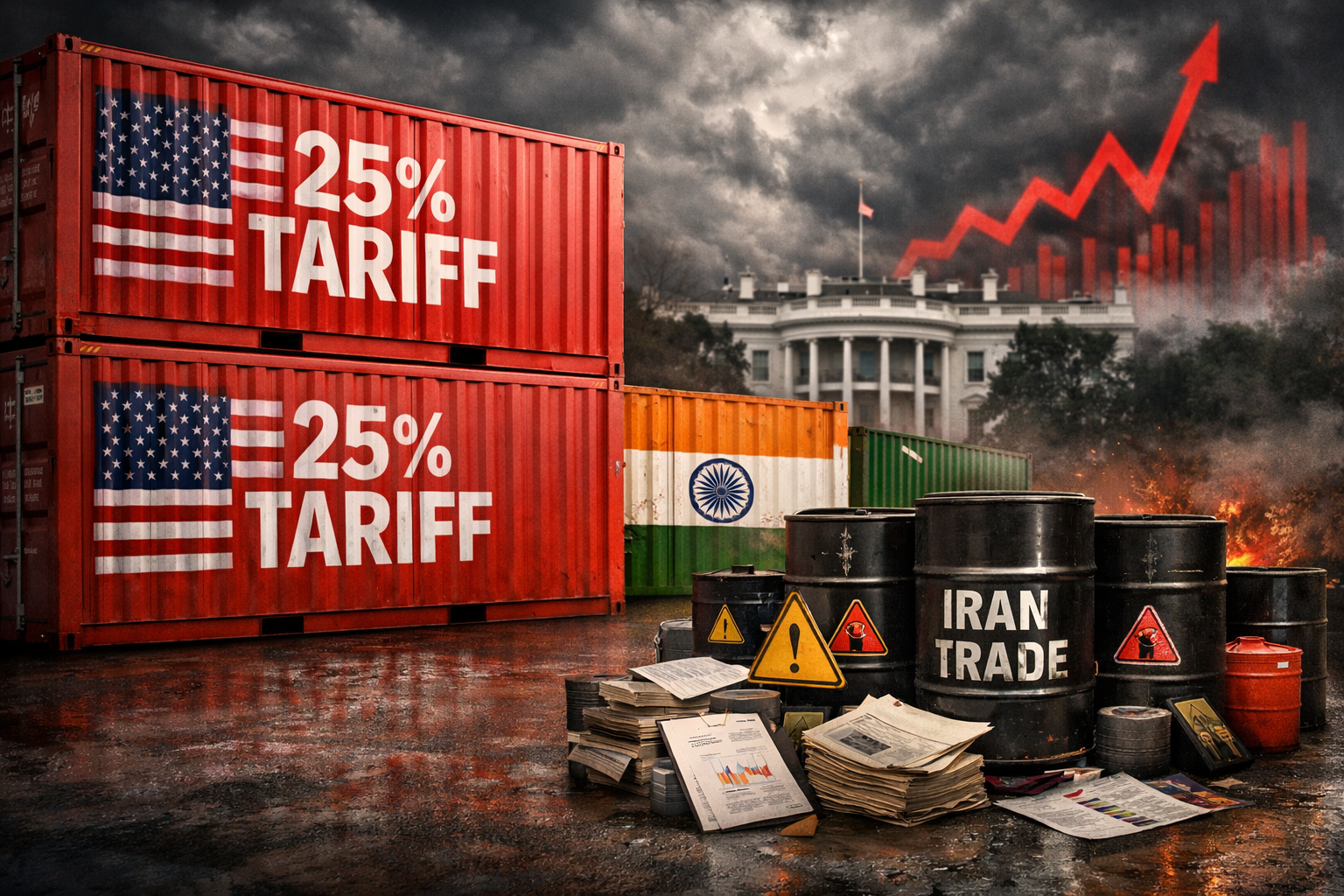
Trump has announced a 25% tariff on countries trading with Iran, a move that could deeply impact global commerce.
India, already under heavy U.S. tariffs, stands out as one of the most affected nations.
This decision signals a sharp escalation in America’s economic pressure campaign against Iran and its trade partners.
What Is the 25% Tariff Announcement About?
Donald Trump declared that any country maintaining trade relations with Iran could face a 25% import tariff from the United States.
The move is aimed at isolating Iran economically.
However, the ripple effects will extend far beyond Tehran.
Many countries still rely on Iran for energy, oil, fertilizers, and strategic trade routes.
By imposing tariffs, the U.S. is effectively forcing nations to choose between Iranian trade and access to the American market.
Why India Is at the Center of the Storm
India is already facing a 50% tariff burden on certain exports to the United States.
If Trump’s proposed 25% Iran-related tariff is added, the total tariff on Indian goods could rise to 75%.
This is alarming for several reasons.
India and Iran have long-standing trade ties, especially in:
-
Crude oil imports
-
Fertilizers
-
The Chabahar Port project
A 75% tariff would severely reduce the competitiveness of Indian exports in the U.S. market.
Impact on India-US Trade Relations
India is one of America’s key strategic partners in Asia.
But trade relations between the two nations have often been tense.
A tariff hike of this scale could:
-
Increase costs for Indian exporters
-
Hurt small and medium-scale industries
-
Reduce India’s trade surplus
Sectors like steel, pharmaceuticals, textiles, and auto components could face significant losses.
This also complicates diplomatic ties at a time when both countries need cooperation on global security and China.
Congress Bill Proposes Tariffs as High as 500%
Adding to the uncertainty, a bill currently in the U.S. Congress proposes tariffs as high as 500% on countries trading with Iran.
If passed, this would mark one of the harshest trade penalties in modern history.
Such extreme tariffs would:
-
Make Iranian trade economically impossible
-
Force countries to sever ties immediately
-
Trigger retaliatory trade measures
The bill shows how strongly anti-Iran sentiment runs in Washington, across party lines.
Is This the Beginning of a Trade War?
Many experts believe these moves could ignite a new global trade war.
Countries affected by the tariffs may respond with:
-
Counter-tariffs
-
WTO disputes
-
Strategic realignments
Emerging economies like India are especially vulnerable, as they depend heavily on export growth.
A prolonged tariff battle could slow global economic recovery and destabilize supply chains.
Legal Questions Surround Trump’s Tariff Powers
Trump’s authority to impose such sweeping tariffs is under legal scrutiny.
A recent U.S. Supreme Court judgment is pending, and its outcome could determine whether these tariffs can be enforced.
Legal experts argue that:
-
Tariffs must align with congressional approval
-
Blanket trade penalties may exceed presidential powers
If the court rules against Trump, the tariffs could be delayed or blocked entirely.
The Role of the International Emergency Economic Powers Act (IEEPA)
Trump is reportedly using the International Emergency Economic Powers Act (IEEPA) to justify these actions.
The IEEPA allows the U.S. president to regulate commerce during a declared national emergency.
Trump has previously used this law to:
-
Sanction Iran
-
Restrict Chinese companies
-
Impose emergency trade controls
Critics argue that using IEEPA for broad tariffs stretches the law beyond its original intent.
How Iran Fits Into Trump’s Strategy
Iran has long been a central target of Trump’s foreign policy.
During his presidency, Trump:
-
Withdrew from the Iran nuclear deal
-
Re-imposed heavy sanctions
-
Targeted Iran’s oil exports
The new tariff plan is seen as an extension of this pressure campaign, designed to cut off Iran’s remaining economic lifelines.
However, this strategy risks alienating allies rather than isolating Iran.
Global Reaction and Diplomatic Concerns
Countries affected by the tariffs are watching closely.
Many nations believe the move undermines:
-
Free trade principles
-
Multilateral cooperation
-
WTO frameworks
India, the EU, and Asian economies may seek diplomatic exemptions or legal remedies.
If negotiations fail, global trade fragmentation could increase.
What Happens Next?
Several factors will decide the final outcome:
-
The Supreme Court’s ruling
-
Congressional approval of the 500% tariff bill
-
Responses from affected countries
For India, the priority will be balancing strategic ties with the U.S. while protecting national economic interests.
Businesses are already preparing for worst-case scenarios.
Conclusion: High Stakes for Global Trade
Trump’s announcement of a 25% tariff on countries trading with Iran marks a major escalation in economic warfare.
For India, the possibility of a 75% total tariff is deeply concerning.
With Congress considering even harsher penalties and legal battles unfolding, the future of global trade relations remains uncertain.
One thing is clear:
These tariffs could reshape international commerce, diplomacy, and alliances for years to come.