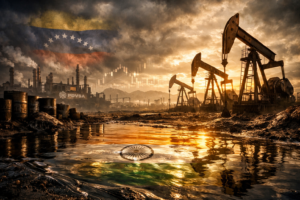
 The ongoing economic and political crisis in Venezuela may unexpectedly turn into a financial opportunity for India. According to recent discussions and expert analysis, India could recover nearly $1 billion that has been stuck for years due to international sanctions on Venezuela.
This development is closely linked to U.S. sanctions, Venezuela’s oil-driven economy, and shifting global geopolitics. If conditions improve, India may finally receive long-pending payments for oil imports and other trade dealings.
This article explains how Venezuela’s crisis could benefit India, why the money was blocked, and what role oil, sanctions, and geopolitics play in this unfolding situation.
Understanding Venezuela’s Economic Crisis
Venezuela is facing one of the worst economic crises in modern history. Hyperinflation, collapsing infrastructure, political instability, and declining oil production have severely damaged the country’s economy.
For decades, Venezuela depended heavily on oil exports as its primary source of income. When oil revenues declined and sanctions intensified, the country struggled to meet its international financial commitments.
As a result, payments to countries like India remained unpaid or frozen.
How U.S. Sanctions Impacted Venezuela
A major turning point came during the presidency of Donald Trump, when the United States imposed strict economic sanctions on Venezuela.
These sanctions were aimed at:
-
Weakening the Maduro government
-
Restricting Venezuela’s oil exports
-
Blocking financial transactions involving Venezuelan entities
Due to these restrictions, Venezuela could not freely transfer money through the global banking system. This directly affected payments owed to foreign partners, including India.
Even when Venezuela wanted to pay, sanctions made transactions nearly impossible.
Why India’s Money Got Stuck
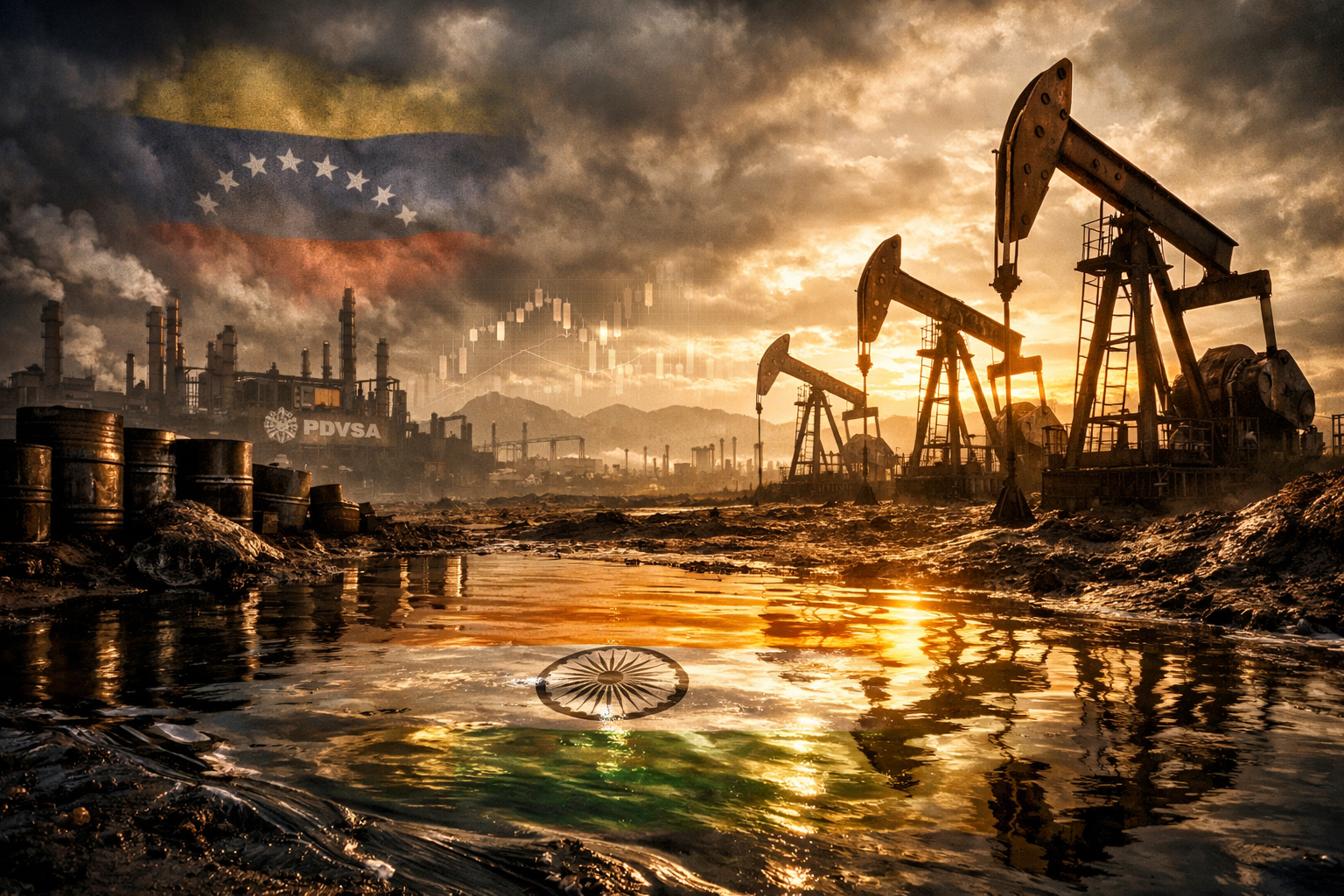
India was once one of the largest buyers of Venezuelan crude oil. Indian refiners imported large quantities of oil, especially heavy crude suited for Indian refineries.
However, after sanctions were imposed:
-
Payments could not be routed through banks
-
Oil trade slowed or stopped
-
Outstanding dues remained unpaid
Over time, these unpaid amounts accumulated and are now estimated to be close to $1 billion.
This money belongs to Indian companies and, indirectly, strengthens India’s foreign trade balance if recovered.
The Importance of the Orinoco Belt
One of the most critical elements of Venezuela’s oil economy is the Orinoco Belt.
The Orinoco Belt is:
-
One of the largest oil reserves in the world
-
Rich in heavy crude oil
-
Central to Venezuela’s energy exports
Historically, oil from this region fueled Venezuela’s economy and funded government spending.
For India, oil from the Orinoco Belt was strategically important because Indian refineries are designed to process heavy crude efficiently.
Any revival of production or exports from this region improves Venezuela’s ability to clear its dues.
PDVSA: Backbone of Venezuela’s Economy
At the center of Venezuela’s oil industry is PDVSA (Petróleos de Venezuela, S.A.), the state-owned oil company.
PDVSA:
-
Controls oil production and exports
-
Generates the majority of Venezuela’s foreign income
-
Plays a key role in global oil trade
However, years of mismanagement, sanctions, and underinvestment have weakened PDVSA.
Despite this, PDVSA remains crucial for settling international payments, including those owed to India.
If PDVSA regains limited access to global markets, clearing outstanding payments becomes possible.
Changing Geopolitics Could Help India
Global geopolitics is slowly shifting.
In recent times:
-
Some restrictions on Venezuela have been eased
-
Diplomatic engagement has increased
-
Energy security concerns have grown worldwide
The global demand for oil, especially after geopolitical conflicts elsewhere, has made Venezuela relevant again.
If sanctions are relaxed or workarounds are allowed, Venezuela could legally move funds—opening the door for India to recover its money.
How India Could Recover Nearly $1 Billion
Experts believe India’s recovery could happen through:
-
Settlements via alternative banking channels
-
Oil-for-payment or barter-style arrangements
-
Gradual easing of U.S. sanctions
-
Diplomatic negotiations
India has maintained a cautious but pragmatic approach to Venezuela, avoiding direct confrontation while protecting its economic interests.
This balanced diplomacy increases the chances of recovering pending dues.
Why This Matters for India’s Economy
Recovering nearly $1 billion is significant for India.
It would:
-
Strengthen India’s foreign exchange position
-
Improve the balance of trade
-
Benefit Indian oil companies
-
Reduce financial losses from stalled deals
At a time when global markets are uncertain, unlocking stuck funds is a major financial win.
Lessons from the Venezuela Crisis
The situation also offers key lessons:
-
Over-dependence on sanctions-prone markets carries risks
-
Geopolitics can freeze even legitimate trade
-
Energy security needs diversification
India has already started diversifying oil imports, reducing dependence on any single country.
However, recovering old dues remains equally important.
What Lies Ahead
The road ahead depends on several factors:
-
U.S. policy decisions
-
Venezuela’s internal stability
-
Global oil prices
-
Diplomatic negotiations
If conditions align, India could finally unlock money that has been stuck for years.
While nothing is guaranteed, current developments suggest cautious optimism.
Conclusion
The Venezuela crisis, though tragic for the country, may bring a financial opportunity for India.
With nearly $1 billion potentially recoverable, India stands to gain from shifting geopolitics and evolving energy dynamics.
U.S. sanctions, PDVSA’s role, the Orinoco Belt, and oil diplomacy all play crucial roles in this unfolding story.
If managed carefully, India could turn a long-standing economic challenge into a strategic win.