
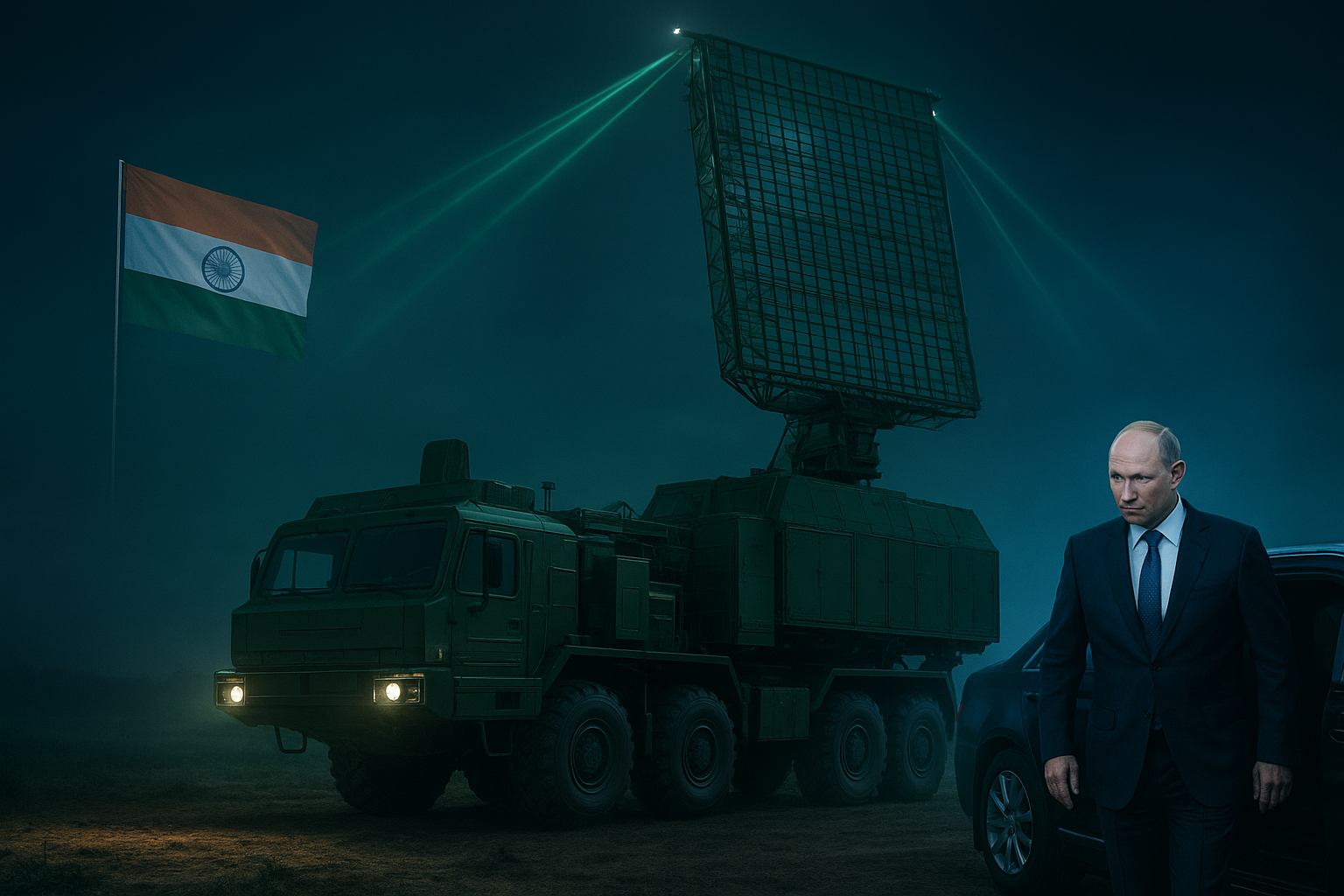
 The recent discussions around Russian President Vladimir Putin’s visit to India have brought a powerful and lesser-known defense system into the spotlight — the S-500 missile system. Many people already know about the S-400, which India has purchased, but the S-500 represents an even more advanced generation of air and missile defense technology.
In this article, we break down what the S-500 missile system is, how it compares to the S-400, why it matters for India, and how Putin’s visit could influence India’s future defense roadmap.
What is the S-500 Missile System?
The S-500 Prometey (also called 55R6M Triumfator-M) is Russia’s most advanced next-generation air defense and missile interception system. Designed by Almaz-Antey, it is built to operate above and beyond the capabilities of the S-400.
While the S-400 is already considered one of the world’s best long-range air defense systems, the S-500 is a major leap forward. It is designed to engage a wider range of threats — from aircraft and drones to cruise missiles and tactical ballistic missiles.
In simple words:
The S-500 is a super-advanced shield designed to protect a country from almost any aerial threat.
Why is the S-500 Important for India?
India has already acquired the S-400, but global security challenges are evolving rapidly. China’s military modernisation, Pakistan’s tactical missile developments, and changes in global geopolitics make future-ready air defense extremely crucial.
Putin’s visit to India has fueled speculation about:
-
Whether India is exploring the S-500
-
How Russia could support India’s next-phase defense modernization
-
Possible cooperation on advanced radar, interception tech, or co-production
With India strengthening its air defense shield, discussions about the S-500 have gained momentum.
S-500 vs S-400: Key Differences
Many people ask: Is the S-500 just an upgraded S-400?
The answer: No. It is a much more advanced and powerful system.
Here’s a simple comparison:
| Feature | S-400 | S-500 |
|---|---|---|
| Max Range | ~250–300 km | ~380–400 km |
| Target Types | Aircraft, UAVs, cruise missiles | + Tactical ballistic missiles, + hypersonic threats |
| Radar Capability | Excellent | Much stronger, tracks more targets simultaneously |
| Reaction Time | Very fast | Even faster |
| Max Altitude | ~30 km | Up to 30 km and beyond |
The S-500 is designed to counter more modern and complex threats, especially those seen in current geopolitical conflicts.
Multi-Missile Architecture: A Game-Changer
One of the strongest features of the S-500 is its multi-missile architecture.
This means the S-500 can launch and operate different types of missiles from the same system. Each missile has its own purpose:
-
Some intercept aircraft
-
Some hit cruise missiles
-
Some destroy high-speed ballistic missiles
-
Some are designed for high-altitude or long-range engagements
This flexibility allows the S-500 to adapt instantly based on the type of threat approaching.
For India, this kind of layered, multi-role defense system fits perfectly into the country’s long-term air defense strategy.
Long-Range Radar: Tracks Hundreds of Targets at Once
The S-500’s radar capability is one of its biggest highlights.
It uses high-power long-range radar systems that can:
-
Track hundreds of targets simultaneously
-
Identify threats from long distances
-
Lock onto fast-moving targets
-
Detect stealth aircraft and low-observable objects
This radar network gives the S-500 a level of battlefield awareness that very few global systems can match.
For a country like India with a large and complex airspace, this radar power could significantly boost national security.
Range of 380 to 400 km: Protecting Huge Airspace Zones
The S-500’s interception range falls between 380 to 400 km.
This means:
-
A single S-500 battery can protect large sections of territory
-
It can detect hostile aircraft or missiles long before they enter Indian airspace
-
It increases reaction time during emergencies
-
It expands India’s defensive coverage without needing too many installations
For India — a nation with diverse terrain and vast borders — this extended range could be a huge advantage.
Engages Targets at 30 km Altitude
Another impressive feature is its ability to engage threats at altitudes up to 30 km.
This altitude coverage is important for:
-
Intercepting ballistic missiles
-
Countering high-altitude UAVs
-
Stopping cruise missiles flying at different levels
-
Protecting strategic military and civilian infrastructure
This high-altitude interception capability places the S-500 in a unique category among global air defense systems.
Quick Reaction Time: Swift Response in Emergencies
The S-500 has been designed with an extremely quick reaction time.
This means:
-
It can detect, identify, and intercept a threat within seconds
-
It reacts faster than older missile systems
-
It reduces the chances of any successful enemy strike
-
It offers real-time defense even in fast-moving conflicts
In modern warfare, where threats like drones, hypersonic weapons, and surprise attacks are becoming common, reaction speed is everything.
How Putin’s Visit to India Connects to the S-500
Putin’s visit sparked deeper discussions between India and Russia on defense cooperation.
While there is no official confirmation, experts believe India may be exploring:
1. Future Purchase or Technology Transfer
India could consider the S-500 as part of its long-term air defense upgrade plan.
2. Strengthening Strategic Partnership
The S-500 discussions highlight deeper trust between India and Russia on sensitive defense technologies.
3. Potential Co-Production
India has been pushing for Make in India. Future Russian systems could be locally manufactured.
4. Radar and Missile Technology Support
India may seek advanced radar and interception technologies to integrate with its existing S-400 units.
Putin’s visit has clearly opened the door for more advanced military cooperation that could shape India’s defense landscape for decades.
Why India Needs Systems Like the S-500
India faces multiple kinds of threats:
-
Drones and UAV attacks
-
Long-range surveillance aircraft
-
Cruise missiles from hostile neighbors
-
Tactical and short-range ballistic missiles
-
Potential hypersonic threats in the future
The S-500 answers all these modern challenges.
It helps India prepare for:
-
High-intensity conflicts
-
Multi-front scenarios
-
Surprise missile attacks
-
Aerial intrusions
-
Future warfare based on long-range precision strikes
Could India Actually Get the S-500?
While it is not confirmed, the possibility is real because:
-
India and Russia have a strong defense relationship
-
India is already operating the S-400
-
Russia is willing to share advanced technology with India
-
India wants stronger missile defense for the next 25–30 years
If India ever acquires the S-500, it would become one of the only nations in the world to operate such a powerful system.
Conclusion: The S-500 Could Transform India’s Defense Future
The S-500 is not just an upgraded S-400 — it is a complete next-generation defense shield.
With features like:
-
380–400 km range
-
Multi-missile capability
-
High-altitude interception
-
Powerful long-range radar
-
Fast reaction time
-
Ability to track hundreds of targets at once
…the S-500 stands among the most advanced air defense systems on Earth.
Putin’s visit to India has brought attention to this powerful system and its potential role in India’s future military strategy.
If India eventually secures the S-500, it could dramatically strengthen national security and give India one of the world’s most advanced air defense capabilities.