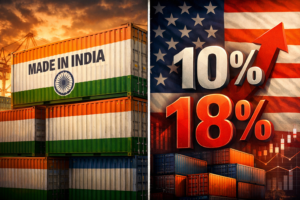
 The debate over Trump tariffs on Indian goods is back in the spotlight. A recent U.S. Supreme Court development has created fresh confusion about how much tariff Indian exports may actually face.
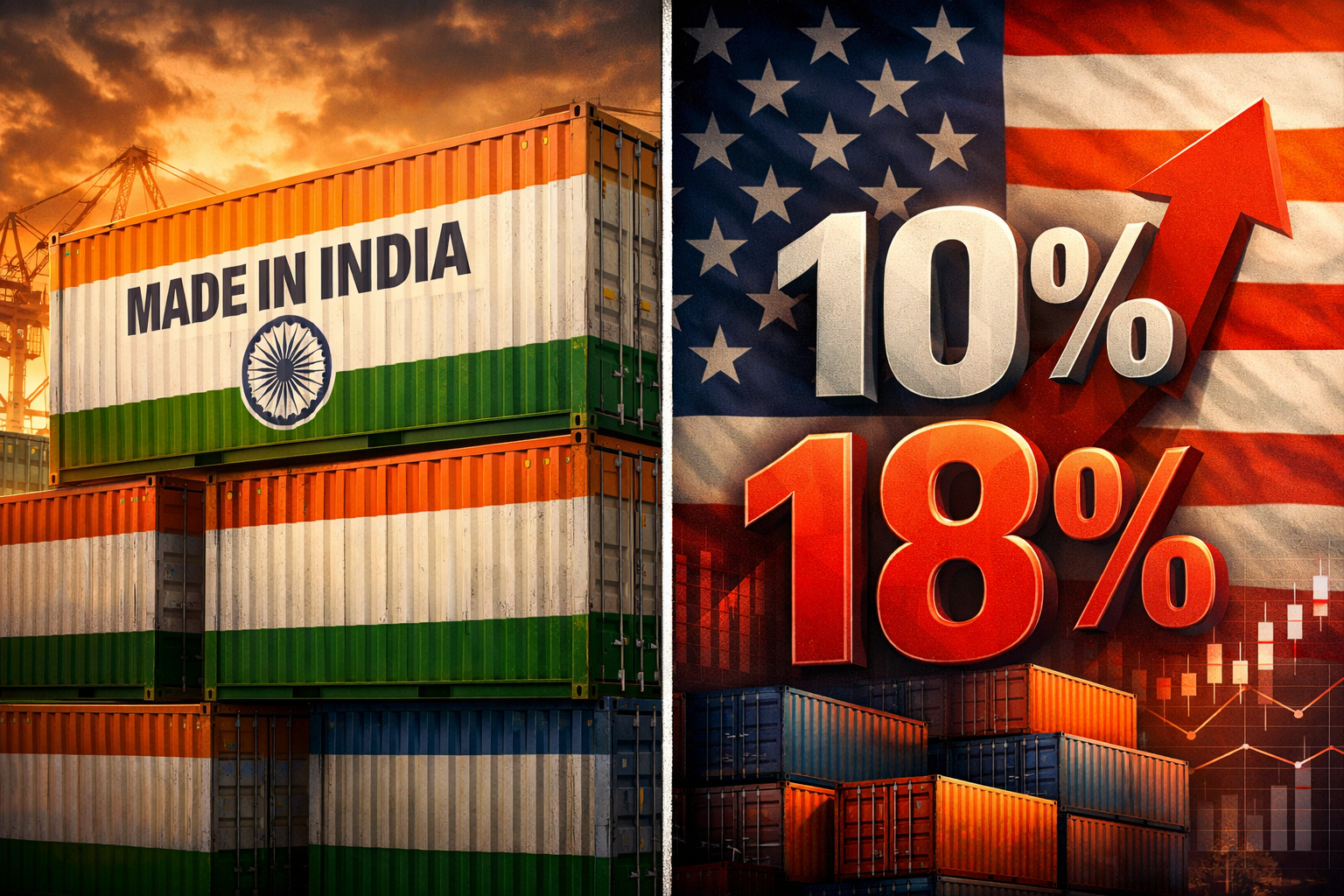
Will it be 10%?
Could it rise to 18%?
Or even go as high as 25%?
In this article, we break down the issue in simple terms. We look at the legal background, Trump’s tariff strategy, and what it could mean for India’s economy.
Why Is There Confusion About Tariffs?
The confusion began after a Supreme Court order in the United States triggered renewed discussions about trade powers and executive authority.
The video that sparked the debate highlights several key concerns:
-
There is uncertainty about the exact tariff rate.
-
Estimates range from 0% to 25%.
-
The minimum baseline being discussed is 10%.
-
Trump’s trade strategy focuses on reciprocal tariffs.
This uncertainty has left exporters and policymakers in India worried about future trade costs.
What Are Tariffs and Why Do They Matter?
A tariff is a tax imposed on imported goods.
When the U.S. places tariffs on Indian products:
-
Indian goods become more expensive in the U.S.
-
American buyers may look for cheaper alternatives.
-
Indian exporters may lose competitiveness.
For a country like India, which exports billions of dollars’ worth of goods to the U.S., even a small tariff increase can have major economic consequences.
Historical Context: Tariffs Before and After Trump
To understand the present confusion, we need to look at history.
Before Trump’s Presidency
Before Donald Trump became president in 2017:
-
The U.S. had relatively stable trade relations with India.
-
Tariff structures were predictable.
-
Trade tensions existed, but they were manageable.
During Trump’s Presidency
Trump changed the approach dramatically.
His administration:
-
Emphasized “America First” trade policies.
-
Imposed higher tariffs on several countries.
-
Removed India from the Generalized System of Preferences (GSP).
-
Introduced reciprocal tariff threats.
Under Trump, a baseline tariff of 10% became a key reference point in trade negotiations.
What Is the 10% Baseline Tariff?
The 10% figure often comes up as the minimum tariff level under Trump-style trade policy.
This means:
-
Even if no special penalties apply, imports could face at least a 10% tariff.
-
Countries with higher tariffs on U.S. goods could face matching increases.
For Indian exporters, this baseline creates a risk floor. Even in the best-case scenario, they might not get zero tariffs.
Could It Be 18% or Higher?
Some analysts suggest the tariff could go beyond 10%.
Here’s why:
-
Trump supports reciprocal tariffs.
-
If India imposes higher duties on U.S. goods, the U.S. may respond in kind.
-
Certain sectors could face higher “strategic tariffs.”
Estimates range from:
-
0% (if trade negotiations succeed)
-
10% (baseline)
-
18% (moderate escalation)
-
25% (maximum projected scenario)
The exact number depends on political decisions, court rulings, and trade negotiations.
What Are Reciprocal Tariffs?
One of Trump’s core trade ideas is reciprocity.
The principle is simple:
If you tax American goods at 20%, we will tax your goods at 20%.
This approach aims to pressure countries into lowering their tariffs.
In India’s case:
-
Some U.S. products face higher import duties in India.
-
The U.S. may argue for equal treatment.
-
This could justify higher tariffs on Indian exports.
Reciprocal tariffs can quickly escalate into trade tensions.
How Does the Supreme Court “Bombshell” Fit In?
The recent Supreme Court development has revived questions about executive authority in trade decisions.
While the Court ruling does not directly set tariff rates, it affects:
-
The legal foundation for tariff actions.
-
The president’s ability to impose emergency trade measures.
-
How future administrations might enforce trade policies.
This legal shift adds uncertainty to global trade relationships, including India-U.S. trade.
Which Indian Sectors Could Be Affected?
If tariffs rise to 10% or 18%, several Indian industries could feel the impact.
1. Pharmaceuticals
India is a major supplier of generic medicines to the U.S.
Higher tariffs could:
-
Increase costs for American buyers.
-
Disrupt supply chains.
-
Reduce India’s competitive advantage.
2. IT and Technology Products
While services are less affected by tariffs, hardware exports could face higher duties.
3. Textiles and Apparel
This sector is highly price-sensitive.
Even a 10% tariff increase could:
-
Reduce demand.
-
Shift orders to Vietnam or Bangladesh.
4. Steel and Metals
These sectors have already experienced tariff fluctuations in the past.
Further increases could intensify pressure.
What Does This Mean for India’s Economy?
The U.S. is one of India’s largest trading partners.
If tariffs increase:
-
Export growth could slow.
-
Trade deficits may widen.
-
Currency pressure could rise.
-
Investment sentiment may weaken.
However, the impact depends on the final rate.
A 10% tariff may be manageable.
An 18% or 25% tariff could significantly affect export-driven sectors.
Is 0% Tariff Still Possible?
Some experts argue that zero tariffs are still possible.
This would require:
-
Successful trade negotiations.
-
Mutual tariff reductions.
-
Diplomatic engagement between both governments.
India and the U.S. have strategic ties beyond trade, including defense and technology cooperation.
These broader relationships could prevent extreme tariff escalation.
Political Factors Behind Tariff Decisions
Tariff policies are not purely economic.
They are deeply political.
Trump’s trade strategy focuses on:
-
Protecting American industries.
-
Reducing trade deficits.
-
Appealing to domestic manufacturing voters.
If Trump returns to office, tariff policy could once again become aggressive.
That increases uncertainty for Indian exporters.
How Can India Respond?
India has several options.
1. Negotiate Bilateral Agreements
Trade talks could reduce tariff tensions.
2. Diversify Export Markets
Reducing dependence on the U.S. market lowers risk.
3. Adjust Domestic Tariffs
Lowering tariffs on U.S. goods could avoid reciprocal hikes.
4. Strengthen Domestic Demand
A strong internal market reduces reliance on exports.
What Should Businesses Do Now?
Indian exporters should prepare for multiple scenarios.
Key steps include:
-
Monitoring U.S. trade policy developments.
-
Reviewing pricing strategies.
-
Exploring alternative markets.
-
Hedging currency risks.
-
Building flexible supply chains.
Uncertainty is the biggest risk right now.
Preparation is crucial.
Final Verdict: 10% or 18% Trump Tariff?
So, will Indian goods face a 10% or 18% Trump tariff?
The honest answer is: It depends.
At present:
-
10% appears to be the likely baseline.
-
18% is possible under reciprocal escalation.
-
25% represents a more aggressive scenario.
-
0% remains achievable if diplomacy succeeds.
The situation remains fluid.
Legal developments, political decisions, and trade negotiations will determine the final outcome.
Why This Matters for Global Trade
This issue is not just about India.
It reflects a broader shift in global trade policy:
-
Rising protectionism.
-
Emphasis on reciprocity.
-
Greater use of tariffs as political tools.
For emerging economies like India, adaptability is key.
Conclusion
The question of whether Indian goods will face a 10% or 18% Trump tariff highlights deeper uncertainty in U.S.-India trade relations.
The Supreme Court development has added complexity.
Trump’s reciprocal tariff philosophy increases the risk of higher duties.
Yet strong diplomatic ties could prevent escalation.
For now, businesses and policymakers must stay alert.
The final tariff rate will shape not only India’s export future but also the direction of global trade in the coming years.
As negotiations unfold, one thing is clear:
Trade policy is no longer predictable. And preparation is more important than ever.