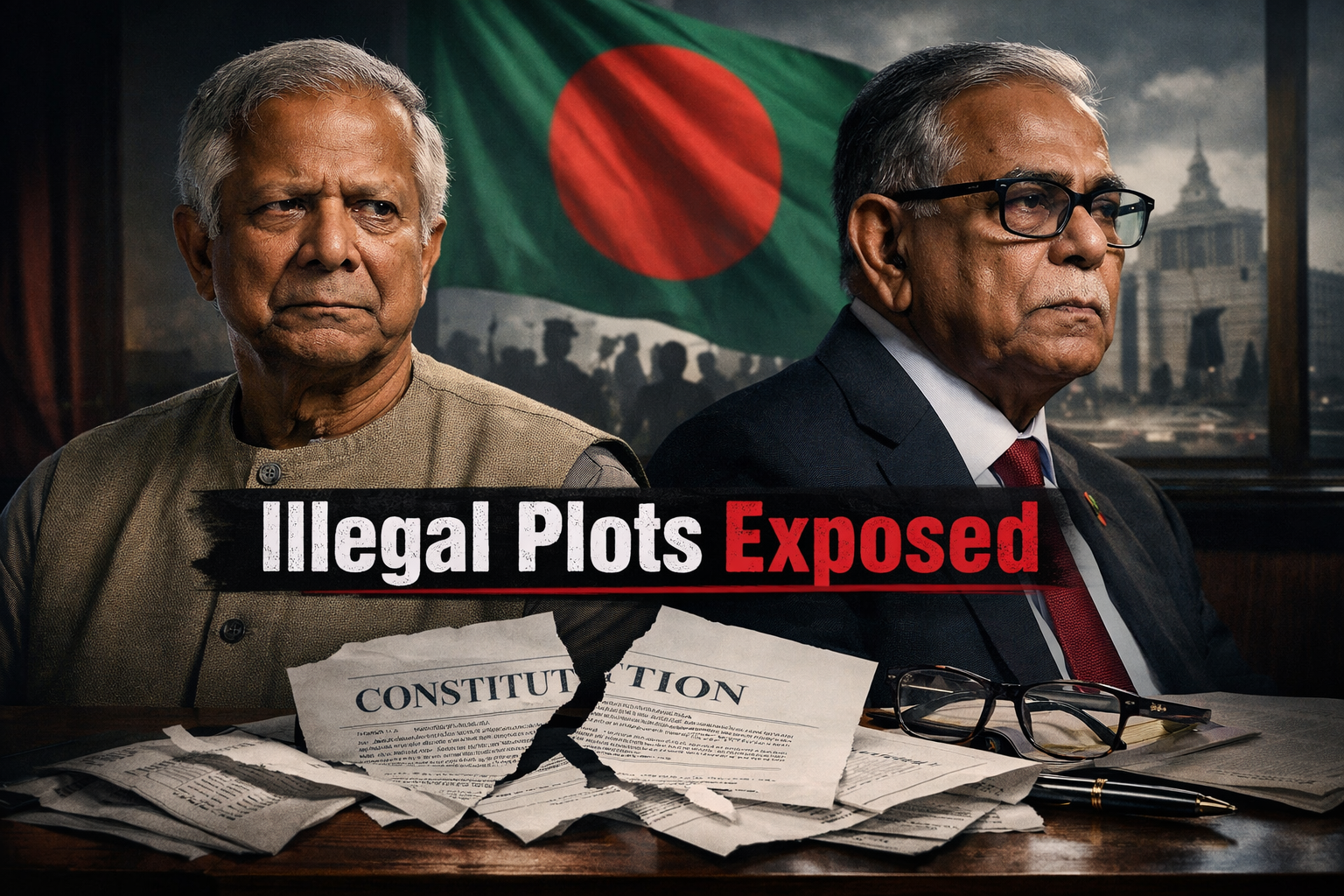
 Political tensions in Bangladesh are rising fast after explosive claims from the country’s top leadership. A fresh controversy has put Mohammad Yunus at the center of serious allegations that could reshape the nation’s political future.
In a strong public statement, Mohammad Shahabuddin accused Yunus of unconstitutional behavior, political manipulation, and actions that have damaged both domestic stability and foreign relations.
The President’s remarks have shocked many citizens and triggered debates across South Asia. From worsening ties with India to growing insecurity for minorities, the accusations paint a troubling picture of governance failures and hidden agendas.
This article breaks down the key issues, explains the political impact, and explores what this means for Bangladesh’s future.
Why the Yunus controversy matters
Bangladesh has long balanced economic growth with political challenges.
However, recent developments suggest the country is facing deeper instability.
The President claims Yunus’s actions were not just political disagreements.
He described them as illegal moves that crossed constitutional boundaries.
If these claims are proven, they could lead to major political and legal consequences.
For citizens, the situation raises concerns about democracy, safety, and international reputation.
Allegations of unconstitutional plots
In his media interview, President Shahabuddin made direct and serious accusations.
He said Yunus tried to undermine the constitutional order.
According to him, there were deliberate attempts to remove him from power.
These alleged efforts included political pressure and behind-the-scenes plotting.
The President described it as an organized campaign rather than routine political rivalry.
Such actions, if true, could be considered violations of democratic norms.
Many experts say this could be one of the biggest political controversies in Bangladesh’s recent history.
Bangladesh-India relations under strain
One of the most important points raised in the discussion is the damage to Bangladesh’s relationship with India.
India has traditionally been a key partner for Bangladesh.
Both countries share strong economic, cultural, and security ties.
But recent tensions have weakened cooperation.
The President believes Yunus’s decisions worsened diplomatic trust.
Poor coordination and controversial policies reportedly created misunderstandings.
Trade, border security, and regional stability depend heavily on good relations between the two nations.
Any disruption could affect millions of people on both sides.
For businesses and investors, strained ties mean uncertainty.
For citizens, it means fewer opportunities and more risks.
Rising instability inside Bangladesh
Domestic stability is another major concern.
The President warned that the country has seen increasing unrest.
Political conflicts have created divisions within society.
Protests, fear, and uncertainty are becoming more common.
When leadership struggles intensify, ordinary people suffer the most.
Economic growth slows down.
Jobs become scarce.
Investments decline.
Public trust in institutions weakens.
Analysts say these signs indicate deeper governance problems that must be addressed quickly.
Violence against minorities
Perhaps the most alarming issue is the reported violence against minority communities.
The President highlighted several incidents that show growing insecurity.
Minorities are feeling unsafe in many areas.
These attacks threaten social harmony.
Bangladesh has always been known for its diverse culture and religious coexistence.
But rising violence damages this image.
It also harms the country’s global reputation.
Human rights groups are calling for immediate action.
They want stronger protection and accountability.
Without safety for all citizens, true development is impossible.
Cricket crisis and World Cup setback
Sports, especially cricket, play a big role in Bangladesh’s national pride.
However, even this area has not escaped the political turmoil.
The Bangladesh national cricket team reportedly faced serious safety concerns.
Because of the unstable environment, the team struggled to participate in the Cricket World Cup.
Players were allegedly not properly consulted about security risks.
This created frustration within the squad.
For fans, missing or disrupted participation is heartbreaking.
Cricket unites the nation.
When politics interferes with sports, it reflects deeper problems.
The situation shows how instability affects every part of society, not just politics.
Claims of suppression during tenure
President Shahabuddin also revealed that he felt suppressed during Yunus’s influence.
He said his authority was limited.
Important decisions were allegedly taken without his approval.
This, according to him, weakened the presidency.
He now feels free to speak openly and expose what he calls “dark plots.”
His statements suggest that internal power struggles prevented smooth governance.
If true, this raises serious questions about transparency and accountability.
Citizens deserve leaders who respect constitutional roles.
Public reaction grows
The public response has been intense.
Social media is filled with debates.
Some support the President’s claims.
Others defend Yunus and call the accusations political.
Still, most people agree on one thing.
Bangladesh needs stability.
Businesses want predictable policies.
Students want opportunities.
Families want safety.
Nobody benefits from constant political battles.
People are now demanding clear answers and evidence.
What happens next?
Several possible scenarios could unfold.
There could be investigations into the allegations.
Courts may get involved.
Political alliances could shift.
New elections or leadership changes are also possible.
Everything depends on how the government handles the crisis.
If handled transparently, trust can be restored.
If ignored, tensions could worsen.
Experts say dialogue and rule of law are crucial.
Only fair processes can solve the conflict peacefully.
Impact on economy and image
Bangladesh has made impressive economic progress in recent years.
It has attracted foreign investment.
It has improved infrastructure.
It has created jobs.
But political instability can quickly reverse gains.
Investors avoid uncertain markets.
Tourism declines.
International partnerships weaken.
The current controversy risks damaging the country’s image.
Restoring confidence must be a top priority.
Strong governance and accountability can help rebuild trust.
The bigger picture
The Yunus controversy is not just about one individual.
It reflects larger issues about power, democracy, and responsibility.
Bangladesh stands at a crossroads.
Leaders must choose between confrontation and cooperation.
Citizens expect honesty and stability.
The President’s bold statements have opened a new chapter.
Whether it leads to reform or more conflict remains to be seen.
But one thing is clear.
The future of Bangladesh depends on respecting the constitution and protecting every citizen.
Conclusion
The accusations that Yunus acted illegally have shaken Bangladesh’s political landscape.
President Shahabuddin’s revelations have exposed alleged unconstitutional plots, damaged foreign relations, rising minority violence, and even sporting disruptions.
These claims highlight serious challenges facing the nation.
Bangladesh now needs unity, transparency, and lawful governance.
Only then can the country move forward with peace and stability.
The coming months will be crucial.
The world is watching how Bangladesh responds to this historic moment.