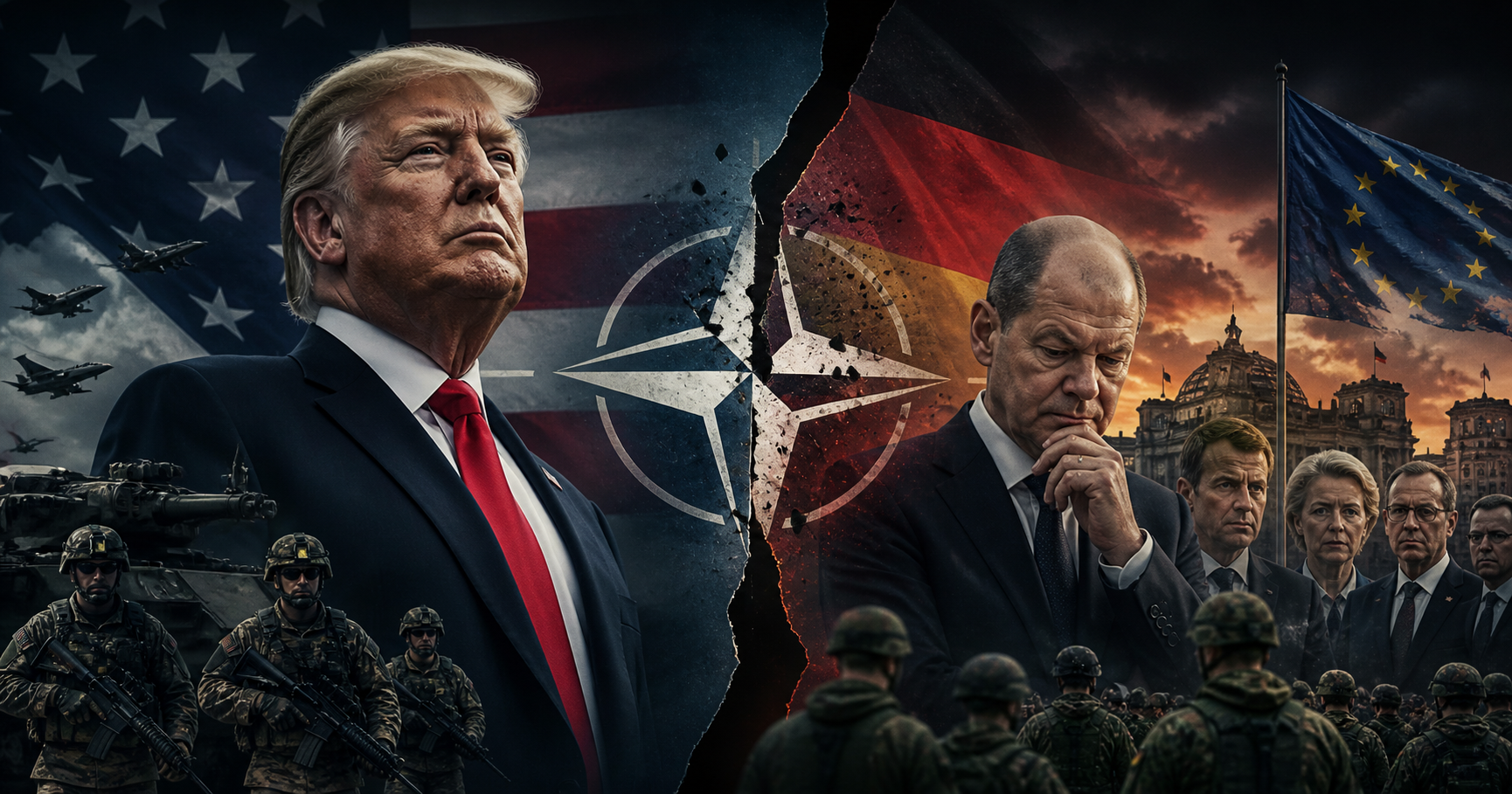
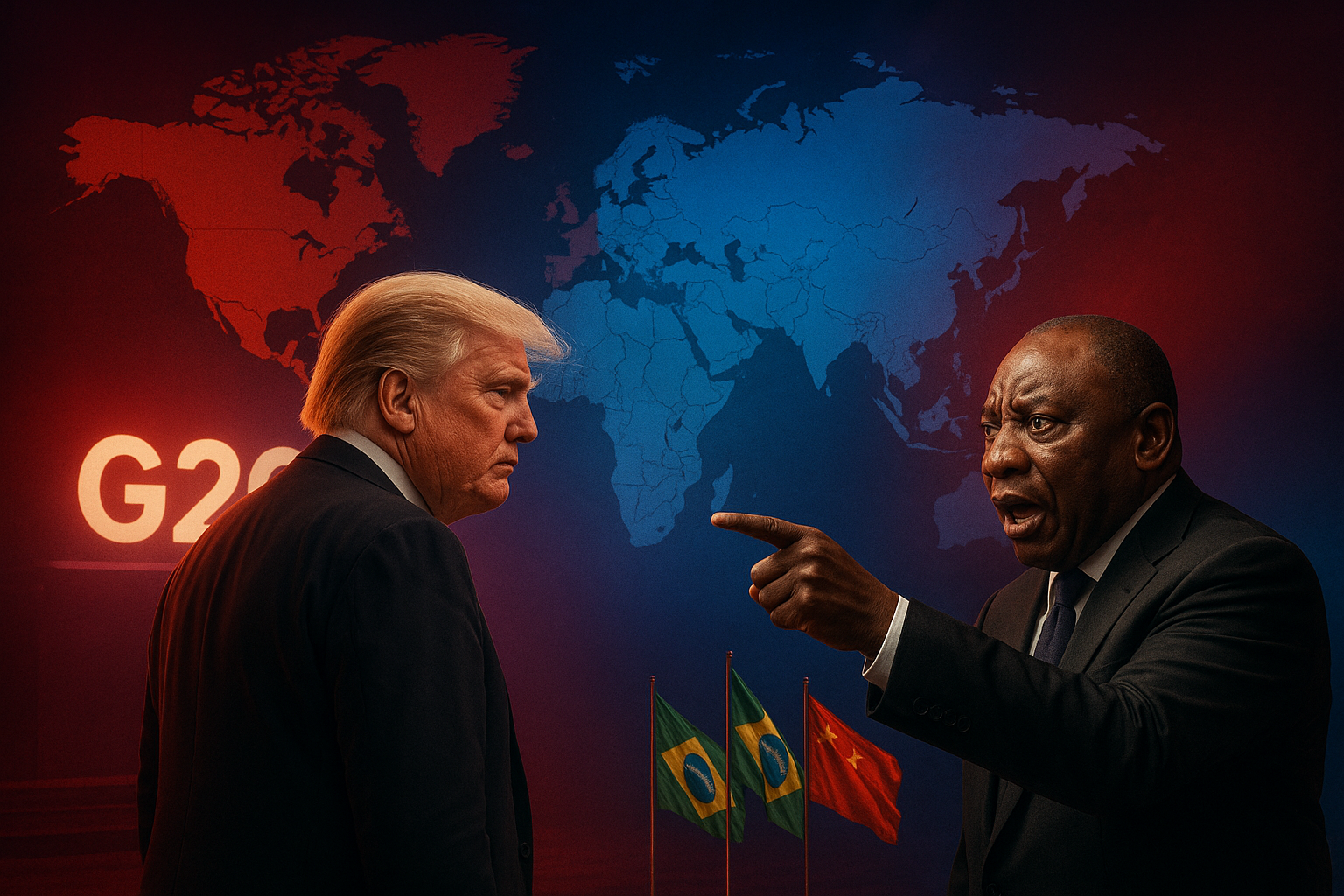
 The global political landscape has entered another storm as Donald Trump officially announces he will not attend the G20 Summit, triggering what many analysts now call a historic U.S. boycott.
This move immediately sparked reactions worldwide—especially from South African President Cyril Ramaphosa, who has openly criticized U.S. foreign policy for years.
This article breaks down the Trump–Ramaphosa tensions, the US-China G2 fear, and the growing debate on whether America is trying to suppress a multipolar world order.
We’ll also highlight an important segment from Kinjal’s video urging viewers to take part in a major UCSC Test event offering scholarships and rewards.
Let’s dive in.
Trump Officially Boycotts the G20 Summit
Former U.S. President Donald Trump shocked diplomats and media houses by announcing he would not attend the upcoming G20 Summit.
This move is unprecedented—because attending G20 is considered a basic obligation for major world leaders, especially for the United States.
Why the boycott matters
-
The G20 is the world’s most important economic forum.
-
It gathers the largest economies to coordinate global financial stability.
-
A U.S. absence signals political protest, not mere scheduling conflict.
Trump’s decision instantly raised global concerns:
Is America withdrawing from multilateral platforms again?
Is this about foreign policy clashes?
Or is Trump sending a message to specific leaders?
The answer lies in his growing friction with one man—Cyril Ramaphosa.
Ramaphosa’s Criticism Plays a Key Role
According to multiple political analysts, Trump’s boycott is widely seen as a reaction to Ramaphosa’s outspoken criticism of U.S. foreign policy.
Ramaphosa has often accused Washington of:
-
Practicing global bullying
-
Punishing countries that don’t align with American interests
-
Using sanctions as a tool to micro-manage global politics
-
Blocking the emergence of a fair multipolar world
These statements hit hard in Washington.
Trump, who strongly believes in an “America First” foreign policy, took Ramaphosa’s comments as personal attacks.
Why Trump took Ramaphosa’s remarks seriously
-
Ramaphosa represents one of the most influential voices in the Global South.
-
South Africa is a key member of BRICS, a bloc challenging U.S. dominance.
-
His criticism fuels the global debate about U.S. hegemony.
Ramaphosa’s remarks did not stay diplomatic—they became open confrontations.
Tensions Between Trump and Ramaphosa Explained
The relationship between Trump and Ramaphosa has been tense for years.
Kinjal’s video highlights several points explaining the depth of this conflict.
1. Ideological clash
Trump represents a unipolar, U.S.-centric worldview.
Ramaphosa represents a multipolar, pro-BRICS vision.
These worldviews cannot peacefully coexist.
2. Trade and sanctions disputes
Ramaphosa has repeatedly opposed U.S. sanctions on:
-
Russia
-
Iran
-
African countries accused of corruption or political instability
To him, sanctions harm ordinary people and undermine sovereignty.
To Trump, sanctions are tools to enforce U.S. global leadership.
3. South Africa’s BRICS expansion
South Africa played a huge role in expanding BRICS+, bringing more countries into the bloc.
BRICS is seen as a direct challenge to U.S. economic dominance.
Trump views BRICS as an anti-American coalition.
Ramaphosa views it as a necessary counterbalance.
4. The ICC controversy
Ramaphosa expressed clear dissatisfaction with Western double standards—especially regarding the ICC (International Criminal Court).
He claims the U.S. wants accountability for others but rejects accountability for itself.
This “double standard” angered U.S. officials throughout Trump’s tenure.
Ramaphosa Accuses the U.S. of Undermining Multipolarity
The strongest message from Ramaphosa is simple:
The U.S. is trying to stop a multipolar world from emerging.
What does multipolarity mean?
A world where no single country dominates global politics.
Ramaphosa argues that:
-
The world needs shared power.
-
The Global South needs equal representation.
-
U.S. interference must end.
-
Countries should have freedom to choose alliances—BRICS, G20, or otherwise.
Why this argument bothers the U.S.
Because multipolarity directly weakens:
-
U.S. economic leverage
-
U.S. military influence
-
U.S. geopolitical dominance
Ramaphosa claims Trump’s boycott of the G20 is not diplomatic strategy, but a power play to avoid confronting rising multipolar voices.
Is There a US-China “G2” Plan?
Kinjal’s video raises an interesting geopolitical question:
Is the U.S. pushing for a “G2 order” with China?
A “G2 world” would mean:
-
U.S. and China as the only two superpowers
-
Other countries sidelined
-
BRICS influence minimized
-
EU, Africa, South America reduced to spectators
This idea has been floating around think-tanks for over a decade.
Ramaphosa fears the U.S. wants:
-
To strike deals with China
-
To maintain top-tier dominance
-
To prevent other countries from rising
This, according to him, is a direct threat to multipolarity.
Why Trump’s Boycott Strengthens BRICS
Ironically, Trump’s G20 absence might strengthen BRICS, not weaken it.
Here’s why:
-
It signals U.S. frustration with developing nations.
-
It allows BRICS leaders more room to voice criticism without pushback.
-
It weakens U.S. commitment to global forums.
-
It boosts the argument that G20 is no longer fully “global.”
Ramaphosa and the Global South can now say:
“The U.S. is afraid of equal dialogue.”
This narrative will spread quickly.
Global Reaction: Mixed Signals
Countries around the world reacted differently:
Asian Nations
-
Concerned about instability
-
Worried about U.S.–China power rivalry
-
Expect smaller countries to be ignored in a G2 world
African Nations
-
Largely support Ramaphosa’s multipolar stance
-
View U.S. absence as disrespectful
-
Feel G20 needs reform
European Allies
-
Confused and frustrated
-
Fear U.S. unpredictability
-
Want stability and cooperation
Latin America
-
Divided between pro-U.S. and pro-BRICS positions
-
Watching closely for future alliances
The world is clearly not aligned.
Trump’s Boycott: A Message to China?
Another angle analysts discuss is whether Trump is sending a signal to China, not Ramaphosa.
Possibilities:
-
A warning that the U.S. won’t accept China’s growing influence
-
A protest against China’s expanding role in G20
-
Pressure tactics ahead of upcoming bilateral negotiations
But the timing—right after Ramaphosa’s comments—suggests both reasons may be true.
What This Means for the Future of Multipolarity
Trump’s boycott will be studied for years.
It proves three major points:
1. The U.S. is uncomfortable with a multipolar world
Even public debates about power-sharing irritate American policymakers.
2. Global South leaders like Ramaphosa are becoming bold
They no longer fear criticizing Washington.
3. BRICS and G20 are moving in opposite directions
BRICS is expanding.
G20 is fracturing.
The world is changing.
UCSC Test Event: Big Opportunity Highlighted in Kinjal’s Video
Near the end, Kinjal shifts the focus to something positive—a major UCSC test event.
She encourages viewers to participate because:
-
There are multiple rewards
-
Students can win scholarships
-
Participation boosts academic exposure
-
It’s a chance to improve future opportunities
This segment emphasizes engagement and empowerment, reminding viewers that geopolitics is important—but so is investing in one’s personal growth.
Conclusion
Trump’s boycott of the G20 Summit marks a dramatic moment in global politics.
Whether driven by Ramaphosa’s criticism, fear of multipolarity, or strategic calculations involving China, one thing is clear:
The world is entering a new era of power struggles.
Ramaphosa stands firm for a multipolar world.
Trump stands firm for American dominance.
BRICS is rising.
G20 is shaking.
And countries everywhere are choosing sides.