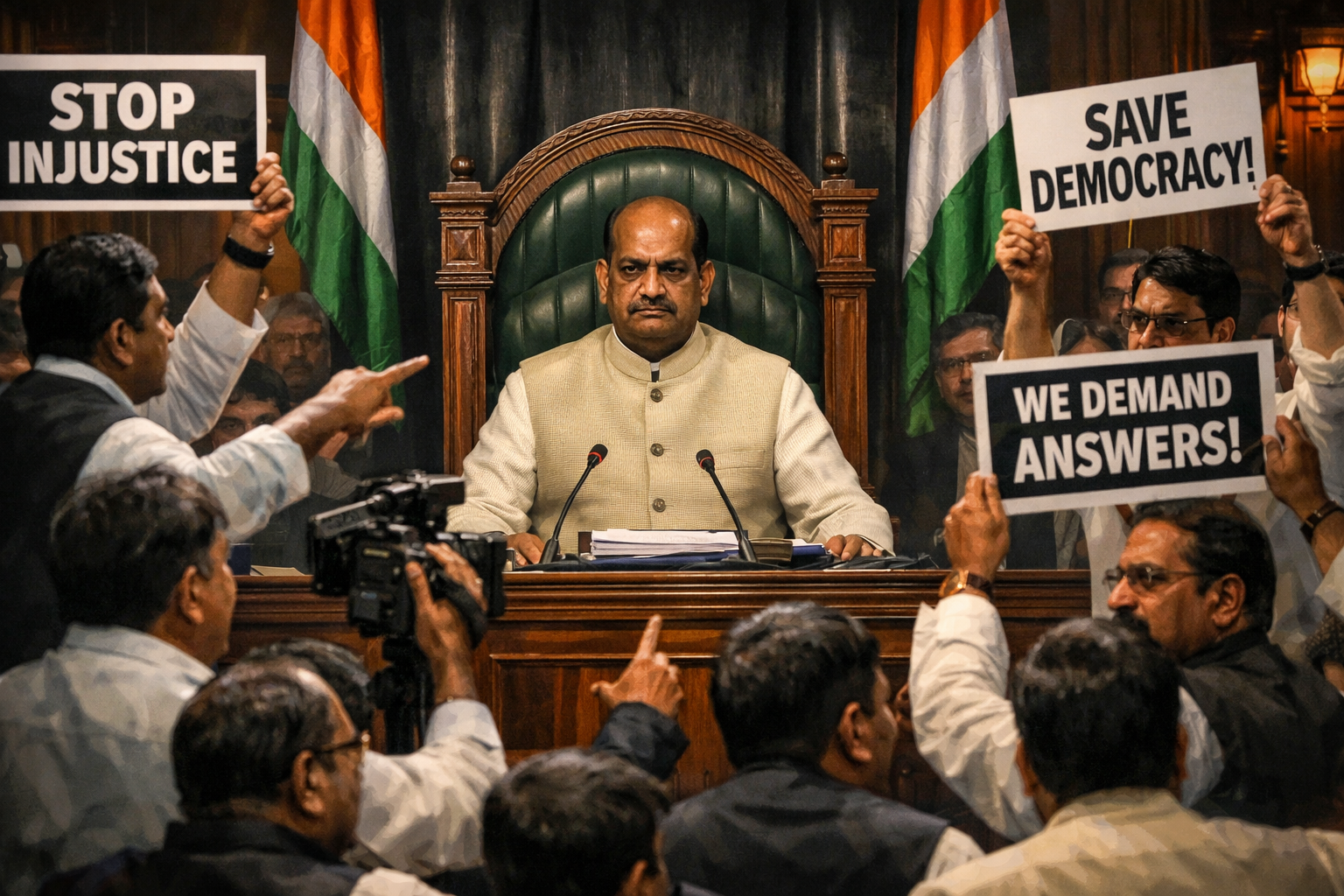
 The Indian Parliament has once again become the center of intense political debate. The opposition parties are preparing to move a no-confidence motion against Lok Sabha Speaker Om Birla, accusing him of bias and unfair conduct during parliamentary proceedings.
This rare move has sparked nationwide discussions about the role of the Speaker, parliamentary democracy, and whether such a resolution is similar to impeachment. The issue has also led to major disruptions in both houses of Parliament.
This article explains the controversy in simple terms, the reasons behind the opposition’s move, and its impact on Indian politics.
What Is the No-Confidence Motion Against the Speaker?
A no-confidence motion against the Lok Sabha Speaker is a formal resolution seeking their removal from office. Unlike a no-confidence motion against the government, this motion targets the Speaker’s neutrality and conduct.
The opposition claims that Speaker Om Birla has failed to act impartially, especially during debates involving sensitive political issues.
Although such motions are rare, they are allowed under parliamentary rules if enough members support the resolution.
Background of the Current Controversy
The latest tension in the Lok Sabha arose during discussions related to a book by former Army Chief General M. M. Naravane.
Opposition members attempted to cite references from the book during debates. However, Speaker Om Birla reportedly stated that the book was unpublished, and therefore, references from it could not be officially cited in the House.
This statement triggered strong objections from the opposition, who argued that the book was already in circulation and being discussed publicly.
Allegations of Bias Against Speaker Om Birla
One of the main reasons behind the no-confidence motion is the allegation of bias.
Opposition leaders claim that:
-
They were not given adequate time to speak
-
Their objections were frequently ignored
-
Ruling party members were allowed more freedom during debates
According to the opposition, these actions undermine the democratic functioning of Parliament.
They argue that the Speaker, as the constitutional head of the Lok Sabha, must remain neutral and give equal opportunity to all members, regardless of political affiliation.
Dispute Over the Naravane Book Reference
The controversy surrounding the Naravane book acted as a tipping point.
Speaker Om Birla’s assertion that the book was unpublished became a major point of disagreement. Opposition members insisted that the book had already been released and was available to the public.
This disagreement escalated into loud protests, repeated adjournments, and eventually, a complete breakdown of proceedings in the Lok Sabha.
Is This an Impeachment of the Speaker?
A major question being discussed is whether the removal of a Speaker can be called impeachment.
The answer is no.
Impeachment is a constitutional process reserved for high offices such as:
-
The President of India
-
The Vice President
-
Supreme Court and High Court judges
The Speaker’s removal is done through a resolution passed by a majority of Lok Sabha members, not impeachment.
However, politically, such a move carries serious weight and signals a breakdown of trust between the Speaker and the House.
Impact on Lok Sabha Proceedings
The ongoing conflict has severely disrupted Lok Sabha proceedings.
Several sessions were adjourned due to protests. At one point, Prime Minister Narendra Modi was unable to address the House because of continuous interruptions.
This situation raised concerns among political observers, who worry that important legislative work is being stalled due to political confrontations.
Opposition Boycott in the Rajya Sabha
The fallout was not limited to the Lok Sabha.
In protest against the Speaker’s conduct, opposition parties also boycotted sessions in the Rajya Sabha.
This coordinated protest across both Houses reflects the seriousness of the opposition’s concerns and their determination to challenge what they see as an erosion of parliamentary norms.
Why the Speaker’s Role Is Crucial in Democracy
The Speaker of the Lok Sabha plays a vital role in India’s democracy.
Key responsibilities include:
-
Maintaining order during debates
-
Deciding who gets to speak
-
Interpreting parliamentary rules
-
Acting as a neutral authority
When the Speaker’s neutrality is questioned, it affects the credibility of the entire parliamentary system.
This is why allegations against the Speaker are taken very seriously, even if they do not always lead to removal.
Political Reactions and Public Debate
Political reactions to the no-confidence motion have been sharply divided.
The ruling party has defended Speaker Om Birla, stating that he has acted strictly according to parliamentary rules.
On the other hand, opposition leaders argue that rules are being selectively applied to silence dissent.
The issue has also sparked debates on television, social media, and among constitutional experts, making it a major political topic across the country.
Can the Speaker Actually Be Removed?
Technically, the Speaker can be removed if:
-
A formal notice is submitted
-
The resolution is taken up for discussion
-
A majority of Lok Sabha members vote in favor
However, given the current numerical strength of the ruling party, the success of the motion appears unlikely.
Still, the move is symbolically important and sends a strong political message.
What This Means for Indian Parliamentary Politics
The no-confidence motion highlights deeper issues within parliamentary functioning.
It reflects:
-
Growing mistrust between the government and opposition
-
Increasingly confrontational politics
-
Challenges to maintaining decorum in Parliament
Experts warn that frequent disruptions and accusations weaken democratic institutions and reduce public confidence in elected representatives.
Conclusion
The opposition’s decision to bring a no-confidence motion against Lok Sabha Speaker Om Birla marks a significant moment in Indian parliamentary history.
While the motion may not succeed numerically, it has already succeeded in drawing attention to concerns about neutrality, fairness, and democratic values in Parliament.
As political tensions continue, the focus now shifts to whether dialogue and cooperation can restore normal functioning or whether confrontations will further deepen divisions.
For India’s democracy to thrive, all stakeholders must respect institutions, rules, and the spirit of parliamentary debate.