
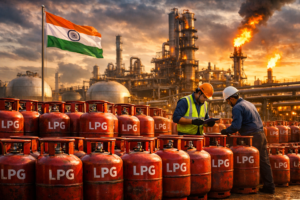
 India’s cooking gas supply has become a major talking point in recent weeks. Many households reported difficulty getting LPG cylinders on time. Social media posts and local reports suggested there might be a shortage in several regions.
However, the government has responded to these concerns with an important update. Officials say LPG production in the country has increased significantly.
According to government data, LPG production has risen by around 25%, which should help stabilize supply and reduce delivery delays. The announcement aims to calm concerns among consumers and ensure that cooking gas availability remains stable.
In this article, we will explain what is happening with LPG supply, why shortages were reported, and what the government’s production boost means for households.
What Is LPG and Why It Is Important
Liquefied Petroleum Gas (LPG) is one of the most widely used cooking fuels in India.
Millions of households depend on LPG cylinders for daily cooking. Over the past decade, the government has worked to increase LPG usage through several schemes.
One major program is the Pradhan Mantri Ujjwala Yojana, which provides subsidized LPG connections to low-income families.
Because of programs like this, LPG demand in India has increased rapidly. Today, the majority of Indian households rely on LPG instead of traditional fuels like firewood or coal.
This is why any news about LPG shortages quickly becomes a national concern.
Reports of LPG Shortage in Several Areas
Recently, some consumers reported delays in LPG cylinder deliveries.
In certain cities and rural areas, people claimed they had to wait longer than usual to receive their cooking gas cylinders.
Some common complaints included:
-
Delivery delays of several days
-
Limited cylinder availability at distribution centers
-
Increased waiting time during booking
These reports quickly spread online and raised concerns that the country might be facing an LPG shortage.
However, the government says the situation is not as severe as it appears.
Government Says LPG Production Has Increased by 25%
To address these concerns, officials released new data on LPG production.
According to the government, domestic LPG production has increased by around 25% compared to previous levels.
This increase is aimed at:
-
Meeting rising consumer demand
-
Reducing delivery delays
-
Ensuring steady supply across the country
Energy officials stated that production facilities have been operating at higher capacity to handle the increased demand.
The government also emphasized that there is no nationwide shortage of LPG.
Instead, some local delays may have occurred due to logistical issues or temporary demand spikes.
Role of Major Oil Companies in LPG Supply
India’s LPG production and distribution are mainly managed by government-owned oil companies.
Some of the key companies include:
-
Indian Oil Corporation
-
Bharat Petroleum
-
Hindustan Petroleum
These companies operate refineries, bottling plants, and distribution networks across the country.
They are responsible for ensuring that LPG cylinders reach households on time.
Officials from these companies say they are working to improve logistics and delivery speed in areas where delays have been reported.
Why LPG Demand Is Rising in India
One of the biggest reasons behind supply pressure is the rapid growth in LPG demand.
There are several factors contributing to this increase.
1. Expansion of Ujjwala Scheme
The Pradhan Mantri Ujjwala Yojana has connected millions of new households to LPG.
As more families switch to clean cooking fuel, overall demand rises.
2. Population Growth
India’s population continues to grow, and more households are being formed every year.
Each household requires its own LPG connection and regular cylinder refills.
3. Shift Toward Cleaner Energy
The government has encouraged people to move away from polluting fuels like firewood.
LPG burns cleaner and produces less smoke, which improves health and reduces indoor air pollution.
Because of these factors, LPG demand has increased steadily over the years.
Logistics and Distribution Challenges
Even when production increases, distribution challenges can still cause delays.
Some common logistical issues include:
-
Transportation bottlenecks
-
Local distribution delays
-
High seasonal demand
-
Weather-related disruptions
For example, during festivals or winter months, LPG demand can spike suddenly.
If distribution networks are not able to respond quickly, consumers may experience temporary shortages.
Government officials say they are working with oil companies to improve supply chain management.
Government Steps to Improve LPG Availability
To ensure stable LPG supply, the government has taken several steps.
Increasing Domestic Production
The reported 25% production increase is part of a broader effort to strengthen domestic energy output.
Higher production means more cylinders can be filled and delivered to consumers.
Expanding Bottling Plants
More LPG bottling plants are being developed to increase distribution efficiency.
These plants help convert bulk LPG into cylinders that are delivered to households.
Improving Delivery Systems
Oil companies are also investing in digital systems to track cylinder deliveries.
Consumers can now book cylinders online and track their delivery status.
These improvements are expected to reduce delays in the future.
Impact on LPG Prices
Another major concern for consumers is LPG pricing.
In recent years, LPG cylinder prices have fluctuated due to global energy market changes.
However, government officials say that increasing domestic production can help reduce dependence on imports.
If domestic supply improves, it may help stabilize LPG prices over time.
Still, prices are also influenced by global crude oil trends and currency exchange rates.
What Consumers Should Do If They Face Delays
If households experience delays in receiving LPG cylinders, there are several steps they can take.
-
Check booking status through the official LPG distributor website or app
-
Contact the local distributor for updates
-
Use customer support services of oil companies
Consumers can also use the official apps of Indian Oil Corporation, Bharat Petroleum, and Hindustan Petroleum to track bookings.
These apps allow users to monitor delivery status and register complaints if necessary.
Future Outlook for LPG Supply in India
Experts believe LPG demand will continue to grow in India over the next decade.
As more households adopt clean cooking fuel, supply systems will need to expand further.
Increasing domestic production is an important step toward meeting future demand.
The government’s latest announcement about a 25% rise in LPG production suggests that authorities are actively working to address supply concerns.
If production continues to grow and distribution improves, LPG shortages are likely to remain temporary rather than long-term.
Conclusion
Recent reports about LPG shortages created concern among many Indian households. However, the government has clarified that the situation is under control.
Officials say LPG production has increased by around 25%, which should help meet rising demand and reduce delivery delays.
Major oil companies like Indian Oil Corporation, Bharat Petroleum, and Hindustan Petroleum are working to improve distribution across the country.
With growing demand driven by schemes such as Pradhan Mantri Ujjwala Yojana, maintaining a strong LPG supply chain will remain a top priority.
For consumers, the key message is simple: there is no nationwide LPG shortage, and production increases are expected to support stable supply in the coming months.