India Russia Activates Major Defence Agreement: What It Means for Both Nations
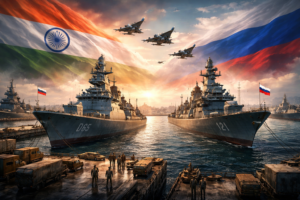 In a significant geopolitical development, India and Russia have officially activated a landmark defence logistics agreement — a move that is reshaping military cooperation between two of the world’s most powerful nations.
This activation marks a turning point in the India-Russia strategic partnership and has major implications for regional security, particularly in the Indian Ocean.
What Is the India-Russia Defence Logistics Agreement?
The agreement in question is a Reciprocal Logistics Support Pact signed between India and Russia in 2025.
While the pact was signed last year, it was formally ratified by Russia ahead of President Vladimir Putin’s visit to India. As confirmed by Russia’s official information portal, the agreement came into full operational force in January 2026.
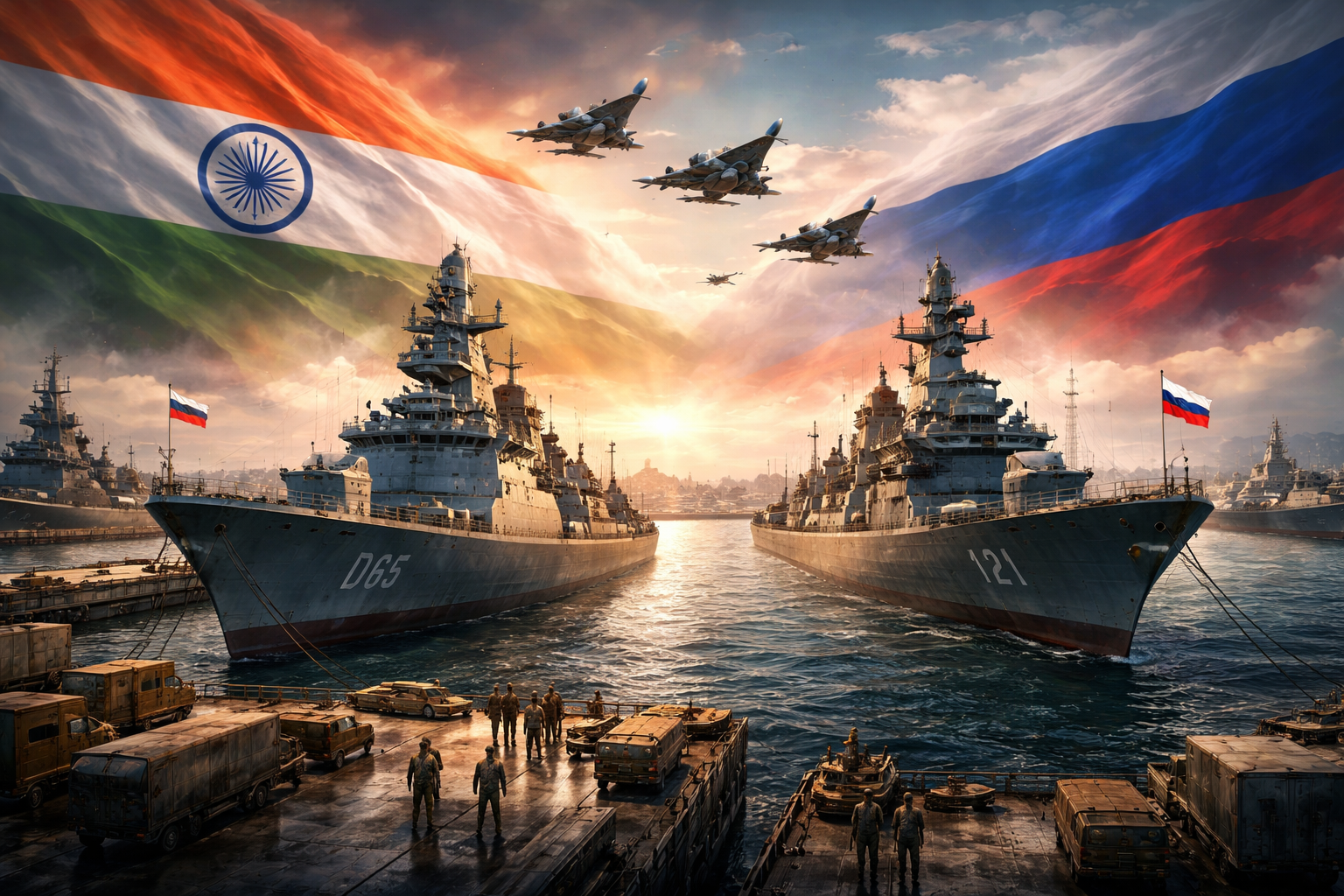
Simply put, this pact allows both countries to use each other’s military facilities — including ports, airfields, and bases — for logistical support during military operations, exercises, and deployments.
Key Terms of the Agreement: What Are Both Countries Allowed to Do?
The specific terms of the pact are notable. Under this agreement:
- Up to 3,000 military personnel from each country can be stationed in the other’s territory
- Up to 5 warships can be docked in each other’s naval ports
- Up to 10 military aircraft can be deployed at each other’s airbases
These are not trivial numbers. The ability to station warships and aircraft in each other’s territory gives both nations meaningful operational flexibility that was simply not possible before.
How Does This Compare to India’s Other Logistics Pacts?
India is no stranger to logistics agreements of this nature. The framework of this Russia pact closely mirrors deals India already has with other major defence partners.
LEMOA with the United States: India signed the Logistics Exchange Memorandum of Agreement (LEMOA) with the US in 2016. It allows both nations’ militaries to use each other’s land, air, and naval bases for resupply and repair.
Logistics Pact with France: India has a similar agreement with France, allowing mutual access to military facilities — particularly useful given France’s overseas territories in the Indo-Pacific.
The India-Russia pact follows the same logical framework. However, what makes this agreement geopolitically distinct is the specific context of the two nations’ military and strategic interests in 2026.
Why This Agreement Matters for Russia
Russia’s motivation for signing and activating this agreement is fairly straightforward — access to the Indian Ocean region.
Russia has long sought to expand its naval footprint beyond the Black Sea and the Baltic. Gaining logistical access to Indian ports gives Russian warships the ability to operate more effectively in the Indian Ocean, the Arabian Sea, and beyond.
With the ongoing conflict in Ukraine having strained Russia’s relationships with Western nations, deepening ties with India offers Russia a critical strategic outlet — both diplomatically and militarily.
Being able to dock warships and station aircraft on Indian soil is a significant gain for Russia’s global power projection ambitions.
Why This Agreement Matters for India
For India, the benefits are equally compelling — though they look quite different.
India’s military is still heavily reliant on Russian-origin equipment. Decades of defence procurement from Russia mean that a significant portion of the Indian Army, Navy, and Air Force uses Russian platforms — from the T-90 tanks to MiG and Su-30 fighter jets, and the INS Vikramaditya aircraft carrier.
Maintaining logistical access to Russian support systems, spare parts, and servicing infrastructure is therefore a practical operational necessity for India — not just a diplomatic gesture.
Additionally, this agreement:
- Gives India greater flexibility during military exercises and deployments in Russia’s near abroad
- Strengthens India’s strategic autonomy by deepening ties with a major power outside the Western bloc
- Reaffirms the India-Russia relationship at a time when global powers are increasingly pressuring New Delhi to pick sides
India’s Strategic Balancing Act
India has consistently pursued a policy of strategic autonomy — maintaining strong relationships with multiple global powers rather than being tied exclusively to any one bloc.
The activation of this agreement with Russia, even as India deepens its Quad partnership with the US, Japan, and Australia, is a textbook example of this approach.
New Delhi is not choosing Moscow over Washington. It is simply ensuring that its military has the logistical support it needs from all its strategic partners.
This is why India has signed logistics pacts with the US, France, and now activated one with Russia — each agreement serves a specific operational and geopolitical purpose.
Reactions and Geopolitical Implications
The activation of this pact has drawn quiet attention from analysts tracking the Indo-Pacific security environment.
Western nations, particularly the United States, have watched India’s continued defence engagement with Russia with concern. However, India has consistently maintained that its partnerships are driven by national interest, not ideological alignment.
For Russia, this agreement is a diplomatic win — evidence that its global isolation following the Ukraine conflict is far from complete. Moscow continues to maintain strong ties with major emerging powers.
For India, it sends a clear message: New Delhi will continue to chart its own course, deepening ties where it sees strategic benefit.
What Comes Next?
With the agreement now activated, the focus shifts to implementation. Both nations are expected to:
- Begin coordinating on specific port and airfield access protocols
- Conduct joint military exercises leveraging the new logistical framework
- Potentially expand the pact’s scope in future negotiations
Analysts will also be watching whether Russia moves to actually dock warships at Indian ports, which would be a visible and politically significant step.
Final Thoughts
The activation of the India-Russia defence logistics agreement is far more than a bureaucratic formality. It is a strategic signal — from both sides — about the direction of one of the world’s most important bilateral relationships.
For Russia, it means a foothold in the Indian Ocean. For India, it means logistical continuity for a military that still runs largely on Russian hardware.
As the global order continues to shift and fragment, agreements like this one will define which nations hold real strategic leverage — and India, it seems, intends to hold a great deal of it.
Stay updated on India’s defence and foreign policy developments. Share this article if you found it informative.