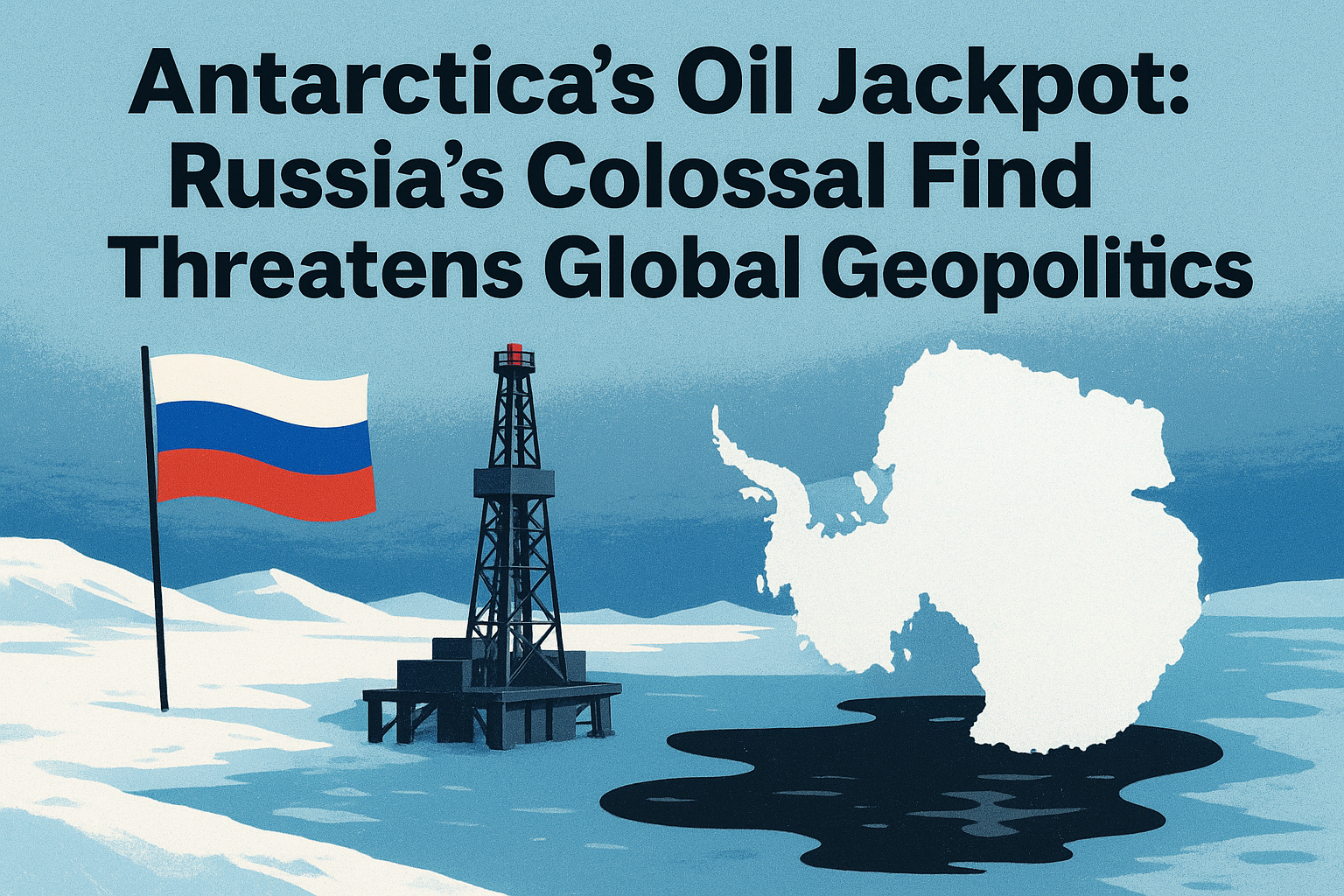
 Antarctica – the world’s coldest, quietest, and most isolated continent – is suddenly at the center of a global storm.
Russia’s recent discovery of massive oil reserves beneath the icy surface has triggered international concern, geopolitical tensions, and growing fears that the continent’s long-preserved peace may soon fracture.
According to reports, the oil found near the Weddell Sea could rival the reserves of Saudi Arabia, one of the world’s largest oil producers. This comparison alone explains why the world is paying attention — and why tensions are rising fast.
Below is a detailed, easy-to-read, SEO-friendly breakdown of what this discovery means for global politics, energy markets, and the future of the Antarctic Treaty.
Russia’s Oil Discovery in Antarctica: What Exactly Happened?
The center of the controversy is a Russian geological survey operation that has been exploring underground structures in the Weddell Sea region.
Recent findings suggest that the area may hold billions of barrels of recoverable oil.
This is not a minor discovery.
It has the potential to reshape global energy economics, especially at a time when the world is witnessing volatility in oil markets, energy conflicts, and rising competition for resources.
The Russian geological survey company leading the mission has not released full details, but the scope of the discovery is large enough for global powers to sit up and take notice.
A Game-Changing Find Comparable to Saudi Arabia
One of the strongest statements made in the video discussing this discovery is the comparison to Saudi Arabia’s oil reserves.
Saudi Arabia is synonymous with petroleum wealth, controlling some of the world’s deepest, richest, and most accessible reserves.
If Antarctica even comes close to this scale, it would fundamentally change:
-
Global oil pricing
-
Foreign policy priorities
-
Energy security strategies
-
International alliances
Countries that are currently dependent on Middle Eastern oil could shift their focus to the south.
Meanwhile, nations with existing Antarctic presence may try to strengthen their territorial claims.
This is how major geopolitical shifts begin.
Why the Weddell Sea Location Is Sparking Tensions
The Weddell Sea is not just any location.
It lies close to the British-claimed Antarctic territory, raising serious concerns among Western nations.
Even though the Antarctic Treaty of 1959 suspends territorial claims and bans resource extraction, nations like the UK, Argentina, and Chile have historical claims in the region.
Here’s why the location matters:
-
The British Antarctic Territory overlaps with the area Russia is exploring.
-
The UK has previously expressed worry over intensified Russian activity in the region.
-
Other nations may soon stake stronger claims if the oil find is confirmed.
This is a recipe for geopolitical friction, especially during a period of strained Russia-West relations.
Russia’s Strategic Positioning: A Silent Power Play
Russia’s involvement is not accidental.
For years, Russia has been strengthening its presence in Antarctica through:
-
Research stations
-
Geological surveys
-
Icebreaker fleet expansion
-
Increased funding for polar missions
Now, with major oil reserves on the line, experts believe Russia is positioning itself to dominate the future of Antarctic energy resources.
This discovery may allow Russia to:
-
Increase geopolitical leverage
-
Reduce Western energy dominance
-
Strengthen alliances with energy-dependent nations
-
Challenge the norms of the Antarctic Treaty System
For a country already using energy as a tool of power, this “oil jackpot” could be a strategic goldmine.
The Antarctic Treaty in Danger: Could It Break Down?
The Antarctic Treaty has been a rare example of global peace, cooperation, and scientific collaboration.
Its key principles include:
-
Antarctica must be used only for peaceful purposes.
-
Military activity is banned.
-
Resource extraction is prohibited.
-
Territorial claims are frozen.
But this discovery threatens to destabilize all of that.
What happens if one country starts drilling?
-
Other nations will rush to stake their claims.
-
The treaty may collapse under pressure.
-
The region could turn into a strategic battleground.
-
Environmental devastation could follow.
Experts worry that the oil find could be the first major challenge to the treaty since its signing.
The moment the economic value of the continent becomes too large to ignore, nations may begin to push for exceptions, revisions, or even outright violations.
Why the World Is Concerned About Future Conflicts
Oil discoveries have historically been at the root of many major global conflicts.
From the Middle East to West Africa, competition over resources has shaped foreign policy and military strategy for decades.
Antarctica could now become the next flashpoint.
Key concerns include:
-
Territorial disputes escalating into diplomatic conflicts
-
Military presence increasing under the guise of research
-
Environmental destruction due to drilling operations
-
Breakdown of international cooperation
-
New alliances forming around energy exploitation
Even a continent protected by international law is not immune to the reality of global energy politics.
Global Reactions: Silence, Suspicion, and Strategic Planning
So far, official reactions have been muted.
But geopolitical analysts believe major powers are quietly:
-
Conducting internal assessments
-
Re-evaluating Antarctic strategies
-
Strengthening research stations
-
Monitoring Russian activity closely
-
Exploring legal loopholes in the Antarctic Treaty
Nations like the US, UK, China, Australia, and Argentina all have active Antarctic operations.
They will not accept Russia gaining sole advantage in such a resource-rich environment.
Environmental Concerns: The Hidden Crisis
Lost in the geopolitical noise is a major issue:
The environmental impact of drilling in Antarctica.
The continent is home to:
-
Fragile ecosystems
-
Rare species
-
Crucial ice sheets that regulate global temperatures
Oil extraction could result in:
-
Large-scale spills
-
Melting of surrounding ice
-
Disturbance of marine life
-
Long-term ecological damage
Environmentalists warn that the world cannot afford a Deepwater Horizon-scale disaster in such a sensitive region.
What Happens Next? The Future of Antarctica Is Uncertain
As nations analyze Russia’s discovery, several possible future scenarios emerge:
✅ Scenario 1: A New Energy Race Begins
Countries may rush to explore Antarctic oil, triggering political and territorial competition.
✅ Scenario 2: The Antarctic Treaty Collapses
Growing pressure could lead to renegotiation or the treaty losing its authority.
✅ Scenario 3: Strict Regulations Prevent Mining
The international community may reinforce environmental protections.
✅ Scenario 4: Russia Gains a Major Energy Advantage
If left unchallenged, Russia could secure massive influence over global oil markets.
For now, the world waits — but the geopolitical chessboard is already shifting.
Conclusion: Antarctica’s Oil Find Could Change the World
Russia’s colossal oil discovery in Antarctica is more than a geological event — it is a geopolitical earthquake.
The combination of massive reserves, strategic location, and treaty vulnerabilities has created a situation with enormous global implications.
-
Resource conflicts may intensify.
-
Treaties may come under pressure.
-
Nations may compete for access.
-
Environmental risks may skyrocket.
What happens next will determine whether Antarctica remains a zone of peace or becomes the world’s next major battleground for energy dominance.