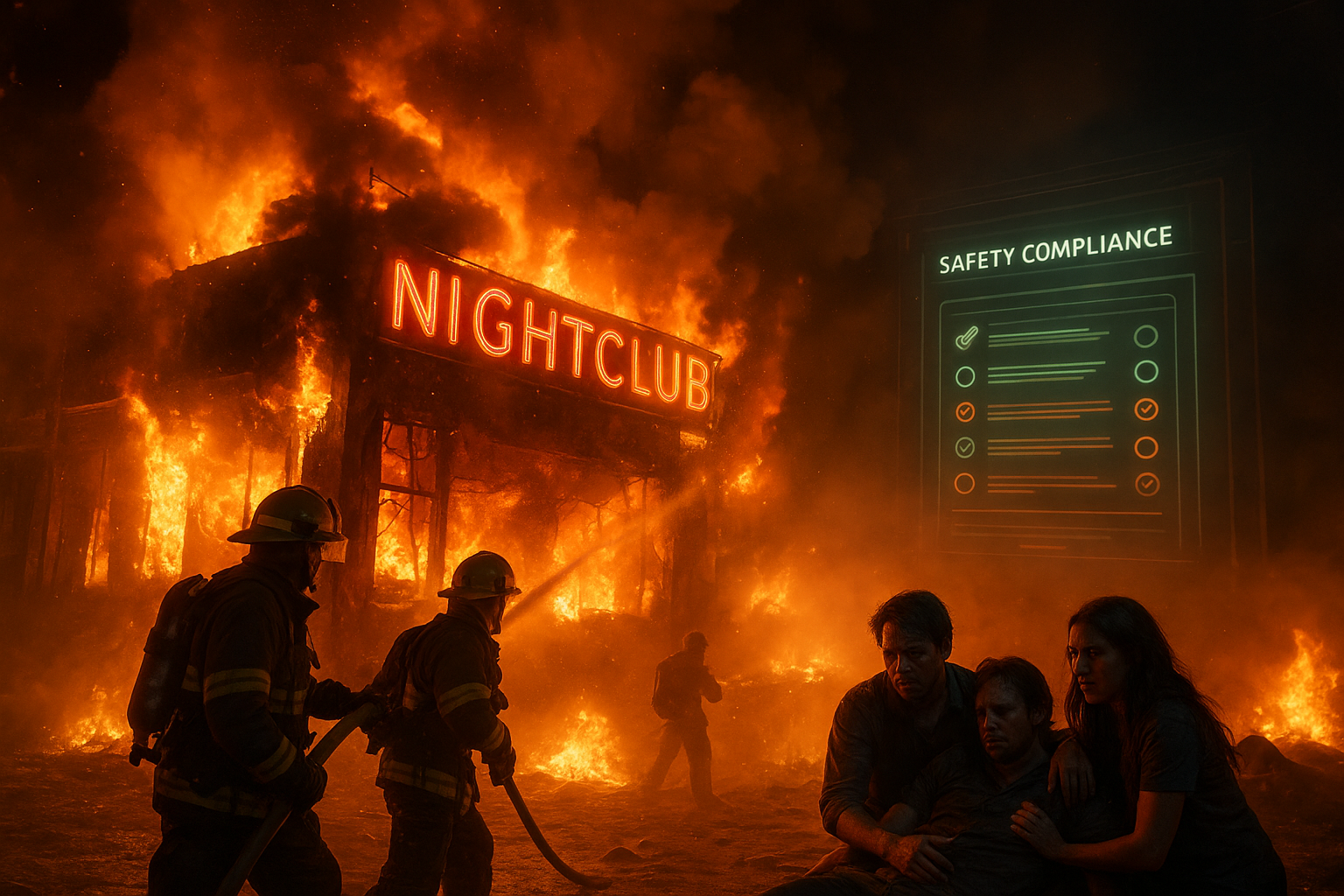
 The recent Goa club fire tragedy, which claimed 25 lives and left over 50 injured, has once again exposed India’s recurring pattern of fire-related disasters. Every few months, the nation wakes up to another heartbreaking headline—loss of life, avoidable destruction, and the same questions about safety negligence.
This incident has shocked Goa and the entire country, raising urgent concerns about how such a massive tragedy could occur at a popular nightlife destination. The answers, unfortunately, point to familiar issues: poor fire safety compliance, negligence by authorities, and illegal structural modifications.
In this article, we break down what happened, why it happened, and what India must urgently do to prevent such disasters in the future.
A Deadly Night in Goa
The tragedy unfolded during a busy weekend night when hundreds of visitors were enjoying music, food, and nightlife. Around midnight, an unexpected explosion was heard from the kitchen area of the nightclub. Within minutes, flames engulfed the premises, trapping dozens of people inside.
Panic spread quickly as thick smoke filled the building, making escape nearly impossible. Many victims lost consciousness due to smoke inhalation, while others were unable to find exits because of the rapid spread of the fire.
Emergency teams rushed to the spot, but by the time the flames were brought under control, 25 people had lost their lives and 50 others were fighting for survival.
A Pattern of Repeated Fire Tragedies in India
The video referenced in the topic highlights a serious issue: India faces frequent fire tragedies, many of which follow a predictable pattern of negligence.
Some of the most common problems include:
-
Poor fire safety planning
-
Lack of regular inspections
-
Ignoring safety guidelines
-
Corrupt approvals for unsafe buildings
-
Faulty electrical wiring
-
Overcrowding in commercial establishments
From Surat (coaching center fire), to Mumbai (Kamala Mills blaze), to Delhi (factory inferno), the list is long and painful.
The Goa incident joins this unfortunate list, raising the same pressing question: Why do we keep repeating the same mistakes?
Negligence by Authorities and Fire Department
One of the strongest points raised in the video is the failure of authorities and the fire department to enforce safety regulations. Despite knowing the risks, many establishments operate with:
-
Expired fire NOCs
-
Non-functional fire extinguishers
-
Blocked emergency exits
-
Flammable interiors
-
Overcrowding far above permitted limits
Nightclubs, in particular, require stringent safety standards due to high footfall, loud music, dim lighting, and confined spaces.
Yet, many operate with blatant violations.
Early reports indicate that the Goa nightclub involved in the tragedy did not comply with multiple safety norms, raising serious questions about how it continued to function without action from officials.
LPG Cylinder Leak: The Suspected Trigger
Preliminary findings suggest that the fire may have been triggered by a major explosion caused by an LPG cylinder leak in the kitchen area.
This raises critical concerns:
-
Was the cylinder properly maintained?
-
Were employees trained in handling gas-related emergencies?
-
Were basic safety sensors installed to detect leaks?
Investigators believe that the leak built up over time until an ignition source—possibly a spark or open flame—triggered the explosion.
Such incidents are preventable with:
-
Regular inspections
-
Modern gas detection systems
-
Well-trained kitchen staff
-
Immediate reporting of leaks
But in many restaurants and clubs across India, these crucial steps are ignored.
How the Fire Spread So Rapidly
Within minutes of the explosion, flames spread uncontrollably. Experts say the speed of the fire was due to flammable materials used extensively in the club’s interior design.
This included:
-
Wooden paneling
-
Foam decorations
-
Acoustic padding
-
Fabric-covered walls
-
Plastic-based installations
Many of these materials burn quickly and produce toxic smoke.
The situation worsened because the club had reportedly undergone illegal expansions, adding makeshift structures without proper municipal approval.
These unauthorized sections:
-
Had no fire-resistant design
-
Were not inspected by fire authorities
-
Blocked or narrowed emergency exits
-
Increased the overall fire load inside the building
This turned the nightclub into a death trap, especially during peak hours.
Inadequate Safety Preparedness Inside the Club
Several survivors have stated that there were no clear emergency exits or visible fire safety instructions. The panic increased because:
-
Fire alarms didn’t function properly
-
Staff weren’t trained to guide people
-
Emergency lights failed during the fire
-
Exits were crowded or blocked
In an environment filled with loud music and dim lighting, fast response is crucial. However, the club lacked even the most basic facilities required during a fire outbreak.
This shows a shocking disregard for human safety.
Authorities Were Aware, but Action Was Missing
Many locals and former visitors have revealed that the club had long-standing safety issues. Complaints were reportedly made regarding:
-
Overcrowding
-
Loud, damaging fireworks used for shows
-
Unsafe wiring
-
Kitchen gas leaks
-
Choked evacuation routes
Yet officials allegedly ignored these warnings, allowing the club to operate at full capacity.
This tragedy underscores a painful reality: India’s fire regulations are strong on paper but weak in enforcement.
Why Do Fire Tragedies Keep Happening in India?
There are several underlying reasons behind repeated disasters:
1. Corruption in Approvals
Buildings receive approvals without proper checks, often due to bribery.
2. Weak Enforcement
Even when rules exist, they are rarely implemented consistently.
3. Poor Awareness
Many business owners do not prioritize fire safety expenses.
4. Inadequate Infrastructure
Cities often lack fire hydrants, accessible roads, and quick-response systems.
5. Lack of Training
Employees are not trained in evacuation, handling cylinders, or using extinguishers.
6. Rising Demand for Commercial Spaces
Nightclubs, restaurants, and event venues often expand illegally to accommodate more customers.
Unless these issues are addressed, tragedies will continue.
Need for Stricter Enforcement of Fire Safety Rules
The video stresses a powerful message: only strict enforcement can prevent future tragedies.
India must implement the following measures urgently:
1. Mandatory Annual Fire Audits
Every commercial building must undergo a detailed safety check.
2. Strict Penalties for Violations
Heavy fines, license cancellations, and criminal charges for serious lapses.
3. Modern Fire Detection Technology
Smoke sensors, gas leak detectors, and automatic sprinklers must be compulsory.
4. Training for All Staff
Basic fire safety training should be mandatory for all employees.
5. Public Awareness Campaigns
Citizens should be educated about fire safety and evacuation plans.
6. Zero Tolerance for Illegal Construction
Unauthorized expansions must be demolished immediately.
7. Transparent Online Compliance System
All fire NOCs and approvals should be publicly available online.
Lessons India Must Learn from the Goa Tragedy
The Goa nightclub fire is not just another headline. It is a painful reminder of how fragile human life becomes when safety is ignored.
Key takeaways include:
-
Safety rules must never be treated as optional
-
Authorities must prioritize inspections
-
Commercial establishments must invest in safety
-
Citizens must demand accountability
-
Fire departments must modernize and act strictly
Every life lost in this tragedy could have been saved. And unless action is taken now, the next disaster is only a matter of time.
Conclusion
The Goa club fire tragedy is a heartbreaking example of what happens when negligence, corruption, and lack of enforcement converge. Twenty-five young and vibrant lives were lost not because of fate, but because of preventable mistakes.
India must wake up.
This is not the first fire tragedy—and it won’t be the last—unless we collectively push for change.
Stricter rules, stronger enforcement, safety-first culture, and responsible governance can ensure that such nights of horror never repeat.
Human lives are priceless.
No amount of profit, nightlife excitement, or commercial expansion is worth the risk.