 Global energy politics has taken a significant turn.
Recent statements from Iran and the United States have created new opportunities for India’s energy security and trade routes.
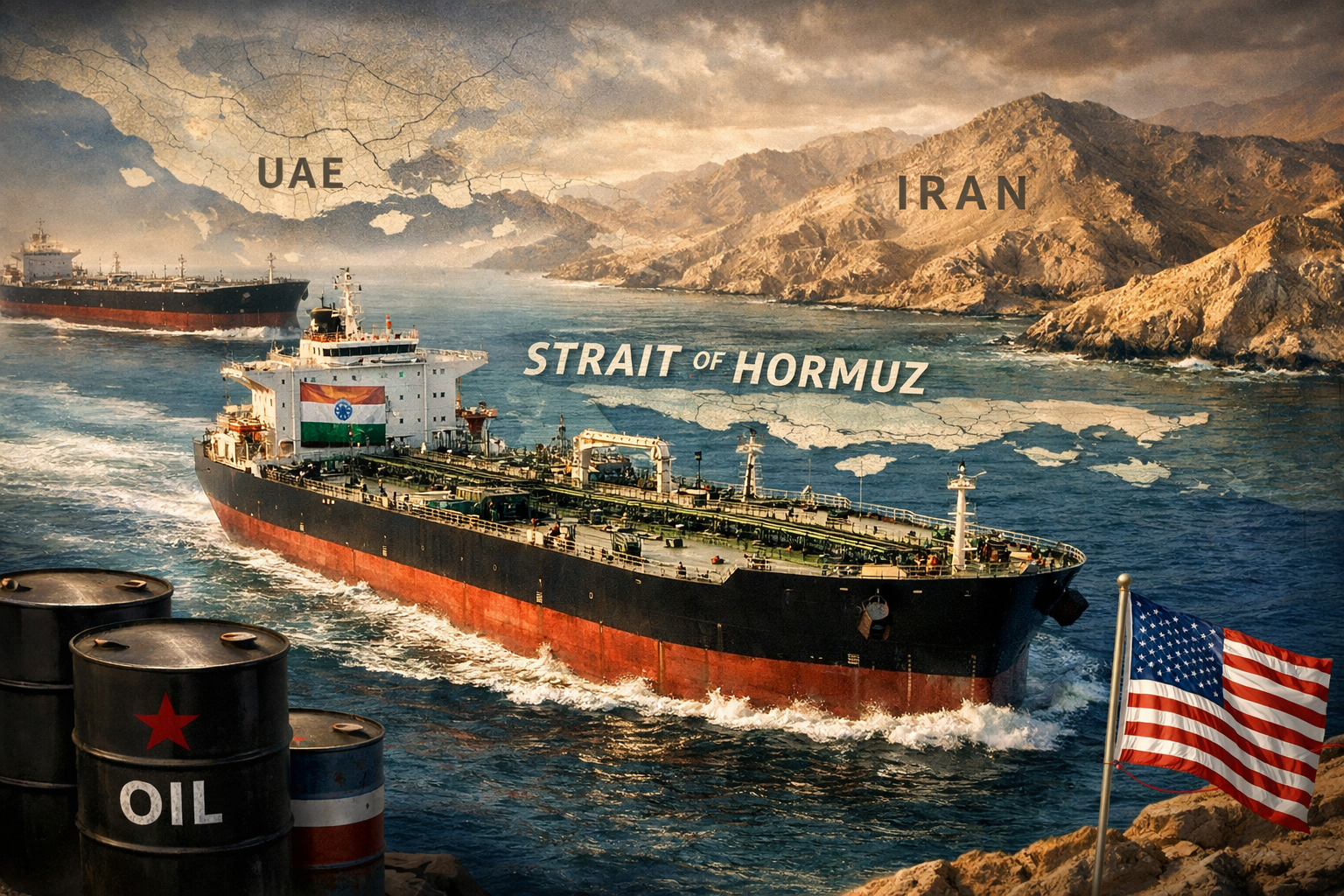
Iran has said that Indian ships can use the Strait of Hormuz, one of the most critical oil shipping lanes in the world. At the same time, the United States confirmed that India is allowed to purchase Russian oil, though certain conditions still apply.
These developments could reshape global oil trade, shipping routes, and geopolitical relations. Let’s break down what this means and why it matters.
What Is the Strait of Hormuz?
The Strait of Hormuz is one of the most important waterways on the planet. It connects the Persian Gulf to the Gulf of Oman and the Arabian Sea.
This narrow passage acts as the main export route for oil from several Middle Eastern countries.
Key facts about the Strait of Hormuz:
-
Nearly 20% of the world’s oil supply passes through it.
-
It is only about 33 km wide at its narrowest point.
-
It connects major oil producers like Saudi Arabia, Iraq, Kuwait, UAE, and Iran to global markets.
Because of this, even small disruptions in the strait can impact global oil prices immediately.
For countries like India, China, Japan, and South Korea, the strait is a lifeline for energy imports.
Iran Announces Strait of Hormuz Open for India
Iran recently announced that Indian ships are allowed to use the Strait of Hormuz.
This announcement is significant because earlier reports suggested that Iran had allowed only Chinese vessels to pass through freely during certain tensions in the region.
Now, by allowing Indian ships, Iran appears to be signaling a more cooperative approach toward India.
This move may help:
-
Strengthen India–Iran relations
-
Ensure smooth oil transportation
-
Reduce shipping uncertainty in the region
India relies heavily on oil imports, and access to the Strait of Hormuz is essential for maintaining energy supplies.
Why This Announcement Matters for India
India is the third-largest oil importer in the world.
Most of India’s crude oil imports come from the Middle East, which means tankers frequently pass through the Strait of Hormuz.
If access to this route becomes restricted, it could lead to:
-
Higher shipping costs
-
Supply delays
-
Rising fuel prices in India
Iran’s statement therefore provides reassurance for India’s energy security.
It also reduces the risk of disruptions in trade routes for Indian oil shipments.
US Allows India to Purchase Russian Oil
Another major development is the United States confirming that India can continue purchasing Russian oil.
This clarification comes after global tensions increased following Western sanctions on Russia.
However, the US made it clear that certain conditions apply.
India must ensure that:
-
Transactions follow international sanction rules
-
Purchases remain within allowed price limits
-
Financial dealings avoid sanctioned entities
This arrangement allows India to maintain energy imports while staying within global regulations.
Why India Buys Russian Oil
Since 2022, India has significantly increased its imports of discounted Russian crude oil.
There are several reasons for this shift.
1. Lower Prices
Russian oil has often been available at discounted rates compared to global benchmarks.
This helps India reduce its energy costs.
2. Energy Security
India’s economy is growing rapidly.
This means energy demand is increasing every year.
Diversifying suppliers helps India avoid overdependence on any single region.
3. Refining Advantage
Indian refineries are capable of processing different grades of crude oil, including Russian blends.
This gives India flexibility in choosing suppliers.
How the Strait of Hormuz Impacts Global Oil Markets
The Strait of Hormuz plays a massive role in global energy stability.
Every day, millions of barrels of oil travel through this narrow channel.
Countries that depend on the route include:
-
Saudi Arabia
-
Iraq
-
Kuwait
-
United Arab Emirates
-
Iran
Major importers include:
-
India
-
China
-
Japan
-
South Korea
-
European countries
If tensions increase in this region, global oil prices can spike instantly.
That is why geopolitical developments around the strait are closely watched by global markets.
Strategic Importance of the Strait of Hormuz
The Strait of Hormuz is not just an economic route.
It is also a major strategic chokepoint.
Several military forces operate near the region, including:
-
Iran’s naval forces
-
US Navy patrols
-
Allied naval coalitions
Because the passage is so narrow, even minor incidents can disrupt shipping traffic.
Examples include:
-
Tanker seizures
-
Naval confrontations
-
Security warnings
These incidents can cause oil prices to surge worldwide.
Impact on Global Energy Markets
The recent announcements by Iran and the US could bring temporary stability to oil markets.
Allowing Indian ships to pass smoothly through the Strait of Hormuz reduces the risk of transport disruptions.
At the same time, US flexibility on Russian oil purchases gives India more options in sourcing crude.
Possible effects include:
-
Stable oil supply chains
-
Reduced shipping uncertainty
-
Balanced global energy demand
However, markets will continue monitoring geopolitical tensions in the Middle East and Eastern Europe.
What This Means for India’s Energy Strategy
India has been focusing on energy diversification in recent years.
The country imports oil from many regions, including:
-
Middle East
-
Russia
-
United States
-
Africa
-
Latin America
By maintaining multiple supply sources, India reduces risk from geopolitical disruptions.
The latest developments with Iran and the US support this strategy.
It ensures India can continue accessing both shipping routes and affordable crude oil supplies.
Possible Future Developments
While the situation currently looks stable, several factors could influence future developments.
These include:
-
Iran–US relations
-
Global sanctions policies
-
Middle East security conditions
-
Russia–Ukraine conflict developments
Any change in these areas could affect oil trade routes and pricing.
Countries like India will continue adjusting their energy strategies based on global political shifts.
Conclusion
The announcement that Iran will allow Indian ships to use the Strait of Hormuz is a significant development for global trade.
Combined with the US confirmation that India can purchase Russian oil under certain conditions, it creates a more flexible environment for India’s energy imports.
The Strait of Hormuz remains one of the most important oil routes in the world, and any change in access or security has global implications.
For India, these developments provide greater energy stability, improved trade routes, and more options in sourcing crude oil.
As global geopolitics continues to evolve, the Strait of Hormuz will remain a key focal point in the international energy landscape.